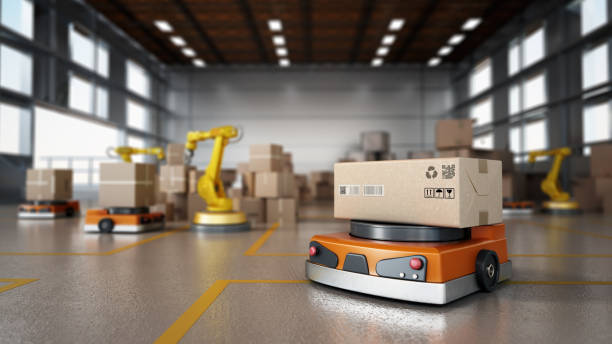
Robots don't fail warehouses very often. Bad planning does. A picking robot dropped into a layout it was never designed for, or a sortation system bolted onto a workflow nobody mapped out first, tends to underperform no matter how good the hardware is. Getting real value out of warehouse robotics solutions has less to do with buying the right machine and more to do with asking the right questions before you buy anything at all, which is exactly where a strong warehouse automation partner earns its value.
Framing the Decision: Robots for Picking, Sorting, or Both
Not every warehouse problem calls for the same kind of robot, and lumping "automation" into one bucket is where a lot of projects go sideways early. Picking robots handle individual item selection, useful where SKU variety is high and manual picking eats the most labor hours. Sortation robots move product between zones, which matters more in facilities pushing high volume through a limited number of exits.
Some operations need both working together, others need neither yet. A facility where material flow, not picking accuracy, is the actual bottleneck is often better served starting with a well-designed conveyor system before layering robotics on top. Dense SKU counts and tight floor space point in a different direction entirely, toward storage that can retrieve inventory without wide aisles for forklift access.
The Technology Stack Behind a Modern Robotics Deployment
Robots get the attention, but they're the visible tip of a much larger system. Underneath every functioning robotics deployment sits an electrical and controls layer that has to be built to handle the load, communication, and redundancy the robots depend on. Skipping that groundwork is a common reason projects stall mid-installation, especially in older buildings where panel capacity and wiring were never designed with this kind of load in mind.
Once that infrastructure is sound, the equipment still has to be mounted, wired, and calibrated correctly. A robot installed slightly out of tolerance rarely performs the way it's supposed to, which is why automation equipment installation work tends to determine a project's success more than the equipment specs on paper.
Matching Robot Types to Warehouse Tasks
Different robotics categories solve different problems, and the wrong match usually shows up in disappointing throughput numbers a few months after go-live.
| Robot Type | Flexibility | Best Fit |
|---|---|---|
| Autonomous Mobile Robots | High | Changing layouts, variable tasks |
| Automated Guided Vehicles | Low | Fixed, repetitive routes |
| Robotic Picking Arms | Moderate | Consistent, well-defined SKUs |
| ASRS | Low, fixed infrastructure | Dense storage, steady demand |
Autonomous mobile robots move goods between fixed points without needing dedicated infrastructure, offering flexibility for facilities whose layout might change. Automated guided vehicles follow fixed paths, cheaper but less adaptable. For operations with limited square footage and steady demand, ASRS installation combines dense storage with fast retrieval, though it's the least forgiving of the four options to retrofit after the fact.
Why More Operators Are Moving on Robotics Now
Adoption has moved past the early-adopter phase into something closer to standard practice. Industry survey data shows that 48 percent of companies were using one or more robots in their plants or warehouses by 2025, up from just 23 percent three years earlier, according to research from MHI and the Robotics Group. That kind of jump in a short window signals a shift in what operators consider standard rather than a nice-to-have upgrade.
Labor availability plays a real part in that shift too. Federal projections show employment of hand laborers and material movers, the workforce most directly involved in manual picking, growing just 4 percent from 2025 to 2035, with the same data noting that warehouses are increasingly turning to conveyors and sorting equipment to fill the gap. Operations across warehousing and distribution are feeling that slow-growing labor pool directly as order volume keeps outpacing available workers.
Weighing Cost, Speed, and Risk Before You Commit
The upfront cost of a robotics deployment is usually the number everyone focuses on, but it's rarely the number that determines whether a project succeeds. Integration time, staff training, and how well the system fits existing workflows tend to matter more for long-term performance than the sticker price on the equipment itself.
| Factor | Greenfield Installation | Retrofit Installation |
|---|---|---|
| Predictability | Higher, known conditions | Lower, some unknowns |
| Upfront Cost | Often higher overall | Often lower overall |
| Timeline | Longer planning phase | Faster to first deployment |
| Risk of Surprises | Lower | Higher |
Retrofitting older infrastructure carries its own set of tradeoffs worth weighing honestly. It can extend the life of an existing facility without a full rebuild, but it comes with unknowns a greenfield project doesn't face, like undocumented wiring or structural limits discovered mid-project. That's a risk many 3PL and logistics providers accept anyway, since a full facility rebuild would cost far more time than working through a phased automation retrofit instead.
Questions to Ask a Warehouse System Integrator Before Signing
The integrator matters as much as the robots. A warehouse system integrator who has only worked with one manufacturer's hardware will naturally steer every recommendation toward that equipment, whether or not it's actually the best fit for your operation. Ask directly whether they work across multiple robotics platforms or represent a single vendor, and press on how they plan to sequence the rollout around your existing operations so picking or shipping isn't shut down longer than necessary.
Support after the install matters just as much as the install itself. Robots need ongoing calibration, software updates, and troubleshooting, and an integrator who disappears once the equipment is running leaves a facility exposed the first time something breaks. This question carries extra weight for manufacturing operations running tight production schedules, where even a short unplanned stoppage ripples through everything downstream of it.
How MTLI Supports a Robotics Rollout
Our warehouse robotics solutions approaches projects as a full system build, starting with a site assessment that covers electrical capacity, layout, and current workflow before any equipment gets specified. That assessment shapes the recommendation, rather than the other way around, and our teams stay on as an installation partner through commissioning rather than handing the project off midway through.
The physical build itself runs through the same crews handling installations across every part of a project, which keeps design intent and finished system consistent instead of losing details in a handoff between separate vendors.
Talk to a Warehouse Robotics Company That Gets Results
Warehouse robotics solutions only deliver on their promise when the planning behind them is as solid as the hardware itself. Rushing into a deployment without mapping the workflow, checking the electrical infrastructure, or vetting the integrator is how facilities end up with expensive equipment that never quite performs the way it was supposed to.
MTLI Group works as a warehouse robotics solutions company that plans before it builds, helping operations across the country deploy systems suited to their actual layout and volume. Contact our team to talk through your facility's automation goals.