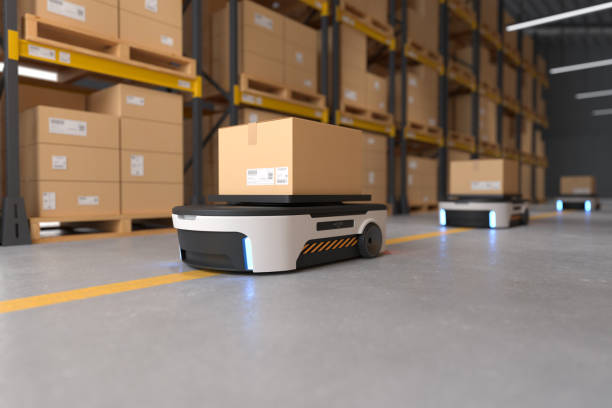
Warehouse teams are under constant pressure to move more orders while maintaining accuracy. Repetitive picking, long travel distances, and seasonal labor demands can make that difficult. Warehouse robotics solutions can take on some of this work, helping facilities improve productivity without putting the entire burden on their workforce.
There are several types of warehouse robots, and each serves a different purpose. Some transport products across the warehouse, while others pick, sort, or handle inventory at specific workstations. Knowing how these systems work is the first step toward choosing the right solution.
With over 40 years of experience in material handling and automation, MTLI Group understands the practical side of implementing warehouse robotics. This guide covers the main types of robotic solutions, the benefits they can provide, and the key factors to consider before adding them to your operation.
What Are Warehouse Robotics Solutions?
Warehouse robotics solutions are technologies that use autonomous or semi-autonomous machines to perform repetitive physical tasks. Instead of relying entirely on workers to move and handle products, robots can take on jobs such as:
- Transporting inventory across the facility
- Picking items for individual orders
- Moving totes between different work zones
- Supporting sorting and order routing
These robots are usually one part of a broader warehouse automation strategy. Software tells the system what needs to happen, while robots handle much of the physical movement. This combination can help warehouses increase throughput and handle growing order volumes more efficiently.
Types of Warehouse Robots Used in Fulfillment
Different warehouse robots are designed to solve different operational challenges. Some transport inventory, while others handle picking or storage. Many facilities use a combination of systems to create a more efficient workflow.
- Autonomous Mobile Robots (AMRs): Navigate the floor independently using sensors and mapping software, carrying totes or pallets between zones.
- Automated Guided Vehicles (AGVs): Follow fixed paths, often magnetic strips or wires, to move heavier loads along predictable routes.
- Robotic picking arms: Use vision systems and grippers to pick individual items from bins or shelves.
- Goods-to-person robots: Bring entire racking & shelving units to a stationary worker instead of sending the worker to the shelf.
- Automated Storage and Retrieval System (AS/RS) robots: Store and retrieve pallets or totes vertically within a dense rack structure.
The right robot depends on what you need it to accomplish. Here's a quick comparison:
| Robot Type | Best Fit For | Typical Mobility |
|---|---|---|
| AMRs | Flexible inventory transport | Free-roaming |
| AGVs | Heavy, repetitive loads | Fixed path |
| Robotic picking arms | High-speed item picking | Stationary |
| Goods-to-person systems | Reducing walk time | Stationary station, mobile shelving |
| AS/RS robots | Dense vertical storage | Fixed rack-based |
Facilities researching ASRS cost often start by evaluating storage automation. From there, they can determine whether adding picking, transportation, or other robotic systems makes sense for their operation.
How Robots Improve Picking Accuracy and Speed
Robotics can make a noticeable difference in picking operations, especially when order volumes are high. By reducing unnecessary movement and helping workers identify the right products, these systems can keep orders moving while limiting common errors.
Here are some of the ways they help:
- Improve picking accuracy: Vision-guided robots and picking systems can reduce wrong-item and wrong-quantity errors.
- Reduce travel time: Goods-to-person systems bring products directly to workers instead of requiring them to walk between locations.
- Maintain steady output: Robots can work at a consistent pace throughout the shift without the natural drop in speed caused by fatigue.
- Improve inventory visibility: Connected systems provide real-time information that makes it easier to find products and manage stock.
The benefits go beyond faster picking. Better accuracy can reduce returns and rework, while shorter travel distances can help workers and robots complete more tasks in less time. Pairing robotics with high-density warehouse storage can further improve space utilization and overall fulfillment efficiency.
Robotics and E-Commerce Order Fulfillment
E-commerce has made fast fulfillment a basic customer expectation. As order volumes grow, warehouses need to process more orders without increasing labor at the same rate. According to the U.S. Census Bureau, 50.8% of businesses using robotics reported using the technology to automate tasks that were previously done by workers.
For fulfillment centers, this can make a real difference during busy periods. Robots can handle repetitive picking, movement, and transportation tasks while employees focus on work that requires more attention. This helps facilities increase capacity without relying as heavily on additional labor every time demand rises.
Robotics can also make it easier to manage seasonal spikes. Instead of hiring and training large numbers of temporary workers for a few weeks or months, facilities can use automation to get more out of their existing capacity. For businesses planning a larger upgrade, turnkey material handling solutions can also bring robotics, racking, electrical work, and construction together as part of one coordinated project.
Costs and ROI of Warehouse Robotics
The cost of warehouse robotics solutions can vary significantly from one project to another. The type of robot, number of units, facility size, integration requirements, and level of automation can all affect the overall investment. Because of these differences, it is better to evaluate the cost based on what the system needs to accomplish rather than looking at the equipment price alone.
| Robotics Investment Level | Approximate Cost Range | Typical Payback Period |
|---|---|---|
| Single robotic cell (e.g., one picking arm) | $75,000 – $300,000 | 1–2 years |
| Fleet of AMRs (10-30 units) | $500,000 – $2 million | 2–3 years |
| Full goods-to-person system | $2 million+ | 3–5 years |
The return on robotics also goes beyond labor savings and faster order processing. Safety can be another important part of the equation. In fact, according to the U.S. Government Accountability Office, transportation and warehousing had the highest rate of serious workplace injuries and illnesses. This is among 19 major industry sectors in 2022, with about 3.8 cases per 100 workers.
Robots can reduce the amount of repetitive lifting, carrying, and long-distance walking required from employees. That can help lower physical strain while also reducing costs associated with injuries, downtime, and employee turnover. When planning broader projects, these factors are worth considering alongside warehouse renovation costs rather than treating robotics as a separate investment.
Signs Your Warehouse Is Ready for Robotics
Robotics can be a valuable addition to a warehouse, but it is not the right starting point for every facility. Before investing, look for signs that your operation has a clear need for automation and the right conditions to support it.
Your facility may be ready for robotics if:
- Picking volume has grown to the point where manual picking can't keep pace
- Labor costs and turnover are eating into margins every quarter
- Existing conveyor or storage automation is already in place, and picking is now the bottleneck
- Facility layout has room for robot pathways or can be adjusted to create them
- Leadership is planning for continued growth rather than a short-term spike
If your facility is expanding or you're planning a new build, it is worth considering robotics early in the process. A partner that provides both industrial construction solutions and automation services can account for robot pathways, equipment placement, power, and other requirements during the initial design. That can help you avoid expensive changes later.
Choosing the Right Warehouse Robotics Company
The right robotics technology can make a major difference, but only when it is properly planned, installed, and integrated. A capable warehouse robotics company should look beyond the robots themselves and understand how they will fit into your existing operation.
When evaluating a provider for warehouse robotics solutions, look for a company that can:
- Assess your workflow: Understand your current processes, bottlenecks, and order volumes.
- Recommend the right technology: Determine whether AMRs, AGVs, robotic arms, or other solutions fit your needs.
- Handle system integration: Make sure robotics work with your WMS, conveyors, storage systems, and other equipment.
- Manage electrical requirements: Ensure the facility has the power and infrastructure needed to support the system.
- Support installation: Oversee installation, testing, and the transition to a fully operational system.
MTLI Group takes this approach with every robotics project. As a warehouse robotics company, we design and install solutions ranging from individual robotic cells to full goods-to-person systems. Our in-house engineering, electrical, and installation teams work under one contract, giving you a single point of contact throughout the project.
Common Challenges When Integrating Robotics
Adding robotics to a warehouse can improve productivity, but the integration process comes with its own challenges. Planning for these issues early can help prevent delays and keep the system running reliably.
Some common challenges include:
- Insufficient power and network infrastructure: Robots depend on reliable power and connectivity, and older facilities often need upgrades before robots can run reliably
- Poor fleet-to-WMS communication: Robots that don't sync properly with your warehouse management system create routing conflicts and blind spots
- Underestimating training time: Workers need time to adjust to working alongside robots safely and efficiently
Getting the Electrical Systems Integration right early on prevents most of these issues from surfacing after robots are already on the floor and running.
Keeping Warehouse Robotics Solutions Running Long-Term
Adding robots to your warehouse is only the beginning. Like any other equipment, robotic systems need regular maintenance to stay reliable and perform at their best. A good maintenance plan should include:
- Sensor checks and calibration: Make sure robots continue to navigate, detect products, and perform tasks accurately.
- Battery and charging checks: Monitor battery health and charging stations to prevent unexpected downtime.
- Software updates: Keep robotic systems and connected software current as order volumes and workflows change.
- Routine inspections: Look for worn wheels, loose components, or other small issues before they cause larger problems.
Regular automated system maintenance helps catch these issues early. A small repair is much easier to manage than a robot going offline during a busy shipping period.
Robotics also does not have to be an all-at-once investment. Many facilities start with a single robotic cell or a small AMR fleet, measure the results, and expand when the system proves its value. Whether you're exploring your first picking robot or planning a larger warehouse robotics solutions rollout, a phased approach can make the process easier to manage.
At MTLI Group, we bring more than 40 years of experience to robotics and automation projects of all sizes. We work with you to understand your facility, order volume, workflow, and goals, then build a solution around what your operation actually needs. If you're ready to explore where robotics could fit into your warehouse, contact us today to discuss your next step.