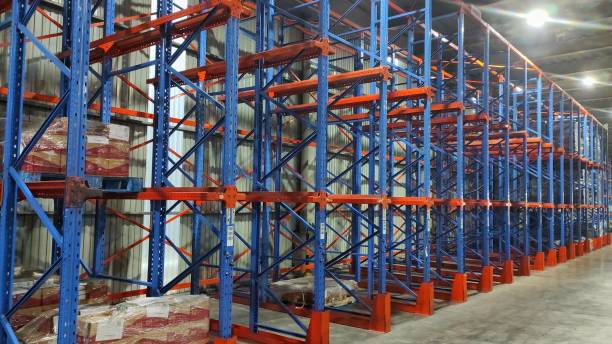
Racking and automation get sold separately more often than they should. A facility buys a racking system from one vendor, then bolts on a robotics platform from another, and spends the next year discovering all the ways the two were never designed to work together. Automated storage racking solutions solve that mismatch by treating storage structure and automated retrieval as one connected system from the start, not two projects stapled together after the fact.
This guide breaks down how racking and automation actually depend on each other, and where operations run into trouble when they don't. MTLI Group approaches both sides through its warehouse automation division, working alongside racking design rather than after it.
Two Systems, One Job: Storing and Moving Product Efficiently
Racking holds product. Automation moves it. That distinction sounds simple, but it's the reason so many facilities end up with systems that don't actually cooperate. A racking layout designed without automation in mind often has aisle widths, beam heights, or pallet positions that a robotic system can't navigate cleanly, forcing expensive rework once the automation gets bolted on.
Warehouse automation covers a wide range of equipment, and understanding the categories helps clarify what a racking system actually needs to support. Our warehouse robotics guide breaks down the main types, from guided vehicles to fully automated retrieval systems. Whatever the automation type, it still needs a properly engineered structure underneath it, which is where our warehouse racking systems division comes in, designing racking with automation dimensions as a starting input rather than an afterthought.
The Racking Side of the Equation
Every automated system still needs somewhere to put product, and that's where the racking structure comes in. Pallet racking remains the backbone of most warehouse layouts, whether the facility runs manual forklifts or fully automated retrieval. Our pallet racking systems team builds these with beam spacing and tolerances tighter than a standard manual system requires, since automated equipment has far less room for error than a human operator correcting on the fly.
Getting that precision right during installation matters as much as the design itself. A rack that's out of square by even a small margin can throw off an automated guidance system entirely. That's the level of accuracy our racking installation crews build to on every automated project.
The Automation Side of the Equation
On the automation side, the equipment itself ranges from relatively simple to highly complex, and the right level depends on volume, SKU count, and how fast a facility needs product moving. Heavier automated systems bring their own installation demands, particularly around power, structural anchoring, and safety zoning. Projects at this scale typically route through our heavy industrial installation team, since the equipment itself often weighs and draws far more than a standard conveyor line.
That same structural precision extends to the racking underneath heavier automation. Our structural racking work accounts for the dynamic forces automated equipment adds during operation, not just the static weight of stored product.
Matching Racking Configuration to Automation Type
Not every racking configuration works with every level of automation, and mismatching the two is one of the most expensive planning mistakes a facility can make.
Standard selective racking pairs well with automated guided vehicles and basic conveyor sortation, since aisle widths and pallet positions stay relatively conventional. High-density configurations, including deep-lane and shuttle-based systems, require automation built specifically for narrower access and denser storage. Rack-supported structures go a step further, using the racking itself as the building's structural frame, which changes how automation equipment gets anchored and powered throughout the facility.
| Racking Configuration | Compatible Automation | Density Level |
|---|---|---|
| Standard Selective Racking | AGVs, basic conveyor systems | Moderate |
| High-Density Shuttle Racking | Shuttle-compatible retrieval systems | High |
| Rack-Supported Structure | Integrated ASRS, robotic picking | Highest |
Facilities pursuing maximum density often move toward our high-density storage configurations specifically because they pair with automated retrieval far more efficiently than manual picking ever could. For operations planning a full rack-supported building rather than a conventional structure with racking installed inside it, our automated storage racking solutions design the racking as the primary structural system from day one.
Why More Operations Are Combining Racking and Robotics
Combining racking and automation isn't a trend chasing itself. It's a direct response to a labor market that keeps getting tighter for warehouse operators. Nationally, 83 percent of supply chain leaders expect their organizations to adopt robotics and automation within the next five years, according to MHI's most recent industry survey, making it one of the most widely anticipated technology investments across the sector.
The jobs impact of that shift looks less dramatic than the headlines suggest. Federal data on technology adoption found no statistically significant difference between the share of businesses that grew their workforce after adopting robotics (9.5 percent) and the share that saw workforce numbers decline (8.1 percent), according to the Census Bureau's Annual Business Survey. In practice, automation tends to shift where labor gets applied rather than eliminating it outright, a pattern that matters for operations in 3PL and logistics balancing tight margins against rising client service expectations.
What Changes When Racking and Automation Are Designed Together
When a warehouse robotics company and a racking provider work from the same plan instead of separate ones, a few things change immediately. Tolerances get tighter from the start, since both teams know exactly what the automated equipment needs to function reliably. Structural loads get calculated once, accounting for both static storage weight and the dynamic loads automated equipment adds during operation.
| Factor | Racking and Automation Designed Separately | Racking and Automation Designed Together |
|---|---|---|
| Installation Tolerances | Often mismatched, requires rework | Aligned from initial design |
| Structural Load Planning | Calculated twice, inconsistently | Calculated once, comprehensively |
| Permitting and Engineering | Duplicated across two vendors | Handled as a single scope |
| Project Timeline | Sequential, slower | Overlapping, faster |
That permitting overlap matters more than it might seem. Our engineering and permits team handles structural documentation for the racking and automation scope together, avoiding the delays that come from two separate permit applications covering interdependent systems. Facilities adding a second working level to the mix also benefit from this coordination, since mezzanine and platform structures built above automated racking need the same load calculations extended a level higher.
Common Missteps When Combining Racking and Automation
The most frequent mistake is sequencing the two projects instead of planning them together. A facility installs racking first, then discovers months later that the automation vendor needs different aisle widths or beam heights than what's already in place, forcing a costly retrofit. Businesses in manufacturing run into this often when adding automation to an existing racking system installed years earlier without automation in mind.
Underestimating structural load is another recurring issue, since automated equipment adds dynamic forces that static racking calculations don't account for on their own. Choosing a contractor without direct experience in both disciplines compounds the risk further, since a team that only knows racking, or only knows automation, is likely to miss the points where the two systems actually interact. Projects planning new construction from scratch have an advantage here, since warehouse construction built around a defined automation plan avoids most of these conflicts entirely.
How MTLI Builds Racking and Automation Together
Our automated storage racking solutions design racking and automation as one connected project rather than two separate scopes handed to different vendors, so tolerances, load calculations, and permitting all reflect the full system rather than half of it.
This approach matters especially for operations in warehousing and distribution, where storage density and retrieval speed both directly affect throughput and where a disconnect between the two systems shows up immediately in daily performance. Learn more about industrial warehouse racking solutions designed to maximize storage capacity, improve operational efficiency, and support warehouse automation.
Get Automated Storage Racking Solutions From MTLI
Automated storage racking solutions work best when the racking and the automation running through it are planned as a single system, not two separate purchases made months apart. Facilities that design both together avoid the rework, mismatched tolerances, and structural gaps that come from treating storage and automation as unrelated projects.
MTLI Group delivers automated storage racking solutions for operations across the country, backed by in-house expertise on both the racking and automation side. Contact our team to talk through your facility's storage and automation plans.