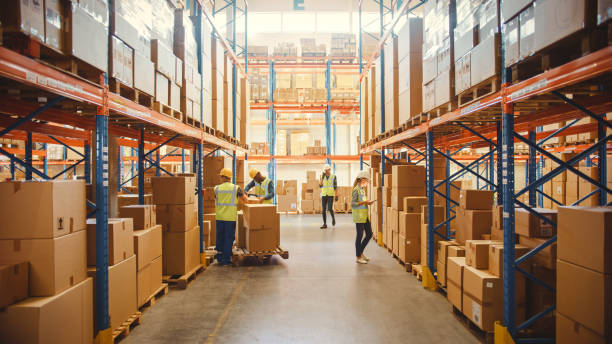
Every hour a shipment sits waiting to leave the building is an hour that customer expectations keep climbing against. Warehouse shipping efficiency has become one of the clearest differentiators between operations that keep pace with modern delivery expectations and those that fall behind, and automation is the primary lever operations managers have to close that gap without simply adding more staff to the shipping dock.
MTLI Group, part of the MTLI group serving operations teams across the US, works on the conveyor, sortation, and material handling systems that move shipments through a facility faster. This blog looks at how automation improves warehouse shipping efficiency specifically, which technologies deliver the most direct impact, and how to evaluate where a facility shipping process is losing time.
Why Warehouse Shipping Efficiency Has Become a Bigger Priority
Freight volume across the US economy continues to grow at a scale that makes shipping efficiency a competitive necessity rather than an optional improvement. Shipments of goods reached 12.2 billion tons valued at $18.0 trillion in 2022, with trucks hauling 68.1 percent of total tonnage and 56.4 percent of all tonnage traveling less than 50 miles, according to the latest Commodity Flow Survey from the Census Bureau and the Bureau of Transportation Statistics. That volume moves through warehouses and distribution centers before it ever reaches a truck, which puts direct pressure on how efficiently a facility can process and stage outbound freight.
Labor market projections point in the same direction. The transportation and warehousing sector are projected to add 198,800 jobs between 2024 and 2034, with the freight transportation arrangement industry growing 10.0 percent, the fastest of any industry in the sector, driven largely by growing demand for faster product shipping and delivery. Facilities competing for labor in that growing sector have a strong incentive to automate the shipping functions that scale poorly with manual staffing alone.
Core Automation Technologies That Drive Faster Fulfillment
Several automation categories consistently deliver measurable gains in warehouse shipping efficiency, though the right combination depends on order profile and facility layout.
Conveyor and sortation systems move goods from picking and packing zones directly to the correct outbound dock or carrier lane, eliminating the manual transport time that otherwise slows down faster fulfillment. Facilities considering this route often start by reviewing a Conveyor sorter suited to their parcel volume, since sortation accuracy directly affects how quickly outbound freight gets staged correctly the first time.
Automated labeling and manifesting remove a manual step that otherwise creates a bottleneck right before shipments leave the building. Automated systems apply shipping labels and generate manifests in real time as packages move through the line, rather than requiring a worker to process each shipment individually at a workstation.
Dock scheduling software coordinates inbound and outbound trailer appointments to reduce dock congestion, ensuring outbound freight has an available door and loading crew ready at the moment it is staged rather than sitting in a queue.
Automated storage and retrieval systems speed up the picking process that precedes shipping, since faster retrieval directly compresses the time between order receipt and dock departure. Facilities weighing this investment should review ASRS systems cost against their current SKU count and retrieval times before committing.
Warehouse management system integration ties all of these pieces together, providing real-time visibility into where every order sits in the fulfillment process and flagging bottlenecks before they delay a shipment past its committed ship date.
The table below compares these technologies across their primary impact on warehouse shipping efficiency.
| Automation Technology | Primary Shipping Impact | Best Suited For |
|---|---|---|
| Conveyor and sortation | Reduces manual transport and sorting time | High parcel volume, multiple carrier lanes |
| Automated labeling and manifesting | Eliminates manual processing bottleneck | High-volume outbound shipping |
| Dock scheduling software | Reduces dock congestion and wait time | Facilities with heavy inbound and outbound traffic |
| Automated storage and retrieval | Speeds up pre-shipping picking process | High SKU count, dense storage needs |
| WMS integration | Provides real-time order status visibility | All facility types, especially multi-stage fulfillment |
Logistics Optimization Beyond the Warehouse Walls
Logistics optimization extends past the shipping dock into how orders get sequenced and routed once they leave the facility. Carrier selection algorithms evaluate cost, speed, and service level in real time, assigning each shipment to the carrier and service level that best matches the order's actual delivery requirement rather than defaulting to a single preferred carrier regardless of fit.
Route optimization software for outbound deliveries adjusts based on traffic, weather, and last-minute order changes, a capability that matters increasingly as customers expect narrower delivery windows. Facilities coordinating logistics optimization across both the internal shipping process and outbound carrier logistics see compounding gains, since delays anywhere in that chain push back the final delivery time regardless of how quickly the warehouse itself processed the order.
Wave planning software groups orders into batches based on shipping cutoff times, carrier pickup schedules, and picking efficiency, ensuring the highest-priority shipments get processed first rather than working through orders in whatever sequence they arrived.
Identifying Where Your Shipping Process Loses Time
Before investing in new automation, operations managers benefit from mapping the current shipping process to identify exactly where time gets lost between order receipt and dock departure.
Picking and packing delays often account for the largest share of total fulfillment time, particularly in facilities with high SKU counts or complex, multi-item orders. Facilities storing a large number of SKUs in a limited footprint often look at a high density distribution center layout to shorten travel distance during picking.
Manual sortation errors create rework that delays shipments significantly more than the original sorting step would have taken if done correctly the first time. Automated sortation reduces this rework by routing packages correctly based on scanned data rather than manual visual sorting.
Dock congestion frequently traces back to scheduling gaps rather than a lack of physical dock capacity. Facilities experiencing regular bottlenecks at the dock should evaluate scheduling software before assuming the solution requires additional physical infrastructure.
Documentation and labeling delays at the point of shipment often stem from manual, single-order processing that automated labeling systems eliminate almost entirely.
The table below outlines a general framework for prioritizing shipping efficiency improvements based on where delays concentrate.
| Bottleneck Location | Likely Root Cause | Automation Solution |
|---|---|---|
| Picking and packing | Manual travel time, complex multi-item orders | Conveyor systems, automated storage retrieval |
| Sortation | Manual visual sorting errors | Automated sortation with scanning verification |
| Dock staging | Scheduling gaps, uncoordinated appointments | Dock scheduling software |
| Final processing | Manual label and manifest generation | Automated labeling and manifesting systems |
Calculating the Return on Shipping-Focused Automation
Warehouse shipping efficiency improvements deliver value in ways that extend beyond simple labor savings, and a complete evaluation should account for the full picture.
Faster processing time allows a facility to accept later order cutoffs while still meeting the same-day or next-day commitments customers increasingly expect, which can directly support revenue growth rather than just cost reduction. Reduced shipping errors lower the cost of returns, reshipments, and the customer service overhead that comes with correcting mistakes after a shipment has already left the building.
Facilities evaluating a conveyor or sortation investment specifically should factor in installation quality, since a Mechanical installation company with experience sequencing shipping-critical work around live operations reduces the disruption of bringing a new system online.
Integration and Electrical Requirements for Shipping Automation
Automation projects focused on shipping efficiency, particularly conveyor and sortation systems paired with automated labeling equipment, require electrical automation solutions capable of supporting the controls, sensors, and connectivity these systems depend on. Facilities underestimating this integration work often face delays getting a new shipping automation system fully operational, since the mechanical installation is only part of what needs to come together before the system performs as designed.
Coordinating electrical work alongside the physical installation, rather than treating them as separate projects handled by different vendors, reduces the risk of integration gaps that show up only after the system is supposed to be running at full capacity.
Maintaining Shipping Automation Reliability
Automated shipping systems need consistent uptime more than almost any other warehouse function, since a conveyor or sortation failure during peak shipping hours directly delays outbound freight with no manual fallback that matches the same throughput. A structured automated system maintenance program focused specifically on shipping-critical equipment reduces the risk of a breakdown cascading into missed carrier pickups or late shipments.
How MTLI Group Supports Warehouse Shipping Efficiency Projects
MTLI Group works with operations teams across the US to design and install the conveyor, sortation, and electrical infrastructure that drives faster fulfillment and improved warehouse shipping efficiency. Services span equipment installation, controls integration, and ongoing maintenance built around shipping-critical systems, backed by a construction management company approach that keeps every trade on the same schedule.
With over 40 years of experience and more than 15,000 completed projects, MTLI Group helps operations managers identify where their shipping process loses time and design an automation approach matched to their specific order profile and outbound volume.
Strengthening Warehouse Shipping Efficiency Through Automation
Warehouse shipping efficiency depends on more than any single piece of equipment. Conveyor and sortation systems, automated labeling, dock scheduling, and warehouse management system integration all contribute to faster fulfillment when they work together as a coordinated process rather than isolated upgrades. Facilities that map their current bottlenecks before investing, then prioritize the automation that addresses the biggest delays first. See the strongest and most measurable improvement in how quickly orders move from receipt to departure.
MTLI Group helps operations teams design and install the automation that drives warehouse shipping efficiency gains. Contact MTLI Group to discuss shipping automation options for your facility.