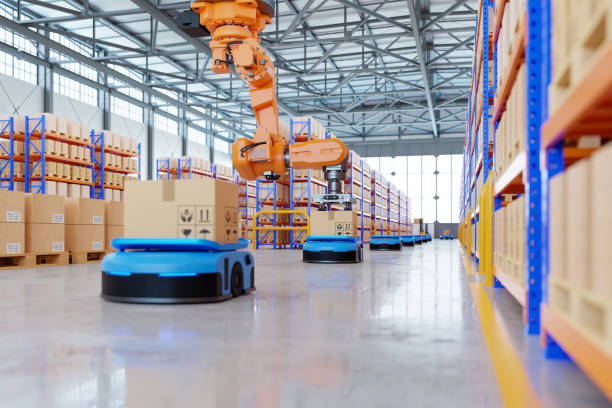
Automating a warehouse that already exists is a different job than automating one being built from scratch. Columns sit where they sit. Dock doors are already placed. Ceiling height is fixed. A brownfield warehouse automation company has to design around all of it, working within constraints a greenfield project never has to consider.
MTLI Group works as a hands-on installation partner for facilities retrofitting existing space rather than starting over with a new structure.
Brownfield vs. Greenfield: Why the Starting Point Changes Everything
A greenfield project starts with an empty site and a clean set of specifications. Column spacing, ceiling height, floor load, and power capacity all get designed around the automation from day one. A brownfield project starts with none of that flexibility. Every decision has to work around a building that already exists, with electrical infrastructure, structural limits, and floor plans that were likely never intended to support warehouse automation at all.
That difference shows up immediately in the electrical scope. Older facilities frequently need panel upgrades or entirely new circuits before automated equipment can even be powered, work that falls under electrical automation services rather than the automation project itself.
What a Brownfield Site Assessment Actually Uncovers
Before any automation goes in, a brownfield project needs a full assessment of what the existing building can and cannot support. This covers structural capacity, current electrical infrastructure, ceiling clearance, column spacing, and floor conditions, since any one of these can limit which automation technologies are actually viable. Equipment installation carries its own constraints too, since fitting automated systems into an existing footprint often means working around fixed columns and low clearance points that a new build would never have to navigate. Our automation equipment installation team handles this kind of constrained fit regularly.
This is where many retrofit projects go sideways before they even start, because the assessment gets rushed or skipped entirely. A proper automation retrofit assessment takes the time to map these constraints against the client's throughput goals, rather than proposing a technology first and discovering the building can't support it later.
Matching Automation Technology to an Existing Footprint
Not every automation technology fits every existing building, and a brownfield project usually means choosing from a narrower set of options than a new facility would have.
Shuttle systems often offer the best starting point for a retrofit, since they can work within existing racking in many cases without major structural demands. Our shuttle system team evaluates whether current racking can support this option before recommending it. Conveyor systems tend to adapt well to existing footprints too, since they can be routed around fixed obstacles with more flexibility than other technologies, an approach our conveyor systems division designs around building constraints rather than a blank floor plan.
| Technology | Retrofit Flexibility | Key Building Requirement |
|---|---|---|
| Conveyor Systems | High | Moderate clearance, flexible routing |
| ASRS | Lower | Tall clear height, reinforced floor load |
| Shuttle Systems | Moderate to high | Compatible racking structure |
The Push Toward Retrofitting Instead of Rebuilding
Robot adoption across North America climbed sharply last year, a sign that automation is becoming a default investment rather than an experiment. Companies ordered 36,766 robots valued at $2.25 billion in 2025, a 6.6 percent increase in units and a 10.1 percent rise in revenue compared to 2024, according to the Association for Advancing Automation. Much of that growth came from general industries outside automotive, the same sectors where existing buildings in warehousing and distribution make up most of the available facility stock.
Rising labor costs are pushing this trend further. Average hourly earnings for private-sector workers climbed 3.1 percent over the year to $37.75 as of August 2026 , according to the Bureau of Labor Statistics, adding sustained pressure on facilities relying heavily on manual labor.
Retrofit Costs Against What They Actually Return
Retrofit projects carry different cost drivers than new construction. Electrical upgrades, structural reinforcement, and working around an active facility all add expense that a greenfield project avoids, but the retrofit still typically costs less overall than relocating to a new building sized for automation from the start. ASRS installations show this tradeoff most clearly, since our ASRS installation team often needs to confirm reinforced floor load before recommending the system for an older building.
| Value Driver | Brownfield Retrofit | New Facility Build |
|---|---|---|
| Upfront Cost | Lower than relocation | Higher, full construction |
| Timeline | Weeks to months | Many months to over a year |
| Operational Disruption | Manageable, often phased | None until move-in |
| Building Constraints | Present, must design around | None, built to spec |
For manufacturing operations working within existing buildings, retrofitting automation into current space is often faster and less capital-intensive than either a new build or an extended search for a bigger facility.
Where Brownfield Projects Typically Derail
The most common failure point is choosing automation technology before the building assessment is complete, locking in a plan that the existing structure simply cannot support without expensive rework. A close second is underestimating how much electrical infrastructure work an older facility actually needs, an expense that often gets discovered mid-project rather than planned for upfront. Choosing a warehouse automation company with limited retrofit experience is often the root cause of both problems, since brownfield work demands a different skill set than greenfield installation projects built around a blank slate.
Coordination gaps cause problems too. Facilities serving 3PL and logistics clients cannot always pause operations for a lengthy retrofit, and a contractor without a clear phasing plan can end up disrupting live operations far more than necessary.
How MTLI Approaches a Brownfield Automation Retrofit
Our warehouse automation company treats every brownfield project as its own puzzle, starting with a full site assessment before recommending any specific technology. This avoids the common mistake of forcing a preferred solution onto a building that was never designed to support it.
As a warehouse system integrator, we coordinate electrical, structural, and automation work under one team, which matters most in facilities that need to keep running during the retrofit. This approach has proven especially valuable for e-commerce fulfillment operations, where seasonal volume swings make phased, disruption-minimal installation a real business requirement rather than a nice-to-have.
Work With a Warehouse System Integrator Built for Retrofits
Automating an existing facility takes a different approach than building automation into new construction, and choosing a warehouse automation company without genuine brownfield experience is one of the most common reasons these projects run over budget or over schedule. The right warehouse system integrator designs Warehouse Robotics Solutions around the building that already exists, not the other way around.
MTLI Group brings that experience to facilities across the country, delivering Warehouse Robotics Solutions built specifically for existing buildings. Contact our team to talk through what your facility can support.