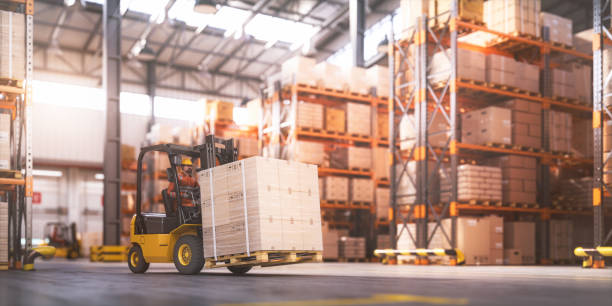
Running out of warehouse space can put pressure on every part of an operation. More inventory means more pallets, more storage locations, and eventually less room to move. While expanding may seem like the obvious answer, making better use of your existing footprint can often be a more practical place to start.
ASRS offers one way to do that. These systems use vertical space and automated storage methods to increase capacity without requiring a larger building. For facilities with enough clear height and the right storage profile, that can create significant additional capacity within the same footprint.
MTLI Group has more than four decades of experience helping facilities plan and implement material handling solutions. Leveraging that experience, we'll break down how ASRS increases warehouse capacity, what makes a facility a good candidate, and what the installation process involves.
The Real Cost of Running Out of Warehouse Space
Space constraints rarely happen overnight. Order volumes increase, inventory levels grow, and storage areas slowly become harder to manage. Eventually, pallets start filling temporary areas, aisles become tighter, and finding a place for new inventory becomes a daily challenge.
The demand for warehouse space makes that problem even harder to solve. According to the U.S. Energy Information Administration, warehouse and storage buildings are the most common type of commercial building in the country. They have more than 17.4 billion square feet nationwide. With continued demand for industrial space, finding additional square footage in the right location may not be as simple or affordable as it sounds.
Running out of space can affect much more than storage capacity. Some of the most common problems include:
- Blocked aisles: Overflow inventory can make it harder for workers and equipment to move through the facility.
- Slower picking: Employees spend more time navigating crowded areas and locating products.
- Poor inventory organization: Temporary storage makes it harder to maintain consistent product locations.
- Less room for growth: Floor space used for overflow cannot be used for new equipment, processes, or additional inventory.
That is why increasing the capacity of your existing footprint can be worth considering before moving to a larger facility. For some operations, using vertical space and improving storage density can create room for growth without adding another building to the equation.
What ASRS Systems Actually Do
An automated storage and retrieval system (ASRS) combines automated equipment, storage structures, and software to move inventory in and out of storage with minimal manual handling. Depending on the system, cranes, shuttles, or robotic carriers can move pallets, cases, or totes through high-density storage areas. This is all without requiring a forklift operator to travel through every aisle.
At a basic level, ASRS can help facilities:
- Store inventory vertically: Products can be placed in tall, dense storage structures to make better use of available building height.
- Retrieve products automatically: The system locates and delivers requested inventory to a picking, packing, or shipping area.
- Track inventory in real time: Software records where each pallet, tote, or case is stored, making inventory easier to locate and manage.
- Reduce aisle space: Automated equipment can operate in narrower aisles than traditional forklifts, creating more room for storage.
The result is a storage system that can hold more inventory within the same footprint while reducing the manual travel involved in storing and retrieving products. For facilities researching how much do ASRS systems cost, understanding these capabilities is an important first step. This is because the right system depends on how much inventory you need to store, how quickly it moves, and how much space you have available.
A Look at the Main Types of ASRS
ASRS is not a single type of technology. Different systems are designed for different loads, storage needs, and retrieval speeds. The right choice depends on what your facility stores, how quickly inventory moves, and how much space you have available.
Here's a quick look at the main ASRS categories:
| ASRS Type | Best For | Typical Storage Density |
|---|---|---|
| Unit-load AS/RS | Full pallets, heavier loads | High |
| Mini-load AS/RS | Cases, totes, smaller items | Very high |
| Shuttle-based systems | High-throughput picking | High |
| Vertical lift modules | Small parts, tight footprints | Very high |
Unit-load systems are generally a strong fit for distribution centers that move full pallets and need high-capacity storage. Mini-load and shuttle systems are better suited to operations handling smaller items or frequent order activity. Vertical lift modules can be especially useful when a facility wants to increase storage density within a relatively small footprint.
The best option is not necessarily the system with the highest storage density. It needs to match your inventory profile, throughput requirements, building height, and day-to-day workflow.
How Much Capacity Can Vertical Storage Actually Add?
Going vertical can create significantly more storage capacity without adding more floor space. The actual increase depends on your building height, rack configuration, aisle requirements, inventory profile, and the type of ASRS selected.
Several factors can make a major difference:
- Greater storage height: Traditional racking may leave valuable vertical space unused, while ASRS can take advantage of much greater building height.
- Higher storage density: Automated systems can place inventory in tighter configurations, allowing more storage locations within the same footprint.
- Narrower aisles: ASRS equipment can operate in narrow aisles without needing the turning space required by traditional forklifts.
- Better use of the existing footprint: By combining vertical storage with a denser layout, facilities can create additional capacity without expanding the building.
The exact capacity increase will vary from one facility to another. That is why facilities considering this approach often evaluate ASRS alongside a broader dense storage system strategy. Planning the racking, aisle layout, automation, and available building height together helps ensure you're getting the most storage capacity possible.
ASRS vs. Building a New Facility
When a warehouse reaches its storage limit, moving into a larger building can seem like the obvious next step. But it is not the only option. Before committing to new construction, it is worth comparing the cost, timeline, disruption, and capacity potential of expanding within your existing footprint through ASRS.
The table below gives a simple side-by-side comparison:
| Factor | ASRS Installation | New Facility Construction |
|---|---|---|
| Typical timeline | 4-9 months | 18-36 months |
| Ongoing lease/land cost | None (uses existing footprint) | New lease or land purchase |
| Disruption to operations | Phased, limited | Full relocation often required |
| Capacity gain | 30-50%+ in existing footprint | Dependent on new building size |
The financial comparison goes beyond the initial construction cost, too. According to the U.S. Census Bureau, total U.S. construction spending was running at a seasonally adjusted annual rate above $2.1 trillion in mid-2026. With new construction involving land, design, permitting, labor, and ongoing occupancy costs, expanding storage capacity within an existing facility can be an attractive alternative.
For facilities that have enough building height and a suitable layout, ASRS can provide a way to add meaningful capacity without taking on another property. The key is to determine whether your current building has the right conditions to support it.
Where ASRS Pays Off Fastest
ASRS can deliver strong value across many types of facilities, but some operations are better positioned to benefit than others. The biggest opportunities usually appear where space is expensive, inventory is dense, or manual retrieval takes up a significant amount of labor.
Automated storage racking solutions can be especially valuable for:
- Cold storage facilities, where every square foot of refrigerated space is expensive to build and operate
- High-SKU-count operations, like parts distributors, where thousands of small items need precise, fast retrieval
- E-commerce fulfillment centers, where order volume keeps climbing but land near population centers is limited
- Facilities with high ceilings already, since vertical storage automation makes the most of clearance that's otherwise wasted
If you're comparing ASRS with building a new facility, it is worth looking at both options based on your actual space needs, timeline, and budget. A commercial construction company can help you understand what a new build would involve. Meanwhile, an ASRS company can help determine how much additional capacity your existing facility could support.
What Installation Actually Involves
Installing an automated storage and retrieval system is a multi-stage project, and the work needs to be coordinated carefully from the beginning. While the exact process varies by facility, most projects follow a similar path:
- Facility assessment. An engineer evaluates ceiling height, floor load capacity, and existing layout to confirm what's feasible.
- System design. The ASRS type, rack structure, and software integration get mapped to your specific inventory and order profile.
- Site preparation. Floors, power, and any structural reinforcement get handled before equipment arrives.
- Installation and commissioning. The racking and automation go in, followed by testing to confirm accuracy and throughput.
- Staff training and go-live. Teams learn the new workflow, and the system transitions into full operation, often in phases to limit downtime.
Getting these steps in the right order can make a major difference. Working with ASRS company experienced in automated storage racking solutions helps ensure the facility is ready before equipment arrives. It also keeps the different parts of the project working together.
Finding the Right ASRS Company
Choosing an ASRS company is about more than finding someone who can supply the equipment. A successful project may involve structural requirements, racking, electrical systems, controls, software integration, and installation. Your partner should understand how all of these pieces fit together.
MTLI Group takes a complete approach to automated storage and retrieval system projects. As an ASRS company, we can support the process from facility assessment and system planning through racking, electrical work, installation, and integration. Keeping these services coordinated under one team helps reduce handoff issues and gives you a clear point of accountability throughout the project.
Ready to Put Your Warehouse Space to Work?
Running out of warehouse space does not automatically mean you need a bigger building. For the right facility, ASRS can create additional storage capacity by making better use of vertical space, tightening the storage footprint, and automating the movement of inventory.
The right answer depends on your building, inventory, throughput, and growth plans. MTLI Group can help you evaluate those factors and determine whether ASRS is a practical way to expand your capacity without expanding your footprint.
We've spent over four decades helping facilities solve exactly this kind of space problem. We'll walk around your facility, look at your ceiling height and layout, and tell you honestly whether ASRS makes sense for your operation. Get in touch to start the conversation.