AMR Systems
AMR systems deliver automation without bolting anything to the floor: robots that navigate live around people and forklifts. As a warehouse robotics company, MTLI designs AMR fleets for warehouse picking and industrial material moves, integrated with your WMS and scaled as volume grows.
What Are AMR Systems and How Do They Work?
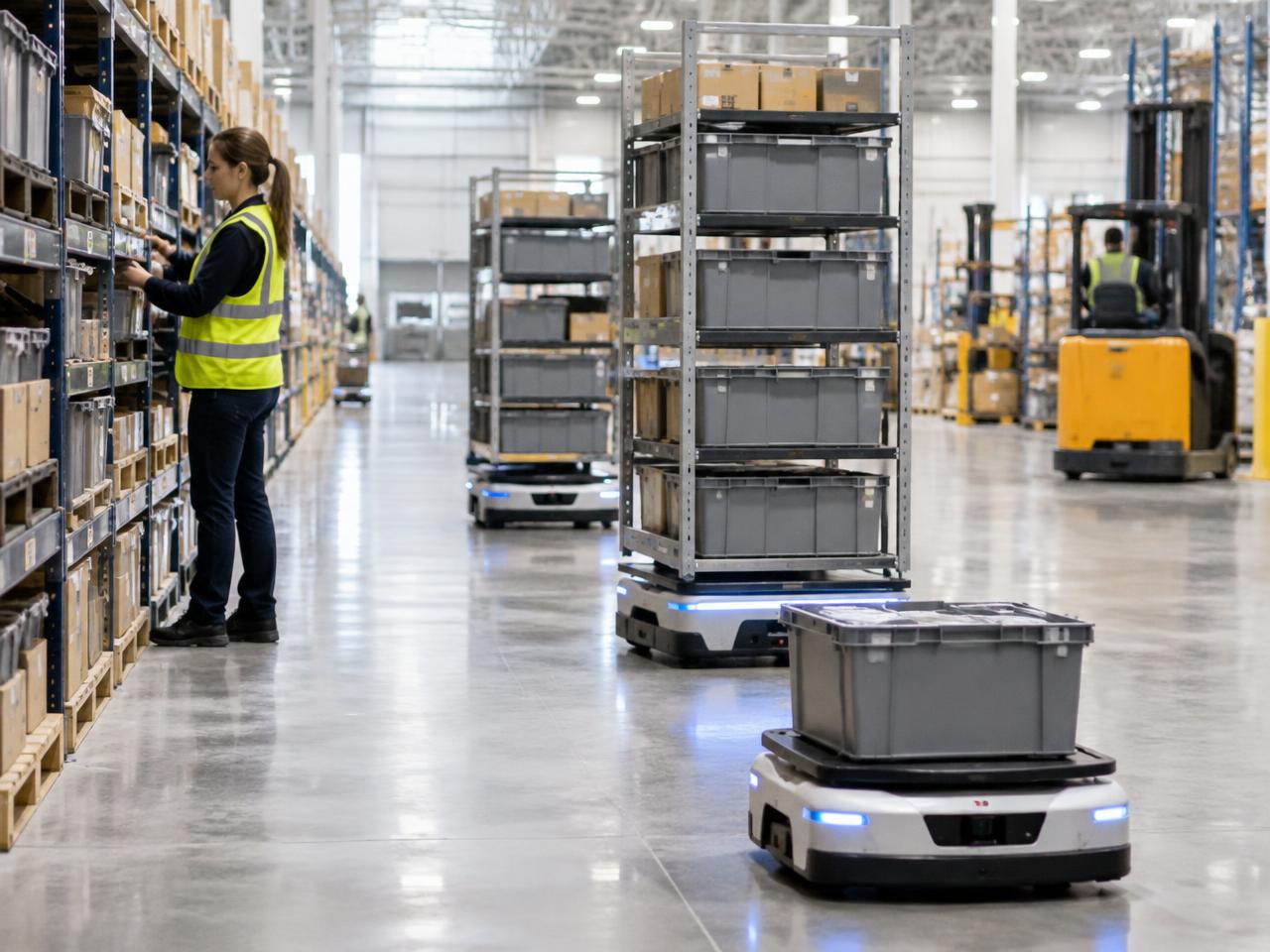
AMR systems use autonomous mobile robots to transport materials, inventory, and products within warehouses and industrial facilities. Unlike traditional automated equipment that follows fixed paths or requires dedicated floor infrastructure, these robots navigate their surroundings and adjust their routes based on changing conditions.
AMRs use sensors, mapping technology, and navigation software to identify their surroundings, move through designated areas, and respond to obstacles. They can operate around employees, forklifts, and other warehouse equipment while completing assigned material movement tasks.
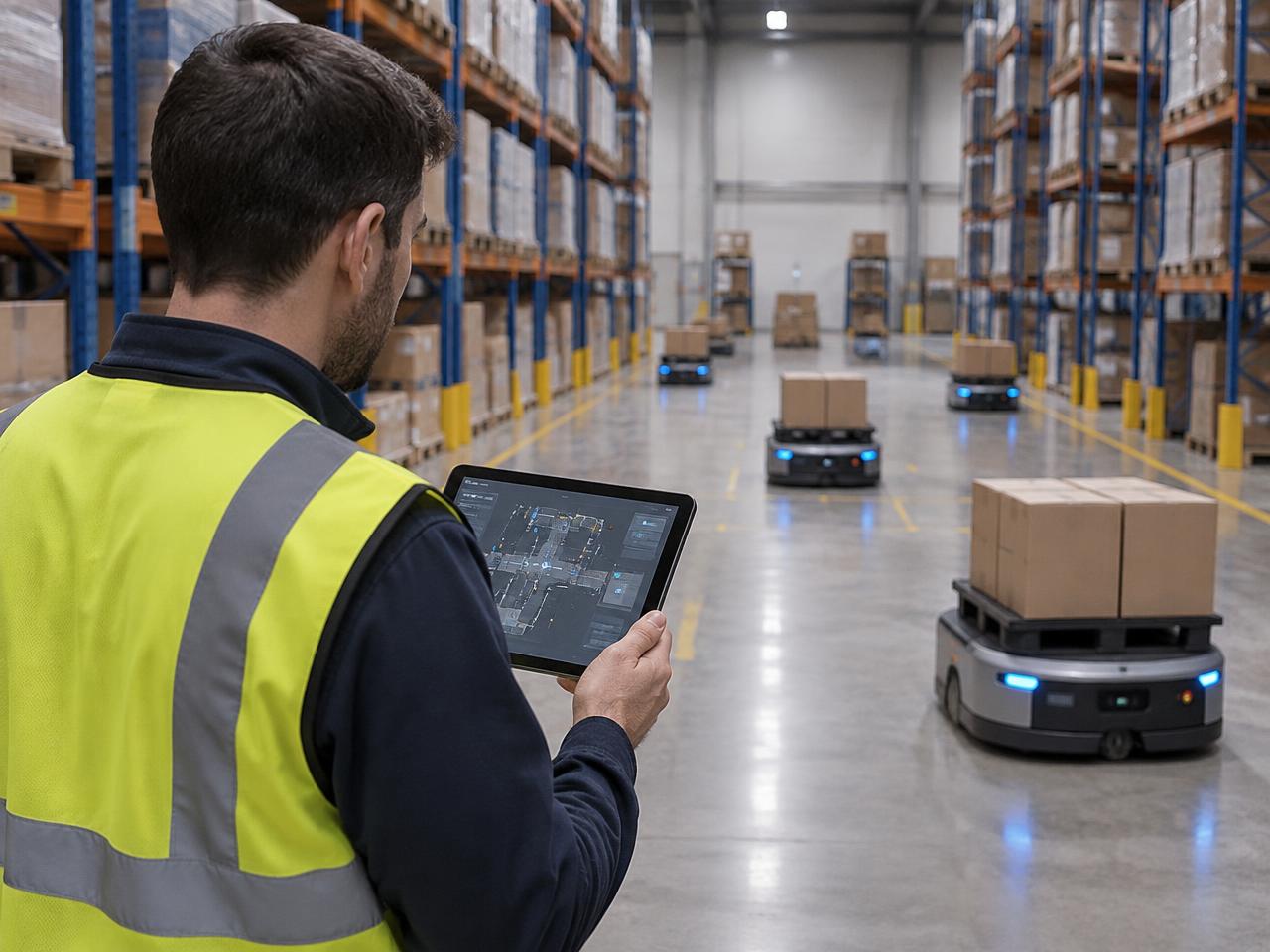
A fleet management system coordinates robot activities, assigns tasks, manages routes, and monitors charging requirements. When connected to a warehouse management system (WMS), the fleet can receive information about orders, waves, and inventory locations. This allows robot movements to align with existing warehouse workflows.
MTLI designs AMR systems around each facility's order profiles, travel patterns, and material handling requirements. From initial fleet planning to WMS integration and deployment, our approach focuses on identifying suitable workflows for automation.
The MTLI Advantage
- Deploy in weeks: no rails, wires, or structural changes
- Warehouse picking: goods-to-person and zone-to-zone flows
- Industrial duty: totes, carts, and pallets between processes
- Scales robot by robot instead of one giant capital hit
- Brand-agnostic fleet selection across the leading platforms
- Phased entry points that start under $100K
Picking AMRs
Robots that meet pickers at the shelf and carry orders away.
Goods-to-Person AMRs
Shelf-to-station systems that bring inventory to operators.
Tote & Cart AMRs
Zone-to-zone movement replacing walk time and cart pushes.
Industrial AMRs
Material delivery between processes in live plants.
Fleet Management
Orchestration, charging strategy, and exception handling.
WMS Integration
Orders, waves, and locations synced to the fleet.
Benefits of Implementing AMR Systems in Warehouses
Introducing AMR systems can help businesses improve material movement and reduce manual travel across warehouse operations. These warehouse robotics solutions offer flexibility in how automation is introduced, allowing facilities to begin with specific workflows and expand as operational requirements change.
Reduce Manual Travel
AMRs transport inventory, totes, and carts between warehouse locations, reducing the time employees spend walking through aisles or pushing carts. This allows teams to focus on other warehouse activities.
Improve Material Movement
Automated robots support the movement of materials between picking areas, storage locations, workstations, and operational zones. This helps coordinate internal transportation across different stages of warehouse activity.
Deploy Without Fixed Infrastructure
AMRs can navigate facilities without requiring fixed rails, floor-mounted wires, or major structural changes. This can make automation easier to introduce into existing warehouse environments.
Scale Operations Gradually
Businesses can begin with a smaller fleet and add robots as order volumes and operational needs increase. This phased approach helps avoid committing to a large automation investment at the outset.
Support Changing Warehouse Layouts
Because AMRs navigate their surroundings rather than depending on fixed travel paths, they can accommodate changes to warehouse layouts and operating zones. Routes and workflows can be adjusted as facility requirements evolve.
Manage Seasonal Demand
Fleet capacity can be adjusted to address changes in order volumes. Seasonal robot rentals, where available on supported platforms, can help businesses manage periods of increased demand.
Industries That Benefit from Autonomous Mobile Robots
Autonomous mobile robots can support material transportation and internal workflows across different industrial and commercial environments. Their applications depend on the materials being moved, facility layout, and operational processes.
E-commerce and Retail
E-commerce and retail distribution facilities can use AMRs to support order picking, tote transportation, and movement between storage and packing areas. These applications help coordinate internal movement as order volumes change.
Manufacturing
Manufacturing facilities can use robots to deliver components, supplies, and materials between production processes. This supports internal transportation within active plants without requiring fixed conveyor routes for every movement task.
Automotive and Parts Distribution
Automotive facilities and parts warehouses can use mobile robots to transport components and inventory between storage areas and operational workstations. The fleet can be planned around the facility's material movement requirements.
Food and Beverage
Food and beverage distribution operations can use AMRs to move packaged products, containers, and supplies between designated warehouse zones. Robot selection should account for the facility environment and the materials being handled.
Key Factors to Consider When Choosing Warehouse Robotics Solutions
Selecting suitable warehouse robotics solutions requires an understanding of how materials move through your facility and where automation can provide practical value. Before choosing a platform or determining fleet size, businesses should evaluate the following factors:
Warehouse Layout and Travel Paths
Review aisle widths, storage arrangements, operating zones, and travel distances. These details help determine where robots can operate and how routes should be planned.
Material Handling Requirements
Identify the types of materials robots will transport, including totes, carts, and pallets. Their dimensions, weight, and movement requirements influence the selection of suitable robot platforms.
Order Profiles and Throughput
Evaluate order volumes, picking patterns, and peak-period demand. This information helps establish the number of robots, stations, and workflows needed to support operations.
Existing Warehouse Processes
Consider how employees currently pick, replenish, and transfer materials. Identifying repetitive movement tasks helps determine which activities are suitable for automation.
WMS and Software Compatibility
Review the existing warehouse management system and other relevant operational software. Integration requirements should be considered to ensure orders, waves, and locations can synchronize with fleet operations.
Future Expansion Requirements
Consider how operational needs may change as the business grows. A scalable fleet design allows businesses to add robots and operating zones as demand increases.
MTLI uses order profiles and travel maps to assess automation opportunities and develop fleet designs around operational requirements rather than selecting equipment based on brand alone.
Why Choose MTLI for Warehouse Automation and Robotics?
Choosing the right automation partner involves more than selecting robots. Businesses also need to consider workflow planning, fleet sizing, software integration, deployment, and ongoing support. As an experienced warehouse robotics company, MTLI brings these elements together to help facilities introduce automation in a structured way.
Brand-Agnostic Fleet Selection
MTLI evaluates leading platforms and considers operational requirements when recommending suitable robots. This approach allows fleet selection to focus on the work that needs to be automated.
Workflow-Based Fleet Design
Our team reviews order profiles, travel maps, and operational peaks to determine suitable platforms, robot quantities, and station requirements.
WMS and Controls Integration
MTLI coordinates integration between warehouse management systems, labels, processes, and fleet software. Our controls team manages the integration to connect robot activity with existing operations.
Phased Deployment Options
Businesses can begin with a pilot in one warehouse zone and expand as the results support further investment. Entry points under $100K provide an option for introducing automation in stages.
Fleet Monitoring and Support
Our support includes monitoring, maintenance, and seasonal re-tuning. These services help businesses adjust fleet operations as order volumes and facility requirements change.
How We Work
Flow & Data Study
We analyze order profiles, travel maps, and material movement patterns to identify tasks suitable for automation. This helps determine where AMRs can support existing warehouse workflows.
Fleet Design
We select suitable robot platforms and determine the required fleet size and station setup based on your operational needs. The design also accounts for peak order volumes and material movement requirements.
Pilot
We test the proposed workflow using live orders in one warehouse zone before expanding deployment. This allows your team to evaluate how the fleet performs in actual operating conditions.
Integration
We coordinate WMS, labeling, and warehouse processes with the AMR fleet. Our controls team manages the integration to help synchronize orders, waves, and locations with robot activities.
Scale
Once the pilot demonstrates the value of the workflow, additional robots and operating zones can be introduced. This phased approach allows automation capacity to grow alongside operational demand.
Support
We provide fleet monitoring, maintenance, and seasonal re-tuning to support ongoing operations. These services help adjust robot performance and fleet capacity as warehouse requirements change.
E-Commerce Pick Fleet
"The pilot paid for itself before peak. MTLI handled the WMS integration and floor readiness, and we scaled from six robots to twenty without a shutdown day."
, Fulfillment Director, E-Commerce Retailer
Common Questions, Answered
How fast can an AMR fleet be running?
Weeks, not quarters: no fixed infrastructure means a pilot zone can run on live orders within weeks of kickoff.
Do AMRs integrate with our WMS?
Yes, orders, waves, and locations sync through the fleet software: our controls team owns the integration end to end.
Can we start small and scale?
That is the model: prove the workflow with a handful of robots, then add units and zones as the numbers earn it, with entry points under $100K.
What happens at peak volumes?
Fleets flex: seasonal robot rentals on the major platforms, plus re-slotting and re-tuning so year-two peak outperforms year-one.
What is the difference between AMRs and AGVs?
AMRs navigate their surroundings and can adjust routes based on obstacles and changing conditions. Automated guided vehicles (AGVs) generally follow predefined paths or guidance systems, making their movement more dependent on established routes.
Can AMRs operate alongside warehouse employees?
Yes. AMRs are designed to navigate shared working environments and respond to obstacles using onboard sensors and navigation technology. Deployment still requires appropriate safety planning, operating procedures, and coordination with pedestrian and forklift traffic.
Do AMRs require changes to existing warehouse infrastructure?
AMRs generally do not require fixed rails, floor-mounted wires, or major structural changes. However, facilities may need navigation mapping, suitable network connectivity, designated operating areas, and software integration before deployment.
How many AMRs does a warehouse need?
The required fleet size depends on order volume, travel distances, material movement frequency, operating hours, and workflow requirements. MTLI evaluates order profiles and travel maps to determine an appropriate robot count for the facility.
Can AMRs handle pallets and heavy materials?
Some industrial AMR platforms are designed to transport pallets and heavier materials, while others are intended for totes or carts. The suitable platform depends on the material dimensions, weight, and movement requirements.
Can an AMR fleet be expanded after initial deployment?
Yes. Businesses can begin with a pilot fleet and add robots or operating zones as volumes increase. MTLI uses a phased approach that allows expansion to follow operational requirements and performance results.
What warehouse software can AMRs integrate with?
AMR fleets can integrate with warehouse management systems and related operational software, depending on platform capabilities and integration requirements. MTLI coordinates WMS, order, wave, and location synchronization with fleet software.
Are AMRs suitable for manufacturing facilities?
Yes. Industrial AMRs can transport components, supplies, totes, carts, and other materials between production processes. Fleet design should account for plant layout, material requirements, pedestrian movement, and existing operational workflows.
Related Pages
Industries We Serve
Deep-Dive Guides
Ready to Get Started?
Contact our team today for a free consultation and customized quote for AMR systems tailored to your warehouse or industrial operations.