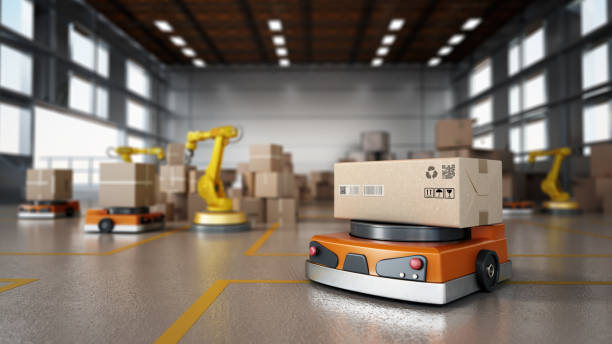
Warehouse operations can quickly slow down when orders increase, equipment gets backed up, or workers spend too much time on repetitive tasks. Warehouse automation helps address these challenges by using technology to streamline how goods are stored, moved, picked, and shipped.
But automation isn't one single system. It can include everything from conveyors and sortation equipment to automated storage and retrieval systems. Understanding the options is the first step toward finding what fits your facility.
MTLI Group has more than 40 years of experience helping facilities improve their material handling operations. In this guide, we'll share that perspective as we explain how the automation works, where it can add value, and how teams can handle common sticking points.
What Is Warehouse Automation?
At its core, warehouse automation uses technology, machinery, and software to handle tasks that would otherwise require manual work. It can support nearly every stage of warehouse operations, including:
- Moving inventory between storage and work areas
- Picking and packing customer orders
- Sorting products and shipments
- Tracking inventory and stock levels
- Moving goods through receiving and shipping
The important thing to understand is that automation can take many forms. One facility may automate a single bottleneck. On the other hand, another may connect conveyors, robotics, and warehouse racking systems into one integrated system.
There is no universal starting point. Your ideal solution depends on your current challenges, order volume, facility layout, and long-term growth plans. In many cases, the smartest approach is to automate the process causing the most disruption first, then build from there.
Core Technologies Behind Warehouse Automation
Automation rarely depends on one technology. Instead, different systems work together to handle specific tasks, improve material flow, and reduce manual work. Some of the most common technologies include:
- Automated Storage and Retrieval Systems (AS/RS): Machines that store and retrieve pallets or totes vertically, without a forklift operator making the trip
- Conveyor and sortation systems: Move goods between zones and route them automatically to the correct outbound dock
- Autonomous Mobile Robots (AMRs) and Automated Guided Vehicles (AGVs): Transport inventory across the floor without needing fixed tracks or a human driver
- Warehouse Management Systems (WMS): The software layer that coordinates inventory, orders, and equipment activity in real time
- Pick-to-light and voice-picking systems: Guide workers to the exact item and location, cutting down on wasted steps and picking errors
But how do these technologies differ from one another? The table below provides a quick comparison of where each one fits and what implementation typically involves.
| Technology | Typical Use Case | Relative Setup Complexity |
|---|---|---|
| AS/RS | High-density pallet or tote storage | High |
| Conveyor/Sortation | Order routing and shipping prep | Medium |
| AMRs/AGVs | Flexible inventory transport | Medium |
| WMS Software | Coordinating orders and inventory | Low to Medium |
| Pick-to-light | Manual picking accuracy | Low |
You don't necessarily need to implement all of these technologies at once. Many operators start with a targeted solution, such as conveyor system installation, to address a specific bottleneck. Once they see the impact on the floor, they can identify where additional automation makes sense.
How Warehouse Automation Improves Daily Operations
Automation is not just about adding advanced equipment to the floor. The real value comes from how it improves the daily flow of work. When the right processes are automated, facilities can achieve:
- Higher throughput: Automated systems maintain a consistent pace throughout the shift. This helps warehouses process more orders without the slowdowns caused by fatigue or shift changes.
- Fewer picking errors: Guided picking and automated handling reduce wrong-item and wrong-quantity mistakes. This can mean fewer returns, rework, and customer complaints.
- Better use of space: Automated storage can make better use of vertical space and support denser layouts, freeing valuable floor space for other operational needs.
- Improved worker safety: Automation can take over repetitive lifting, carrying, and long-distance travel, reducing physical strain on warehouse teams.
- Real-time visibility: Connected systems give managers clearer insight into inventory, order flow, and conveyor throughput without requiring them to walk the floor to check every process.
You also don't need to automate your entire facility to see meaningful results. Starting with one bottleneck can improve daily operations while giving your team a clearer idea of where additional automation could deliver the most value.
Warehouse Automation and E-Commerce Fulfillment
The growth of e-commerce has changed what customers expect from fulfillment. In fact, e-commerce continues to take up a larger share of U.S. retail sales. It accounted for 16.9% of total retail sales in the first quarter of 2026, compared with 15.9% in the first quarter of 2025, according to the U.S. Census Bureau.
Automation can help close that gap. Technologies that speed up picking, improve accuracy, and support ecommerce fulfillment automation allow facilities to process more orders while keeping workflows consistent. For operations that still rely heavily on manual processes, reducing that dependence can also help limit the need for repeated seasonal hiring as order volumes grow.
Understanding the Costs and ROI of Warehouse Automation
Cost is often one of the first questions warehouse operators ask about automation. The answer depends heavily on the size of the project, the technology involved, and how much of the facility you want to automate. A basic conveyor project can require a very different investment than a fully automated distribution center.
Here's a quick look at typical costs and payback periods by automation level:
| Automation Level | Approximate Investment Range | Typical Payback Period |
|---|---|---|
| Single-process (e.g., conveyor) | $50,000 to $500,000 | 1 to 2 years |
| Multi-system integration | $500,000 to $5 million | 2 to 4 years |
| Full-facility automation | $5 million+ | 3 to 6 years |
Labor is another major factor when evaluating potential returns. According to the Bureau of Labor Statistics, warehousing and storage accounts for roughly 27% of employment across the U.S. transportation and warehousing sector. As labor becomes more expensive and harder to staff consistently, automation can help reduce the amount of manual work required for repetitive tasks.
Automation does not mean replacing your entire workforce. Instead, it can help your existing team focus on work that requires more judgment and attention. Over time, those labor savings, along with higher throughput and fewer errors, can contribute to a stronger warehouse automation ROI.
Signs Your Warehouse Might Be Ready for Automation
Not every facility needs to automate right now, and jumping in too early without a clear pain point rarely goes well. A few signals tend to show up consistently in facilities that are genuinely ready:
- Order volume has grown faster than your current labor pool can keep up with
- Picking errors or mis-shipments have become a recurring complaint from customers
- You're paying significant overtime just to hit daily shipping cutoffs
- Seasonal hiring has become harder and more expensive every year
- Your current layout wastes floor space that could otherwise support growth
If two or more of these sound familiar, it's usually worth getting a facility assessment rather than guessing at the right fix.
Common Challenges When Integrating Automation
Warehouse automation can deliver major improvements, but the transition does not always go smoothly. Many common issues can be avoided by identifying potential problems before installation begins. Some of the biggest challenges include:
- Underestimating facility preparation: Floors, power systems, network infrastructure, and other site requirements may need upgrades before new equipment can be installed.
- Poor system integration: New conveyors, robotics, or other equipment must work with existing systems such as your WMS. If they don't communicate properly, data gaps and workflow problems can follow.
- Skipping a phased rollout: Trying to automate too many processes at once can increase downtime and make it harder to identify the source of problems.
Planning these details early can make the entire project easier to manage. Working with a team experienced in electrical automation services can also help identify power, infrastructure, and integration requirements before equipment reaches the floor.
Choosing the Right Automation Company
Choosing the right automation partner is just as important as choosing the technology itself. The right company should take the time to understand how your facility operates before recommending a solution. Look for a partner that can:
- Assess your current layout and workflow
- Identify the biggest operational bottlenecks
- Recommend solutions based on your actual needs and budget
- Plan for future growth instead of focusing only on immediate needs
- Manage the project from design through installation
MTLI Group takes this approach with every project. As a warehouse automation company, we design and install solutions ranging from individual process upgrades to full facility automation. Our in-house team handles engineering, electrical work, and installation under one contract. This gives you a single point of accountability throughout the project.
Keeping Automated Systems Running Long-Term
Installing an automated system is only the beginning. Like any other equipment, these systems need regular care to stay reliable and perform as expected. A strong maintenance plan should include:
- Routine inspections: Check conveyors, sensors, motors, and other components for early signs of wear.
- Preventative maintenance: Address small issues before they turn into costly equipment failures.
- Software updates: Keep control systems and software current as order volumes and operational needs change.
- Performance checks: Monitor equipment regularly to identify changes in speed, accuracy, or overall output.
Consistent preventative maintenance services can help reduce unplanned downtime and protect the value of your automation investment. It also makes it easier to catch small problems while they are still quick and affordable to fix.
You don't need to automate your entire facility to start seeing results. A single process upgrade can address a major bottleneck and give you a foundation for future improvements. Whether you're looking at your first conveyor system or considering full-facility automation, the right plan can make the transition more manageable.
At MTLI Group, we bring more than 40 years of experience to warehouse automation projects of all sizes. We work with you to understand your space, processes, and goals, then develop a solution around what your facility actually needs. If you're ready to see where automation could make a difference, we're here to help you plan the next step. Contact us today!