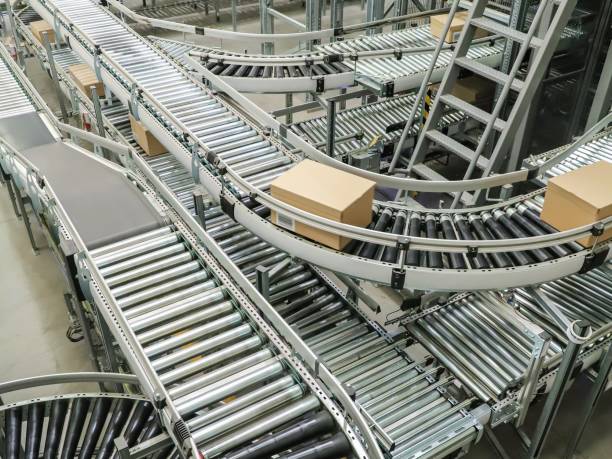
In a distribution center, speed drives customer satisfaction, contract performance, and margins. As order volumes rise and delivery windows shrink, how quickly and accurately goods move through a facility determines whether an operation keeps up or falls behind. Conveyor systems are one of the most established tools distribution centers use to move goods faster and with less manual effort.
From receiving docks to shipping lanes, a well-designed warehouse conveyor system removes the manual transport steps that slow order cycles, reduce labor efficiency, and increase the risk of injury. For distribution center operators looking to improve throughput, conveyor systems deliver consistent, measurable results. MTLI Group has designed and installed conveyor and automation systems across North America for over 40 years, giving distribution centers the infrastructure they need to handle growing order volumes.
What Conveyor Systems Do in a Distribution Center
At their core, conveyor systems move goods from one point in a facility to another without requiring workers to carry or transport them manually. In a distribution center, that means moving inbound product from receiving docks to storage, carrying picked items to pack stations, routing orders through sortation, and transferring outbound shipments to staging and loading areas. Each of these steps, when handled by conveyors, removes a manual task that would otherwise use up labor time, introduce errors, and add variability to order cycle time.
Modern automated conveyors go further than simple transport. They connect with warehouse management systems (WMS) to receive routing instructions in real time, adjust speeds based on current volume, redirect items by destination, and send tracking data back to the system. The conveyor is no longer a passive piece of equipment; it is an active part of the fulfillment process.
Types of Conveyor Systems Used in Distribution Centers
The right conveyor setup depends on product characteristics, facility layout, throughput goals, and integration needs. These are the most commonly used types:
Belt Conveyors
Belt conveyors use a continuously moving surface to carry items and are the standard choice for general carton and tote transport. They work with a wide range of product sizes and weights, which is why they held 38.6% of global market share in 2025, the most widely used conveyor type in distribution.
Roller Conveyors
Motor-driven roller (MDR) conveyors move items across powered rollers and allow individual sections to start, stop, or change speed independently. This zone-based control reduces energy use and enables zero-pressure accumulation, which prevents products from pressing against each other during queue buildup. These systems can process 8,000 to 12,000 parcels per hour in high-volume sortation setups.
Sortation Conveyors
Sortation systems read scan data from items as they move through the facility and direct each item to its assigned destination; a pack station, shipping lane, or storage zone. Cross-belt, tilt-tray, and sliding shoe sorters are the most common types, and each handles different speeds and product requirements. These systems remove the manual routing decisions that slow down operations handling many different product types.
Accumulation Conveyors
Accumulation conveyors hold items in a queue without applying pressure or causing damage. They act as a buffer between two processes running at different speeds, keeping flow steady across the fulfillment line.
Overhead and Vertical Conveyors
Overhead conveyors move goods above the warehouse floor, freeing ground-level space for storage and picking. Vertical conveyors, sometimes called lifts, connect conveyor lines on different floor levels, making multi-story distribution center layouts possible without expanding the building footprint.
How Conveyor Systems Improve Throughput
The throughput gains from a properly designed warehouse automation system built around conveyors come from several connected improvements:
Less Worker Travel Time
In a manual operation, workers spend a large part of their shift moving goods from one location to another. Conveyor systems take over that movement, keeping workers at their stations like picking, packing, or checking while the conveyor brings work to them and carries it away. This shift increases the number of useful tasks completed per labor hour.
Steady Flow Velocity
Manual transport varies. Workers move at different speeds, take breaks, and hit traffic in busy aisles. Conveyor systems keep product moving at a consistent rate regardless of shift changes or staffing levels. That consistency is what allows distribution centers to commit to throughput targets and meet them reliably across shifts and seasons.
Fewer Order Errors
Automated conveyors paired with scan-and-verify stations check item identity at multiple points in the fulfillment process. When a barcode scan at a sortation point confirms the right item is heading to the right destination, the system catches mistakes before they become returns or re-ships.
Longer Productive Hours
Conveyor systems run continuously without fatigue. Distribution centers operating multiple shifts or moving toward 24-hour operations, rely on conveyors to maintain consistent throughput without the drop in output that affects manual workers in late shifts.
The Safety and Cost Case for Automated Conveyors
Throughput improvement drives most conveyor investments, but the safety and cost benefits strengthen the case. According to the U.S. Bureau of Labor Statistics, there were 4.8 nonfatal work-related injury and illness cases per 100 full-time equivalent (FTE) workers in transportation and warehousing in 2022 which is nearly double the 2.7 rate across all private industries. Many of those injuries come from repetitive manual lifting, carrying, and transport, exactly the tasks that conveyor systems take over.
Fewer injuries mean lower workers' compensation costs, less absenteeism, fewer replacement hires, and less regulatory exposure. Distribution centers that add conveyor systems regularly report safety improvements alongside throughput gains.
On the cost side, conveyor deployment in distribution centers reached 41% in 2023, up from 31% the year before, according to industry survey data on material handling adoption. That growth reflects a growing understanding that the return on automated conveyors, lower labor cost per unit, fewer injury-related expenses, and higher throughput capacity, makes the investment work across a wide range of facility sizes and order volumes.
What to Review Before Conveyor Installation
How well a conveyor installation performs depends largely on the quality of planning before any equipment is specified. Distribution center operators should review these factors before committing to a design:
Product Profile
Conveyor type, speed, and layout depend on the size, weight, fragility, and packaging consistency of the items the system will handle. Operations with mixed product types and irregular package shapes have different needs than those running standardized carton sizes.
Throughput Targets
The system needs to handle not just current daily volume but peak demand; the highest realistic order volumes the facility will face. Building for average volume only creates bottlenecks when demand spikes.
Facility Infrastructure
Column spacing, floor flatness, ceiling height, power supply, and fire suppression coverage all affect which conveyor configurations will work in a given building. A facility review should happen before any system design is finalized.
WMS Integration
A conveyor system delivers full value only when it communicates properly with the warehouse management system (WMS). Integration requirements, data protocols, and the placement of scan and verify stations should be mapped out before equipment is ordered.
Scalability
The system should be able to grow with the business without needing to be replaced entirely. Modular conveyor designs allow facilities to add capacity section by section as volumes increase.
How MTLI Group Delivers Conveyor System Projects
Building and installing a conveyor system that actually improves throughput requires hands-on experience across engineering, construction, and systems integration. MTLI Group brings that experience to every project.
With over 40 years in the industry and more than 15,000 completed projects across the US and Canada, MTLI Group delivers conveyor and material handling systems as part of a complete, single-source solution. Work includes system design, in-house construction and general contracting, equipment installation, commissioning, and ongoing facility support; all managed by one project team.
This matters because conveyor installation touches racking systems, structural elements, electrical infrastructure, and WMS integration all at once. MTLI Group coordinates all of those workstreams together, which reduces delays, closes gaps between contractors, and ensures the system works as designed when it goes live.
Final Thoughts
Conveyor systems remain one of the most cost-effective investments a distribution center can make in its physical infrastructure. They cut manual transport labor, keep product moving at a consistent rate, reduce order errors, lower injury rates, and extend productive operating hours; all at once.
As e-commerce order volumes grow and delivery expectations tighten, distribution centers without automated conveyors will find it harder to compete on speed, cost, and reliability. The performance gap between automated and manual operations grows each year.
MTLI Group provides the design, installation, and integration expertise to turn a conveyor investment into a lasting throughput improvement. Reach out today to start planning your conveyor system project.