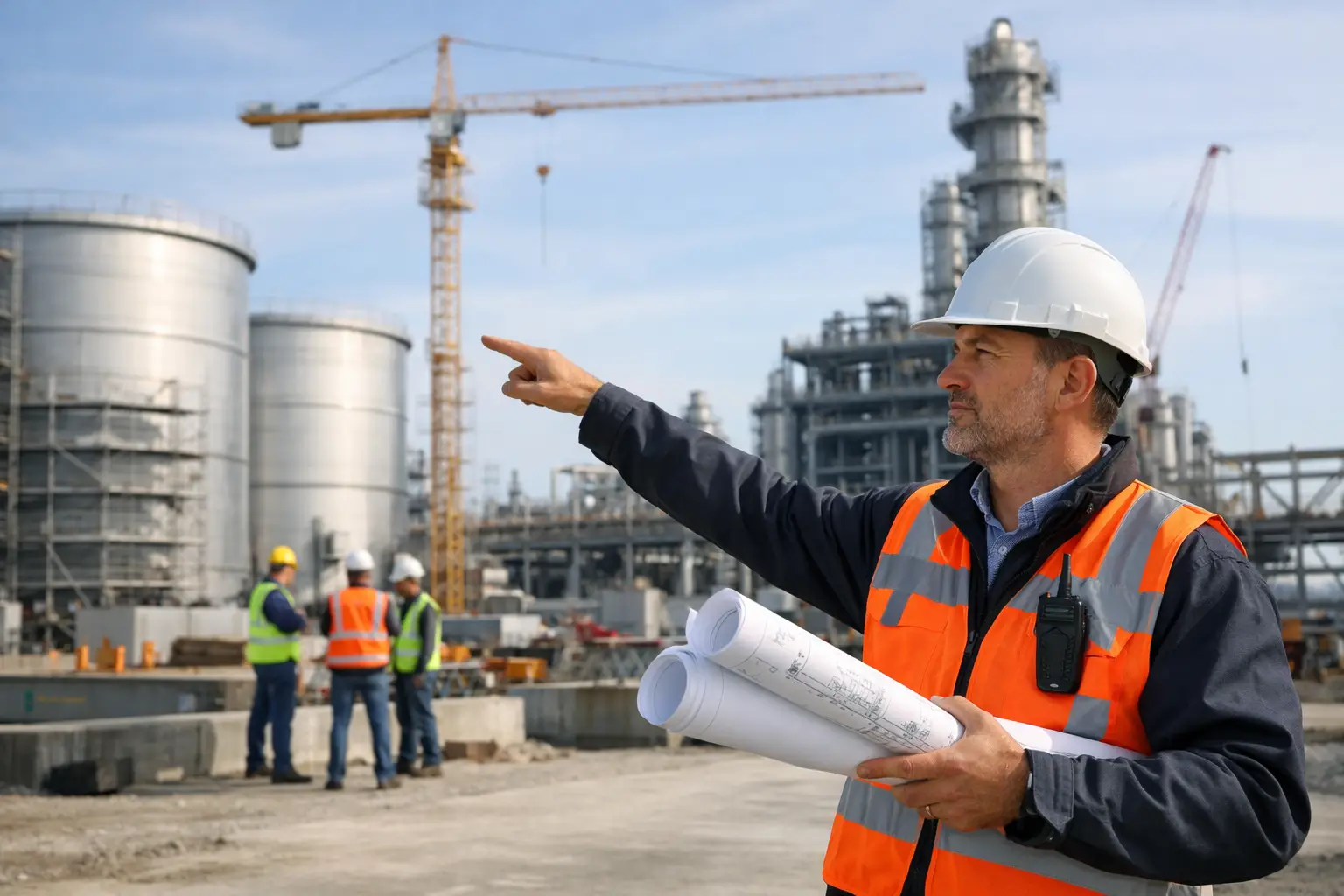
A new distribution center can look complete weeks before it is actually ready to operate. The building may be enclosed, but the power drops are unfinished, the dock equipment has not been commissioned, and the racking layout conflicts with a conveyor run. That gap between a finished-looking facility and an operational one answers a central question: what does a general contractor do? On an industrial project, the general contractor turns a defined scope into a safe, coordinated, ready-for-use facility.
For warehouse, manufacturing, and logistics leaders, that responsibility extends beyond managing a construction crew. A capable general contractor coordinates people, materials, permits, schedules, site conditions, and quality requirements across the full project. When the project includes material handling systems, automation, storage, or a live operating environment, the work must also protect throughput and minimize disruption.
What Does a General Contractor Do for an Industrial Facility?
A general contractor is the party accountable for directing day-to-day construction execution. The owner may set the business requirements, approve the budget, and make key decisions. Architects and engineers develop drawings and specifications. The general contractor organizes the field work required to build those plans correctly, safely, and on schedule.
In industrial settings, that can include tenant improvements, facility expansions, building repairs, mezzanines, office buildouts, dock modifications, equipment foundations, fire protection upgrades, and complex warehouse modernization. The contractor manages the sequence in which those components are installed, because each trade affects the work that follows.
For example, a new automated storage system may require slab review, layout verification, structural supports, electrical distribution, network pathways, guarding, and controls integration. Treating each package as an isolated purchase creates coordination risk. The general contractor helps establish one executable plan across those interdependent scopes.
The Core Responsibilities of a General Contractor
The exact scope depends on the delivery model and contract. On a straightforward renovation, the contractor's role may center on construction management. On a turnkey project, the contractor may coordinate design support, procurement, installation, commissioning, and closeout. In either case, the core responsibilities are consistent.
Planning the Work Before Mobilization
Successful projects are largely determined before crews arrive on site. A general contractor reviews drawings, specifications, existing conditions, access constraints, long-lead materials, and operational requirements. This early review identifies conflicts that could otherwise appear after demolition or installation has begun.
The contractor then develops a project execution plan. That plan defines the construction sequence, site logistics, trade coordination, safety controls, inspection requirements, and schedule milestones. In an active warehouse, it should also address traffic separation, work hours, dust control, temporary utilities, shutdown windows, and emergency access.
A practical plan recognizes that operations cannot always stop for construction. A contractor may phase work by bay, shift, dock line, or department so part of the facility remains productive while another area is modified. Phasing can add complexity and cost, but it may be the right trade-off when lost throughput is more expensive than a longer construction duration.
Managing Subcontractors and Suppliers
General contractors typically self-perform selected work and engage qualified subcontractors for specialized trades such as electrical, mechanical, plumbing, fire protection, concrete, steel, roofing, controls, and low-voltage systems. Their job is not simply to hire those trades. It is to make their work function as one coordinated operation.
That includes defining scopes, confirming qualifications, reviewing submittals, scheduling labor, tracking procurement, resolving field questions, and verifying completed work. If an electrical contractor needs final equipment locations before installing feeders, or a sprinkler contractor must coordinate with a new rack configuration, the general contractor drives the decision before the issue becomes a delay.
Supplier management is equally important. Industrial projects often depend on equipment with extended lead times, including dock equipment, switchgear, structural steel, refrigeration components, racking, and automation systems. The contractor tracks procurement against the construction schedule and adjusts field sequencing when delivery dates change.
Maintaining Schedule, Budget, and Scope Control
A project schedule is more than a target completion date. It shows the dependencies between demolition, structural work, utilities, equipment installation, inspections, and commissioning. A general contractor maintains that schedule, monitors progress in the field, and communicates risks early enough for the owner to make informed decisions.
Budget control follows the same discipline. The contractor tracks committed costs, approved changes, pending requests for information, allowances, and potential exposure from unforeseen conditions. Existing industrial facilities frequently contain surprises: undocumented utilities, damaged slabs, insufficient power capacity, or conditions concealed above ceilings and behind walls. The right response is not to ignore those issues until the end. It is to document the condition, explain its impact, provide options, and keep the decision moving.
Scope control matters because small changes can create larger downstream effects. Moving a conveyor line may affect guarding, power, controls, egress, and sprinkler coverage. An experienced contractor evaluates the full impact rather than pricing only the visible change.
Running a Safe, Compliant Jobsite
Safety is a core construction responsibility, particularly in facilities with moving forklifts, high-bay storage, live production lines, and employees working near construction zones. A general contractor establishes site-specific safety procedures, coordinates contractor orientations, maintains work-area controls, and verifies that crews follow applicable requirements.
The contractor also coordinates permits and inspections with the relevant authorities. Depending on the project, this can include building, electrical, plumbing, fire protection, occupancy, and environmental requirements. Inspections must be planned into the schedule, not treated as an administrative task after work is complete.
For operating facilities, safety planning must cover both construction personnel and the client's workforce. Clear barriers, controlled access, traffic plans, lockout procedures, and communication protocols reduce the chance that construction activity creates an operational hazard.
Verifying Quality and Turning Over a Usable Facility
Quality control is not limited to a final walkthrough. A general contractor verifies work throughout installation, checks conformance with approved drawings and specifications, and corrects deficiencies before they affect later trades. This is particularly valuable where building systems connect to operational equipment.
Before turnover, the contractor coordinates testing, inspections, punch-list completion, training requirements, warranty documentation, and closeout records. For a warehouse or manufacturing operation, the goal is not merely substantial completion. The goal is a facility whose utilities, equipment interfaces, safety systems, and work areas are ready for the intended use.
Where Industrial General Contracting Gets More Complex
Industrial construction differs from a typical commercial buildout because operational requirements are often inseparable from the building work. A new racking system affects fire protection and egress. A mezzanine affects structural loading, lighting, and material flow. An automation upgrade can require controls changes, electrical capacity, guarding, and production cutover planning.
This is where a master general contractor model can reduce vendor fragmentation. Rather than leaving the owner to coordinate separate construction, racking, automation, installation, and relocation vendors, one accountable partner can manage the interfaces between them. The model is not necessary for every project. A small, isolated repair may be best handled by a specialty contractor. It becomes more valuable when several scopes must be delivered in a specific sequence with limited tolerance for downtime.
General Contractor vs. Construction Manager
The terms are sometimes used interchangeably, but the commercial arrangement can differ. A general contractor commonly holds trade contracts and accepts direct responsibility for construction execution. A construction manager may act as an owner's advisor, coordinate project activities, or manage the work under a separate fee structure.
The appropriate model depends on the owner's internal resources, the maturity of the design, and the level of single-source accountability required. For an owner with a strong internal project team and several established vendors, construction management may fit. For a complex facility upgrade where scope interfaces and schedule risk need one point of responsibility, a general contractor or master general contractor structure may be more effective.
What Owners Should Expect From Their General Contractor
A qualified industrial general contractor should provide more than status updates. Owners should expect a clear scope, an executable schedule, defined safety procedures, transparent change management, and regular communication about decisions that affect cost, timing, or operations.
They should also expect the contractor to ask detailed operational questions early: Which areas must stay live? When can power be interrupted? What equipment must be protected? Who approves access to secure areas? What is the required date for operational readiness, not just physical completion? Those answers shape the project plan and help prevent avoidable disruption.
The strongest contractor relationships are built around early coordination and direct accountability. When construction, equipment, and facility operations are planned as connected parts of the same project, the handoff to operations becomes far more controlled - and the facility is better positioned to perform on day one.