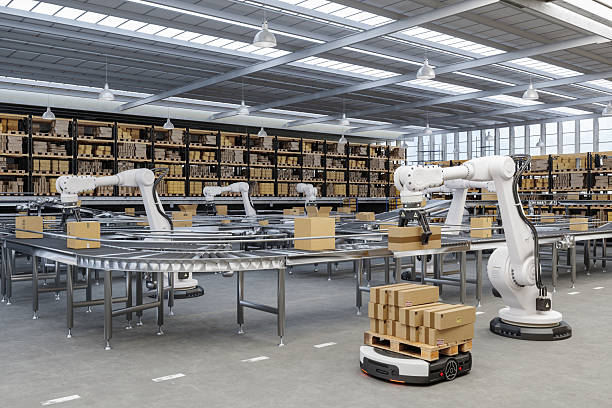
Robots entering a warehouse floor change the safety of conversation in both directions at once. Automated equipment removes workers from some of the most physically demanding and repetitive tasks that cause injury, but it also introduces new hazards around human-robot interaction that a facility has never had to manage before. Warehouse robotics safety sits at the center of that tradeoff, and getting it right determines whether automation actually reduces injuries or simply trades one set of risks for another.
MTLI Group works with operations teams across the US on robotics and automation installations, and a Mechanical installation company with safety-conscious integration experience makes a real difference in how well a new system protects workers from day one. This blog looks at how warehouse robotics safety actually reduces injuries, what automation safety systems belong in a well-designed deployment, and where facilities commonly fall short.
Why Warehouse Robotics Safety Matters More Than Ever
Warehouses have long carried a disproportionate injury burden compared to other industries, which is part of why automation adoption has accelerated as a safety strategy, not just an efficiency one. A U.S. Department of Labor Office of Inspector General audit found that the injury and illness rate at warehouses in 2021 was 5.5 cases per 100 employees, more than double the rate across all industries combined, ranking warehouses 10th out of 92 industries tracked by the Bureau of Labor Statistics. That gap reflects the physically demanding nature of manual material handling, repetitive lifting, and high-traffic areas where workers and equipment share the same space.
Robotics adoption itself is accelerating fast enough that safety planning has become a moving target. According to the National Institute for Occupational Safety and Health, the number of industrial robots in U.S. factories grew by 10 percent in 2022 alone, while the number of service robots sold for professional use rose to 158,000 units that year, a 48 percent increase over the prior year. Warehouse robotics safety practices need to keep pace with that growth rate, since a safety program designed for last year's equipment mix may already be outdated for what a facility is deploying this year.
Core Automation Safety Systems Every Deployment Needs
A warehouse robotics safety program depends on layered automation safety systems working together, rather than any single control providing complete protection on its own.
Physical barriers and safeguarding remain the most basic and effective layer for traditional industrial robots operating in fixed cells. Fencing, light curtains, and interlocked gates prevent workers from entering a robot's working zone while it is in motion, and this remains standard practice even as collaborative robots become more common.
Presence-sensing devices detect when a person enters a hazardous zone and triggers an automatic stop or slow down. These sensors matter especially for mobile robots and automated guided vehicles operating in shared aisles, where a fixed barrier is not practical given the equipment need to move throughout the facility.
Emergency stop systems need to be accessible, clearly marked, and tested regularly, since a stop button that workers cannot reach quickly or one that has degraded over time provides false confidence rather than actual protection.
Speed and force limiting collaborative robots reduces the severity of contact if a worker and robot do come into unexpected proximity, a feature that traditional industrial robots operating at full speed and force do not typically include.
Clear zone marking and signage helps workers understand which areas involve automated equipment and what behavior is expected, reducing the chance that someone unfamiliar with a specific zone wanders into an active robotic work area. This is especially important during equipment installation or relocation projects handled by experienced heavy equipment movers, when work zones and traffic patterns may temporarily change.
The table below summarizes these core automation safety systems and what each one protects against.
| Safety System | What It Protects Against | Best Suited For |
|---|---|---|
| Physical barriers and safeguarding | Accidental entry into fixed robot work zones | Traditional industrial robots in cells |
| Presence-sensing devices | Unplanned proximity in shared or open areas | Mobile robots and automated guided vehicles |
| Emergency stop systems | Delayed response during an unexpected hazard | All automated equipment types |
| Speed and force limiting | Severity of contact during unexpected proximity | Collaborative robots working near people |
| Zone marking and signage | Worker unfamiliarity with automated areas | Facilities with mixed manual and automated zones |
How Warehouse Robotics Safety Contributes to Injury Reduction
Warehouse injury reduction from automation comes through several distinct pathways, not just the obvious removal of a worker from a dangerous task.
Repetitive strain and overexertion of injuries, among the most common categories in manual warehouse work, decline when robots take over repeated lifting, carrying, or reaching tasks. This shift matters given how much of the elevated warehouse injury rate traces back to overexertion incidents during manual material handling.
Reduced foot traffic in high-risk zones, such as areas where forklifts and pedestrians previously shared the same aisles, lowers the chance of a struck-by incident when automated guided vehicles or conveyor systems replace manual transport on the same routes, provided the automation is paired with proper Electrical Systems Integration that ties safety sensors and stop systems into a single, coordinated control scheme.
Consistent, predictable equipment behavior also plays a role. Automated systems follow programmed logic rather than variable human judgment under fatigue or time pressure, which can reduce the inconsistency that sometimes contributes to manual handling incidents during long or high-pressure shifts.
Where Warehouse Robotics Safety Programs Commonly Fall Short
Facilities introducing robotics for the first time tend to encounter a similar set of gaps in their safety planning.
Underestimating training needs for workers who now share space with automated equipment is one of the most common issues. Staff need to understand not just how to avoid a robot's working zone, but how to recognize when a system is malfunctioning or behaving unexpectedly, since not every hazard is visible or intuitive to someone unfamiliar with the specific technology.
Treating safety as a one-time installation step rather than an ongoing program leaves gaps as equipment ages, software updates change behavior, or facility layout shifts around the automated zones. Regular inspection of safety systems, similar to any other critical infrastructure, catches degraded sensors or worn barriers before they fail during an actual incident.
Overlooking mobile and collaborative robot hazards happens when safety planning focuses primarily on traditional, caged industrial robots while newer mobile and collaborative systems receive less rigorous evaluation, despite carrying their own distinct set of risks around shared workspace with people.
Skipping documentation and incident review limits a facility's ability to identify patterns. A near-miss involving automated equipment deserves the same investigation and corrective action as any other safety incident, yet facilities sometimes treat automation-related near-misses as less significant simply because no injury resulted.
Building a Warehouse Robotics Safety Program from the Ground Up
A structured approach helps facilities avoid the common gaps described above and build a program that scales as automation expands.
Start with a hazard assessment specific to each type of automated equipment being deployed, since a fixed robotic arm, a mobile robot, and a conveyor system all carry different risk profiles that a single generic safety policy cannot adequately address. Layer automation safety systems appropriately based on that assessment, combining physical barriers, sensors, and procedural controls rather than relying on any single measure.
Train workers specifically on the automated systems in their work area, not just general workplace safety, and refresh that training whenever equipment or software changes meaningfully. Facilities working with a Warehouse Racking company on automated storage integration should also confirm that racking guarding and clearance specifications account for automated retrieval equipment moving through the same aisles as personnel.
Establish a regular inspection and maintenance schedule for safety-critical components specifically, distinct from general automated system maintenance, since sensors, interlocks, and emergency stops degrade over time and require dedicated verification rather than incidental attention during routine equipment servicing.
The table below outlines a general framework for building a warehouse robotics safety program by equipment type.
| Equipment Type | Primary Safety Focus | Key Training Need |
|---|---|---|
| Fixed industrial robots | Physical barriers, interlocked access | Recognizing hazards outside the visible work envelope |
| Automated guided vehicles | Presence sensing, marked pedestrian paths | Right-of-way rules in shared aisles |
| Collaborative robots | Speed and force limiting | Safe proximity behavior during shared tasks |
| Conveyor and sortation systems | Lockout and tagout procedures | Safe interaction during jams or maintenance |
Safety as Part of a Broader Automation Strategy
Warehouse robotics safety works best when it is built into the automation project from the design phase rather than added after installation as a compliance afterthought. Facilities evaluating ASRS cost should also account for safety infrastructure, employee training, and compliance requirements during the planning stage, rather than focusing only on equipment purchase and installation expenses.
This kind of upfront planning also benefits from working with a facility management company experienced across the full lifecycle of automation projects, from initial design through installation and ongoing operation, rather than treating safety, installation, and maintenance as three disconnected vendors with no shared accountability for how the pieces fit together.
How MTLI Group Supports Warehouse Robotics Safety Programs
MTLI Group works with operations teams across the US to design and install automation systems with safety integrated from the start, including barrier systems, sensor placement, and controls that tie safety devices into a coordinated response rather than isolated add-ons.
With over 40 years of experience and more than 15,000 completed projects, MTLI Group helps operations managers build warehouse robotics safety programs that account for the specific equipment types deployed in their facility, reducing both injury risk and the disruption of retrofitting safety measures after an installation is already complete.
Strengthening Worker Protection Through Warehouse Robotics Safety
Warehouse robotics safety is not a single control or a one-time installation checklist. It requires layered automation safety systems, ongoing training specific to the equipment deployed, and ongoing inspection of safety-critical components as systems age. Facilities that build this kind of comprehensive program see meaningful warehouse injury reduction from automation, while those that treat safety as an afterthought risk trading one category of hazard for another.
MTLI Group helps operations teams build warehouse robotics safety programs that protect workers while supporting a productive automated operation. Contact MTLI Group to discuss safety planning for your next automation project.