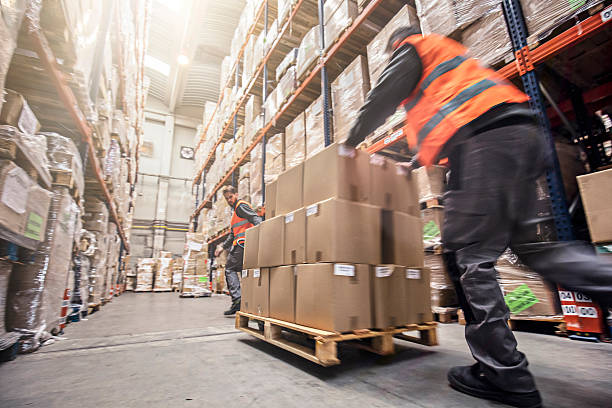
Peak season does not announce itself gradually. Order volume that felt manageable in September can triple within weeks once November arrives, and a facility that waited until the surge started to plan for it is already behind. Preparing a warehouse for peak season means building capacity, staffing, and process changes well before demand hits, not scrambling to react once it does.
MTLI Group, part of the broader MTLI group of companies serving operations teams across the US, works with facilities well ahead of their busiest months to get racking, equipment, and staffing plans in place before volume spikes. This blog walks through the specific steps operations managers should take to prepare a warehouse for peak season, what tends to go wrong, and how to build a repeatable plan for next year.
Why Peak Season Planning Cannot Start Late
The scale of peak season demand makes late planning especially risky. Electronic shopping and mail-order houses generated an estimated $146.6 billion in retail sales in December 2024 alone, the highest monthly total of the year, according to the U.S. Census Bureau. That single month represents a disproportionate share of annual volume flowing through fulfillment operations in a compressed window, which leaves little room for a facility to catch up once the surge is already underway.
Labor markets follow the same seasonal pattern, and the swing can be sharp. Bureau of Labor Statistics data has repeatedly shown employment gains in retail and warehousing during October through December followed by losses in January and February, reflecting the temporary nature of much of the workforce added to handle peak season fulfillment. A facility relying on a commercial construction company for a last-minute expansion in October is competing for contractor availability during the same window every other retailer is scrambling too.
Assessing Capacity Before Peak Season Arrives
The first step in preparing a warehouse for peak season is an honest capacity assessment, not an assumption that last year's approach will scale automatically to this year's volume of projections.
Storage capacity needs to be reviewed well ahead of the surge. A facility running near capacity during normal months has little room to absorb the inventory buildup that typically precedes peak season, when brands stock up ahead of demand rather than trying to replenish in real time during the busiest weeks. Some facilities close this gap with a dense storage system that adds meaningful capacity inside the existing footprint, while others find that swapping in modern pallet racking systems across underused zones frees up more room than expected.
Throughput capacity matters just as much as storage. A facility that can store the inventory but cannot process orders fast enough during peak volume creates a different bottleneck entirely. Reviewing current picking, packing, and shipping throughput against projected peak volume identifies where the gap actually sits before it becomes a crisis in real time.
Equipment reliability deserves specific attention heading into peak season, since a breakdown during the highest-volume weeks of the year costs far more than the same failure during a slower month. Facilities running conveyor lines especially benefit from resolving automated conveyor systems bottlenecks picking storage issues before, not during, the surge.
The table below outlines a general capacity assessment framework for warehouse for peak season planning.
| Capacity Area | Key Question | Typical Lead Time Needed |
|---|---|---|
| Storage space | Can current racking absorb pre-peak inventory buildup? | 3 to 6 months |
| Throughput | Can current systems process project peak order volume? | 2 to 4 months |
| Equipment reliability | Are automated systems serviced and ready for sustained volume? | 1 to 2 months |
| Staffing | Is seasonal labor recruited and trained before volume hits? | 2 to 3 months |
Warehouse Scaling Strategies That Actually Work Under Time Pressure
Scaling warehouse for peak season looks different than scaling for steady, long-term growth, since the added capacity often needs to come online quickly and, in some cases, scale back down once the surge passes.
Temporary and modular storage solutions offer flexibility that permanent infrastructure cannot match a tight timeline. Some facilities turn to used warehouse racking for a short-term capacity gap, since it installs faster than new equipment and can later be reconfigured or removed once volume normalizes, avoiding a permanent capital commitment for a demand spike that lasts only a few months.
Flexible automation supports warehouse for peak season scaling particularly well, and a growing number of facilities lean on a warehouse robotics company to deploy robot fleets that expand temporarily during peak weeks without the fixed infrastructure commitment other automation types require.
Phased implementation matters when facilities need to add capacity across multiple systems simultaneously. Sequencing racking, electrical, and staffing changes so they come online in the right order, rather than all at once in the final weeks before peaking, reduces the disruption of implementing everything under time pressure. This is where a Electrical Systems Integration partner becomes valuable, since control and power upgrades often need to happen alongside mechanical changes rather than afterthought.
Building a Peak Season Fulfillment Timeline
A structured timeline keeps peak season fulfillment preparation from turning into a last-minute scramble. Working backward from the anticipated peak gives operations managers a realistic sense of when each preparation step actually needs to start.
Six months out, facility capacity assessments and any major racking or automation upgrades should already be underway, since equipment installation and construction work takes time that cannot be compressed once the season starts. Four months out, seasonal staffing plans need to be finalized, including recruitment timelines that account for a competitive local labor market during the same window every other warehouse is hiring. Two months out, equipment maintenance and system testing should confirm that automated systems, conveyors, and material handling equipment are ready for sustained high-volume operation, not just functioning under normal conditions. One month out, staff training and process walkthroughs should be complete, giving both permanent and seasonal workers time to build familiarity with peak-specific procedures before volume actually arrives.
The table below summarizes this general timeline for peak season fulfillment preparation.
| Timeframe Before Peak | Key Activities |
|---|---|
| 6 months out | Capacity assessment, racking or automation upgrades |
| 4 months out | Seasonal staffing recruitment and scheduling |
| 2 months out | Equipment maintenance, system stress testing |
| 1 month out | Staff training, process walkthroughs |
| During peak | Daily performance monitoring, contingency response |
Facility Changes That Support Warehouse Scaling Beyond Racking
Racking and automation get most of the attention in peak season planning, but a few other facilities change often make a bigger difference than expected. Mezzanine additions can unlock a second level of usable space above existing operations, and working with an Mezzanine installation company early enough in the year avoids the disruption of installing structural additions during an already busy stretch.
Facilities outgrowing their current footprint entirely sometimes weigh a full move instead of another round of temporary fixes. Reviewing industrial relocation services well before peak season, rather than after a difficult one, gives operations managers time to plan a move during a slower period of the year instead of compounding two disruptive events at once.
Common Mistakes When Preparing for Peak Season
Facilities that struggle during peak season tend to make a similar set of avoidable mistakes.
Underestimating lead time for equipment or construction work is the most common issue. Racking installations, conveyor upgrades, and automation projects all take longer than expected, and starting these projects too close to peak season guarantees a rushed, disruptive rollout instead of a smooth one. Relying entirely on seasonal labor without building in cross-trained backup leaves facilities vulnerable to turnover during the exact weeks when reliability matters most. Skipping equipment stress testing before peak season means the first real test of whether systems can handle sustained high volume happens during the actual surge, rather than during a controlled trial run when problems can still be corrected without major disruption.
How MTLI Group Supports Peak Season Warehouse Preparation
MTLI Group works with operations teams across the US to prepare facilities for peak season demand, coordinating everything from construction management services for capacity expansions to equipment installation timed to complete well before volume hits.
With over 40 years of experience and more than 15,000 completed projects, MTLI Group helps operations managers build a realistic, phased plan for warehouse scaling that accounts for the actual lead times equipment installation and system integration require, rather than a timeline built around wishful thinking.
Getting Your Warehouse for Peak Season Ready Ahead of Time
Preparing a warehouse for peak season is not a single project completed a few weeks before the surge begins. It requires an honest capacity assessment, a realistic timeline that starts months in advance, and a combination of flexible automation and cross-trained staff that reduces dependence on a labor market that gets more competitive every year during the same compressed window. Facilities that treat peak season readiness as an annual, ongoing discipline consistently handle demand spikes more smoothly than those that rebuild their approach from scratch every year under time pressure.
MTLI Group helps operations teams build and execute a warehouse for peak season readiness plans that start early enough to actually work. Contact MTLI Group to discuss peak season preparation for your facility.