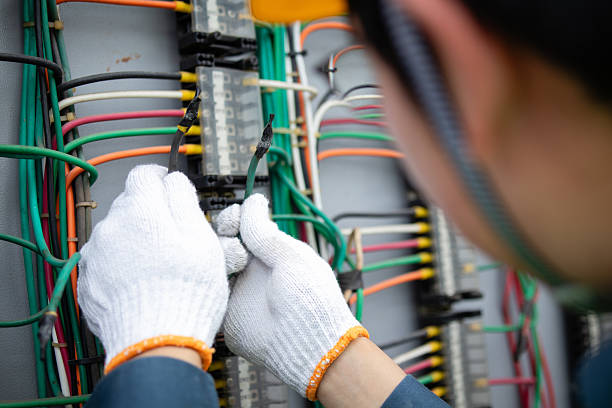
A machine that can sense a problem but has no way to tell anyone isn't really automated; it's just isolated. That's the quiet failure mode behind a lot of "smart" equipment sitting on warehouse and plant floors right now: individually capable, collectively useless, because nothing is actually wired to talk to anything else.
MTLI Group builds electrical automation solutions meant to close exactly that gap, connecting the equipment a facility already owns into something that behaves like one system instead of a dozen separate ones.
From Isolated Machines to One Working System
Plenty of facilities already own automated equipment. A sensor-driven cooling unit here, a programmable conveyor there. What most of them lack is the layer connecting those pieces, the wiring and logic that lets one machine's readings actually change another machine's behavior in real time.
That's the real difference electrical automation solutions bring to the table. It's not about adding more gadgets. It's about giving the ones already on the floor a reason to cooperate. Getting there usually starts with a straightforward automation assessment of what's already installed and what's missing.
The Wiring, Logic, and Software That Make It Run
Four things tend to show up in nearly every functioning automation setup, regardless of industry or facility size.
Controllers handle the moment-to-moment decisions, the actual logic behind when a motor speeds up, or a conveyor stops. Interfaces translate that logic into something a person on the floor can read and act on without cracking open code. Networking, physical and digital, moves data between controllers, so a decision made in one part of the building can trigger a response somewhere else. Monitoring software pulls all of it into a screen someone can actually look at, instead of requiring a walk-through of every panel in the building.
None of this works if the underlying electrical infrastructure can't support it, which is the part most facilities underestimate. Our guide to industrial electrical contracting covers why panel capacity and wiring built for basic lighting loads often need real upgrades before automation can go safely. Getting that groundwork right is where our installation crews spend most of their time, since a beautifully designed control system means nothing if the physical wiring underneath it can't carry the load.
Matching the System to the Operation It Serves
What gets automated, and how, depends entirely on what the facility actually does day to day.
Production floors lean on automation for sequencing machines and catching quality issues before they become expensive mistakes. Distribution operations point it at material flow instead, syncing conveyors and sort stations, so product moves without a person manually routing every pallet. Facilities running heavy equipment often automate power distribution itself, balancing loads so nothing trips a breaker during a demand spike.
| Facility Type | Where Automation Focuses | Typical Components |
|---|---|---|
| Production Plants | Machine sequencing, quality checks | Controllers, sensors, interlocks |
| Distribution Centers | Material flow, sorting | Conveyor logic, drives |
| Heavy Equipment Facilities | Power distribution, load balancing | Load controllers, drives |
Manufacturing operations usually need more than one of these running side by side, since production and material handling rarely stay in separate lanes for long. Our manufacturing clients often start with sequencing automation and expand into material flow once the first phase proves out. Distribution-heavy businesses follow roughly the same path, though warehousing and distribution operations tend to prioritize sorting and flow from day one, since that's where their labor costs concentrate.
What the Data Says About Automation's Payoff
The productivity case for connected automation isn't just anecdotal at this point. Research using Census Bureau firm-level data found that adopting automation technologies is associated with 11.4 percent higher labor productivity on average, a gap that accounts for a meaningful share of the difference between large firms and the typical business in their industry. That's not a marginal improvement. It's the kind of number that shows up directly on a P&L.
Energy is where the payoff gets even more concrete. According to New York's state energy research authority, a 10 percent reduction in motor speed cuts overall power consumption by nearly 30 percent, a relationship that makes variable frequency drives one of the highest-return pieces of any automated electrical system. For businesses serving 3PL and logistics clients, where margins often live and die on operating cost per order, that kind of efficiency gain compounds fast across a full year of operation.
Counting the Real Costs of Staying Disconnected
The cost of doing nothing rarely shows up as one big number. It shows up as a slow leak: a few extra minutes diagnosing every fault, a little more energy wasted running motors at full speed when they didn't need to be, a shift supervisor manually checking three separate dashboards because none of them talk to each other.
| Factor | Disconnected Setup | Integrated Electrical Solutions |
|---|---|---|
| Fault Diagnosis | Manual, panel by panel | Centralized, often automatic |
| Energy Use | Motors run at fixed speed | Demand-based, drive-controlled |
| Visibility | Fragmented across systems | Single view across operations |
| Response Time | Slower, reactive | Faster, often preemptive |
This adds fastest in operations with tight fulfillment windows. We've written specifically about warehouse automation for e-commerce brands, where a few extra minutes of downtime during a peak sales window can mean missed shipping cutoffs that ripple through an entire day's orders. New facility builds have an advantage here too, since warehouse construction projects that plan automation infrastructure from the start avoid a lot of the retrofit cost that older buildings end up paying later.
Common Ways Automation Projects Miss the Mark
The most expensive mistake happens early: automating equipment before confirming the building's electrical infrastructure can actually support it. Panels sized for a much smaller load get discovered mid-installation, and suddenly a straightforward automation project turns into an unplanned electrical upgrade. Assessing infrastructure honestly before design work starts, rather than assuming it'll be fine, is what separates a smooth electrical automation rollout from a stalled one.
Buying equipment from three different vendors without checking whether their control systems can actually speak to each other is another recurring problem. Not every protocol plays nicely with every other one, and a facility can end up with expensive automation that still can't share data across zones. Training gets skipped too, more often than it should. A system nobody knows how to use tends to sit idle while staff quietly go back to doing things manually, which defeats the entire point of the investment.
How MTLI Builds Electrical Automation Solutions That Work
MTLI Group starts every project with an honest look at what's already installed, not a sales pitch for what could be added. That assessment shapes everything that follows, from panel upgrades to control architecture, so the system that gets built actually fits the building it's going into.
Our warehouse automation division handles the physical build directly, and we coordinate closely with construction teams on new warehouse construction projects so automation infrastructure gets planned in from day one instead of retrofitted after the fact.
Get Integrated Electrical Solutions From MTLI
The value of integrated electrical solutions isn't in any single piece of equipment. It's in what happens once everything on the floor can actually talk to everything else: faster fault detection, lower energy costs, and a real-time picture of what's happening across the operation instead of a guess pieced together from separate dashboards.
MTLI Group works with businesses across the country to design and build integrated electrical solutions around the equipment they already have. Contact our team to talk about your facility's automation needs.