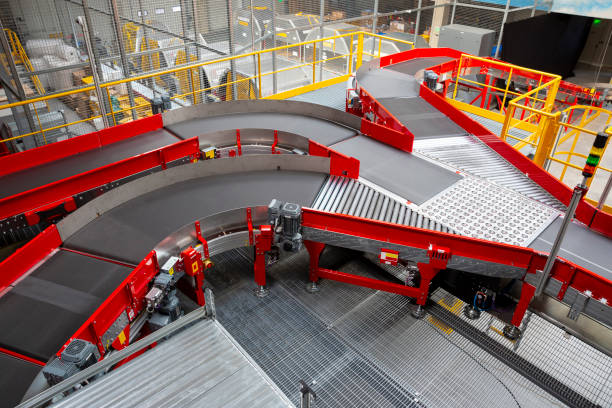
A conveyor line looks simple once it's running. Getting it there is the part nobody sees: floor surveys, load calculations, electrical tie-ins, and a dozen small decisions that determine whether the system runs smoothly on day one or spends its first month getting adjusted. Most conveyor system installation problems trace back to planning gaps, not equipment defects.
This guide walks through what actually needs to happen before a conveyor gets bolted to the floor and wired up. MTLI Group provides industrial equipment installation services for facilities bringing new material handling systems online.
Before the Belt Moves: What Installation Actually Involves
Conveyor installation is not a single task. It's a sequence: site prep, mechanical assembly, electrical connection, controls integration, and testing, each dependent on the one before it. Skip a step or rush it, and problems tend to surface only after the system is loaded and running at full speed, which is the most expensive time to discover them.
Our conveyor installation team handles this full sequence rather than treating mechanical and electrical work as separate jobs handed off between crews. For facilities unfamiliar with the process, our plain-language breakdown of equipment installation covers what to expect at each stage, from initial site visit through final commissioning.
The Site Conditions That Make or Break a Conveyor Install
Floor flatness matters more than most facility managers expect. A conveyor bed that isn't level will bind, wear unevenly, or misalign product as it moves, and correcting this after installation is far more disruptive than surveying the floor beforehand. Ceiling height and column spacing also constrain layout options, particularly for overhead or elevated runs.
Power availability near the install location is another common gap. Conveyors need dedicated circuits sized for motor load, and older facilities sometimes lack sufficient capacity nearby, requiring new runs before installation can even begin. Projects involving heavier material handling equipment benefit from a team experienced in heavy industrial installation, since structural and power requirements scale quickly once conveyor systems start moving pallets rather than just cartons. Layout planning should also account for how the conveyor ties into loading operations, particularly where dock door installation work is happening as part of the same project, since dock position often dictates where a conveyor line can realistically start or end.
Conveyor Configurations and What Each One Demands From Installation
Different conveyor types carry different conveyor system installation requirements, and matching the right configuration to the application matters as much as the installation quality itself.
Belt conveyors handle general product movement and are among the simplest to install, requiring mainly structural support and drive alignment. Roller conveyors, powered or gravity-fed, need precise spacing and leveling to prevent product jams. Chain conveyors, common for heavier loads, demand more robust structural anchoring given the forces involved. Accumulation conveyors add sensor and control complexity, since they need to detect and manage product buildup automatically.
| Conveyor Type | Installation Complexity | Common Application |
|---|---|---|
| Belt Conveyor | Lower | General product movement |
| Roller Conveyor | Moderate | Carton and tote handling |
| Chain Conveyor | Higher | Heavy or palletized loads |
| Accumulation Conveyor | Higher | Buffering and sorting |
For a deeper look at how these systems function once installed, our guide to conveyor systems covers the mechanics behind each type. Facilities integrating conveyors with production lines often need additional coordination through processing equipment installation, since the conveyor typically has to sync directly with upstream or downstream machinery rather than operate as a standalone system.
The Workforce Reality Behind Equipment Installation Right Now
Timing an installation project has gotten more complicated, largely because of who is available to do the work. National data shows demand for skilled installation labor is climbing fast. Employment of industrial machinery mechanics, maintenance workers, and millwrights, the trades most directly tied to equipment installation, is projected to grow 13 percent from 2024 to 2034, much faster than the average for all occupations, according to the Bureau of Labor Statistics.
That kind of projected growth signals tightening capacity across the trades that installation projects depend on. Facilities planning a conveyor project should build in extra lead time for scheduling, particularly for specialized work like automation equipment installation, where qualified technicians are in shorter supply than general labor. Booking early, rather than waiting until a facility is already behind schedule, has become one of the more practical ways to avoid delays tied to crew availability.
Budgeting the Real Cost of Bringing a Conveyor Online
Equipment cost is usually the easiest number to estimate accurately. Installation labor, electrical tie-in, controls integration, and testing time are where budgets tend to drift, particularly on projects that weren't scoped with enough detail upfront.
| Cost Category | Commonly Underestimated | Typical Driver |
|---|---|---|
| Site Preparation | Yes | Floor leveling, power runs |
| Controls Integration | Yes | Sensor calibration, PLC programming |
| Structural Support | Sometimes | Ceiling or column tie-ins |
| Equipment Purchase | Rarely | Usually quoted accurately upfront |
Projects that combine conveyor work with a broader storage overhaul should factor in adjacent scope too. A conveyor line running past new racking installation needs clearance planned around the final rack layout, not the other way around. The same goes for facilities adding a mezzanine above or alongside a conveyor run, since platform support columns and conveyor pathways have to be coordinated during design rather than adjusted after either system is already built.
Planning Failures That Delay Startup
The most common failure is starting equipment procurement before the site survey is complete. Ordering conveyor sections based on assumed dimensions, rather than verified floor and ceiling measurements, frequently leads to costly field modifications once the actual equipment arrives.
Skipping safety systems planning until late in the project is another recurring issue. Conveyor lines need guarding, emergency stops, and lockout points designed in from the start, not retrofitted after conveyor system installation. This is not a minor compliance detail. Control of hazardous energy, commonly known as lockout/tagout, ranked among OSHA's top five most frequently cited standards nationally in fiscal year 2024, with 2,443 violations. Coordinating safety systems installation alongside the conveyor build, rather than as an afterthought, closes a gap that shows up on OSHA's citation list year after year. Projects that also involve automated storage need this same upfront coordination, since ASRS installation depends on precise timing with any conveyor feeding into or out of the storage system.
Why Facilities Choose MTLI as Their Installation Partner
MTLI Group functions as a single installation partner across mechanical, electrical, and controls scope, rather than requiring facilities to coordinate separate contractors for each piece. As both an electrical installation company and a mechanical installation company under one roof, our teams plan power, structure, and controls together from the earliest site visit.
This matters most for facilities in manufacturing, where a conveyor line often has to integrate directly with production equipment already running on the floor, leaving little room for miscommunication between separate vendors.
Bring Your Conveyor Online With MTLI
Conveyor system installation succeeds or fails based on planning done before any equipment arrives on site. Floor conditions, power capacity, configuration choice, and safety systems all need to be worked out in advance, not discovered mid-project. Working with a single conveyor installation company for mechanical, electrical, and controls scope removes most of the coordination gaps that cause delays.
MTLI Group brings industrial equipment installation services together under one accountable team, from initial site survey through final commissioning. Contact our team to plan your conveyor system installation.