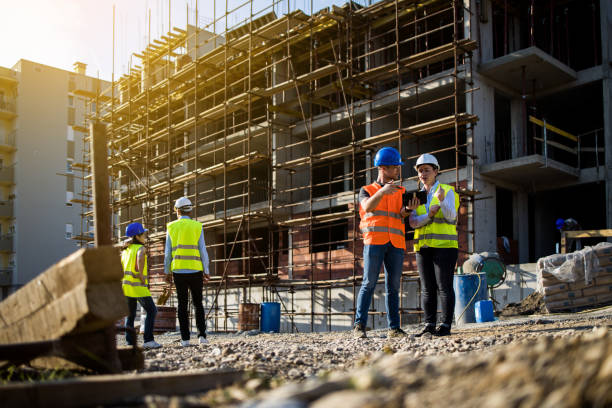
Every warehouse project starts with a piece of land, and that land shapes almost everything that follows. Some sites come with a history: a former factory, an old distribution center, soil that needs testing before anyone breaks ground. Others are simply open fields, untouched and ready to build on however a business chooses. The choice between these two starting points, brownfield and greenfield, affects cost, timeline, and risk more than most owners expect going in.
This guide breaks down both paths so businesses can make an informed decision alongside their commercial construction company. MTLI Group has built warehouse projects on both site types, and our warehouse construction team can walk through what each option means for a specific project.
Two Very Different Starting Points for a Warehouse Project
A brownfield site is previously developed land, often with existing structures, infrastructure, or environmental conditions left behind from a prior use. A greenfield site is undeveloped land with no prior construction history, typically farmland or open acreage on the edge of a growing industrial corridor.
The difference goes well beyond soil quality. Brownfield sites usually come with existing utility connections and road access already in place, while greenfield sites require most of that infrastructure to be built from scratch. Site preparation looks completely different too. A brownfield project frequently starts with demolition and remediation work, handled through our concrete and demolition crews, while a greenfield project begins with grading and utility installation on land that has never been built on before.
What a Brownfield Site Brings to the Table
Brownfield sites offer a major advantage that greenfield land simply cannot match: location. These properties tend to sit closer to existing population centers, transportation corridors, and established infrastructure, since they were developed once already for exactly those reasons. That proximity can shorten supply chain distances and reduce transportation costs for a distribution operation over the life of the facility.
The tradeoff is environmental and structural uncertainty. Prior industrial use can leave contamination that requires testing and remediation before construction begins, and old foundations or utility lines sometimes complicate new structural design. Projects involving existing power infrastructure often need a full industrial electrical assessment before any new equipment or automation gets planned, since old wiring and panel capacity rarely match what a modern warehouse actually requires.
What a Greenfield Site Offers Instead
Greenfield land offers a clean slate, free of demolition costs, contamination risk, or the surprises that come with reusing an existing structure. This predictability makes design and budgeting more straightforward, since a construction general contractor can plan around known site conditions rather than conditions that only reveal themselves once work begins.
The cost of that predictability shows up elsewhere. Greenfield sites often require significant investment in roads, utility extensions, and site grading before vertical construction can even start, and they tend to sit farther from established transportation networks. This makes early planning critical, and it is exactly why teams pursuing a design-build approach on greenfield land bring design-build expertise in from the start, coordinating civil engineering with building design rather than treating them as separate phases. A dedicated project management lead matters just as much here, since greenfield projects involve more moving parts across a longer, more sequential timeline. To learn more, explore warehouse construction company services for planning and building efficient warehouse facilities tailored to your project requirements.
Comparing Timeline, Cost, and Risk Side by Side
| Factor | Brownfield Site | Greenfield Site |
|---|---|---|
| Location and Access | Typically closer to infrastructure | Often farther from established corridors |
| Site Prep Requirements | Demolition, possible remediation | Grading, new utility installation |
| Environmental Risk | Higher, requires assessment | Lower, undeveloped land |
| Upfront Predictability | Lower, existing conditions unknown | Higher, clean starting point |
| Typical Timeline | Varies with remediation scope | More predictable once permitted |
Projects requiring specialized equipment placement, particularly those involving heavy industrial installation work, need this comparison done early, since structural and utility conditions on a brownfield site directly affect where and how heavy machinery can be positioned.
Why More Developers Are Taking a Second Look at Brownfield Sites
Brownfield redevelopment has become a more attractive option than it was a decade ago, both economically and strategically. The Environmental Protection Agency estimates that brownfield sites could support 11 to 13 percent of the jobs and housing growth expected nationally between 2013 and 2030, largely because these properties already sit in locations with existing infrastructure and workforce access.
The financial case has strengthened too. Federal brownfield grant funding leverages significant additional investment, with EPA reporting that $19.47 was leveraged for every dollar of EPA Brownfields Grant funding awarded through fiscal year 2025. For developers weighing site options, that kind of leverage can meaningfully offset the added remediation and industrial renovation costs that come with reusing a previously developed property.
Budgeting for Either Path: What the Numbers Look Like
Brownfield budgets need to account for environmental testing, potential remediation, and demolition of existing structures before new construction costs even enter the picture. These costs are harder to estimate upfront, since the full scope often isn't known until testing and initial demolition are underway.
Greenfield budgets are more front-loaded with civil work: roads, utility extensions, and grading, all of which are more predictable to estimate but add up quickly on undeveloped land. Facility-specific features like dock door configuration and layout tend to cost roughly the same regardless of site type, since these are driven by operational needs rather than the land itself. The same holds true for add-ons like structural steel mezzanines, which factor into the building design independent of whether the site is brownfield or greenfield.
| Cost Category | Brownfield Site | Greenfield Site |
|---|---|---|
| Site Assessment | Required, higher cost | Minimal |
| Remediation or Demolition | Possible, variable cost | Rarely applicable |
| Utility and Road Infrastructure | Often already in place | Frequently built from scratch |
| Building Construction | Comparable to greenfield | Comparable to brownfield |
Common Missteps in Site Selection
The biggest mistake developers make is committing to a brownfield site before completing a thorough environmental assessment, only to discover contamination scope that dramatically exceeds initial estimates. The opposite mistake happens on greenfield sites: underestimating the true cost of utility extension and road access, which can quietly erase the savings a business expected from choosing undeveloped land.
Planning storage and material handling systems too late in the process is another common gap. Businesses that finalize building design before evaluating their warehouse racking needs often end up with column spacing or clear height that doesn't match their intended racking layout. The same applies to automation. Facilities that plan for warehouse automation after the building shell is already designed frequently need costly retrofits to accommodate conveyor paths or automated retrieval systems that could have been built in from the start.
How a Commercial Construction Company Should Guide This Decision
A commercial construction company with experience on both site types brings something a generalist contractor cannot: an honest read on which conditions actually matter for a specific project. That means walking a brownfield site with an eye toward existing electrical infrastructure and coordinating early with an electrical automation team when older systems need to support modern equipment.
It also means helping clients understand how site choice affects future flexibility. Businesses planning to eventually integrate robotics or automated picking systems should review our guide to warehouse robotics early in the process, since certain site and building configurations accommodate these systems more easily than others.
Build With the Right Commercial Construction Company
Choosing between brownfield and greenfield construction is not a decision to make on cost alone. Location, timeline, environmental risk, and long-term operational flexibility all factor into which path actually serves a business best. The right commercial construction company should walk through all of these factors honestly, rather than pushing toward whichever site type is easier to build.
MTLI Group works as both a construction general contractor and an commercial construction company, guiding clients through site selection and delivering complete turnkey construction solutions from initial assessment through final handover. Contact our team to discuss your next warehouse project.