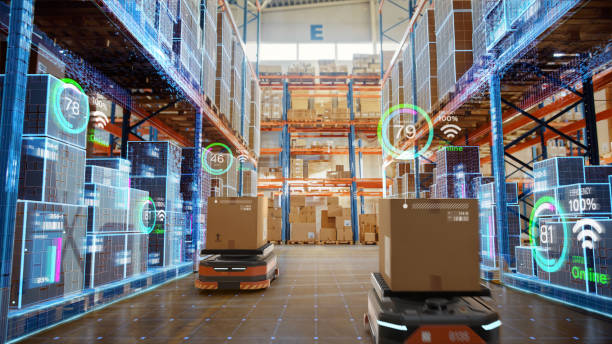
Moving inventory efficiently is essential to keeping a warehouse productive. For years, facilities have relied on workers and traditional material handling equipment to get the job done. As workloads grow, however, repetitive travel and labor demands can make those processes harder to scale. That's where autonomous mobile robots (AMRs) can offer another option.
AMRs can move inventory around a facility with less manual intervention while adapting to changing routes and workflows. But automation is not automatically the better choice. Some facilities may benefit from AMRs, while others may get better results by improving their existing processes.
With more than 40 years of experience in material handling, MTLI Group understands that every facility has different requirements. We've helped operations evaluate solutions based on their workflows, space, and long-term goals. In this guide, we'll compare AMRs with traditional processes and help you understand which approach may be the better fit for your operation.
What Are AMRs, and How Do They Differ from Traditional Processes?
Traditional warehouse processes rely on workers walking or driving through the facility to pick, transport, and stage inventory. Every trip depends on human navigation, judgment, and physical stamina. That works, but it also means throughput is directly tied to headcount and shift length.
Autonomous mobile robots take a different approach. These robots navigate the warehouse independently using sensors and mapping software, moving inventory to and from workers instead of requiring people to walk the full distance themselves. A well-known warehouse robotics company will typically offer AMRs designed for one of two roles:
- Goods-to-person picking: The robot brings racking & shelving units directly to a stationary picker
- Transport and replenishment: The robot moves totes or pallets between zones without a human escort
AMRs do not eliminate the need for warehouse employees. Instead, they take over much of the walking and transportation involved in repetitive workflows. This allows workers to spend more time on picking, packing, and other tasks that require human attention.
With traditional processes, even a short trip can become significant when repeated hundreds or thousands of times per shift. AMRs help reduce that travel by bringing inventory to the worker or moving it between zones automatically.
Where Traditional Processes Still Hold Up
Traditional processes are not obsolete, and they remain the right choice for plenty of operations. Facilities with lower order volume, simple layouts, or unpredictable SKU counts often do not need the complexity that robotics adds.
A few situations where traditional processes still make sense:
- Order volume is low enough that walking time is not a major cost driver
- The facility layout changes frequently, making a fixed robot fleet harder to justify
- Budget constraints make a large automation investment impractical right now
- The operation needs maximum flexibility to handle unpredictable SKU mixes
For smaller e-commerce operations, traditional processes also come with a lower barrier to entry. There is no software integration, no fleet management system, and no need to redesign workflows around robot pathing.
That said, "traditional" does not mean outdated. Many facilities get strong results by improving pick paths, optimizing inventory placement, and cross-training employees. These changes can increase throughput without requiring a major automation investment such as hiring a warehouse robotics company.
Where AMRs Deliver the Most Value
AMRs tend to make the biggest difference when a warehouse has a lot of orders to move, limited labor, or too much time being spent on repetitive transportation. In these environments, workers can spend a large part of their shifts walking between storage, picking, packing, and staging areas. AMRs can take over much of that movement and keep inventory flowing without adding more manual trips.
Labor availability is also becoming an important consideration. According to the U.S. Bureau of Labor Statistics, employment of hand laborers and material movers is projected to grow more slowly than the average for all occupations over the next decade. For facilities that depend heavily on manual movement, that can make it harder to scale operations as demand increases.
AMRs are often a strong fit for e-commerce fulfillment, multi-shift operations, and warehouses with large or changing SKU counts because they can:
- Reduce walking: Robots bring inventory to workers or move it between zones, cutting down on unnecessary travel.
- Support higher throughput: Teams can process more orders without adding the same amount of manual transportation.
- Work consistently: Robots can operate for extended periods without the fatigue that can slow workers during long shifts.
- Adapt to changing demand: Fleet software can assign robots based on current workloads and order patterns.
The key is knowing when the investment makes sense. Before considering AMRs, look at how much time your team currently spends moving inventory compared with picking, packing, and other productive tasks. That baseline can help you determine whether reducing travel could deliver enough value to justify the investment.
Comparing AMRs and Traditional Processes Side by Side
Choosing between AMRs and traditional warehouse processes depends on what your facility needs most. Comparing the two approaches across labor, flexibility, cost, and scalability can make the decision easier. Here's a quick breakdown:
| Factor | Traditional Processes | AMR-Based Processes |
|---|---|---|
| Labor dependency | High, tied directly to headcount | Lower, robots handle transport |
| Flexibility | Easy to adjust layout on the fly | Requires reconfiguration of robot paths |
| Upfront investment | Minimal | Higher, includes hardware and software |
| Scalability | Limited by available labor | Can add robots as volume grows |
| Best fit | Lower-volume, highly variable operations | High-volume, repetitive transport tasks |
The choice does not have to be all or nothing. Many warehouses use a hybrid approach. They keep manual processes for tasks that change frequently while using AMRs for repetitive, high-volume transportation. This can provide some of the benefits of automation without requiring the facility to redesign every part of its operation.
Questions to Ask Before Choosing a Direction
Choosing between traditional processes and AMRs becomes much easier when you start with your facility's actual numbers and workflows. Before making a decision, ask a few practical questions:
- How much labor time goes toward walking and transport? Look at how many hours workers spend moving between zones instead of picking, packing, or completing other value-added tasks.
- How consistent is your order volume? Consider your daily workload as well as seasonal peaks and slower periods.
- How often does your layout change? Frequent changes to storage locations or workflows may affect how practical an AMR system would be.
- What can you realistically invest? Consider not only the robots, but also software, integration, installation, training, and ongoing maintenance.
- How will AMRs connect with your existing systems? Make sure the robots can work with your warehouse management system and other equipment already in place.
- What are your growth plans? If order volume is expected to increase, consider whether your current process can scale without adding significant labor.
The answers can give you a much clearer picture of whether AMRs are worth exploring. In some cases, improving traditional processes may be enough. In others, a small robotics pilot may be the logical next step.
A reputable warehouse robotics company should be willing to work through these questions using data from your facility. The goal is not to sell you the most automation possible, but to identify an approach that fits your workflow, budget, and long-term plans.
What a Hybrid Approach Looks Like in Practice
A hybrid model often starts small. A facility might deploy a handful of AMRs in its highest-volume picking zone while keeping the rest of the operation running on traditional processes. That allows the team to measure results before committing to a larger rollout.
This approach tends to work well for facilities that are not yet ready to commit to a facility-wide warehouse automation program. But they still want to address their busiest, most labor-intensive zones.
A few things to plan for when piloting a hybrid approach:
- Choose a single zone or process with clear, measurable throughput data
- Confirm the AMR system can integrate with your current racking and layout
- Set a defined evaluation period before deciding whether to expand
- Involve floor staff early so the transition does not disrupt daily operations
This kind of phased rollout reduces risk and gives leadership real data to support a larger investment decision later.
A hybrid approach also gives your team time to build internal familiarity with robotics before scaling further. Floor staff learn how to work alongside AMRs, maintenance teams learn the equipment, and leadership gets a clearer picture of actual ROI instead of relying on vendor projections alone.
Why Work with a Warehouse Robotics Company for This Decision
Choosing between AMRs, traditional processes, or a combination of both is a major decision. Having an experienced partner review your facility can help you make that choice based on your actual workflow, order volume, and labor needs rather than generic assumptions.
MTLI Group brings more than 40 years of experience across warehouse robotics solutions, racking, electrical work, and installation. We look at how your facility operates today and help you determine which approach makes the most sense for your goals.
With more than 15,000 completed projects, our warehouse robotics company has worked with facilities of different sizes and requirements. We bring engineering, installation, and ongoing support together, giving you one team to work with throughout the project.
Because we also understand racking, electrical, and construction requirements, we can look beyond the robots themselves. That broader view helps identify important factors such as available power, floor space, system integration, and facility layout before they become problems.
Making the Right Call for Your Operation
There is no universal answer to whether AMRs or traditional processes fit better. The right choice depends on your order volume, labor availability, layout flexibility, and budget. What matters most is making that decision based on real data rather than industry trends alone.
Whatever direction fits your facility, working with an experienced warehouse robotics company can help you avoid costly missteps and get a clearer picture of what results to expect before you commit any budget.
MTLI Group can help you evaluate your current operation and map out what a robotics deployment, or a hybrid approach, could look like for your facility. Contact our team to discuss your goals and next steps.