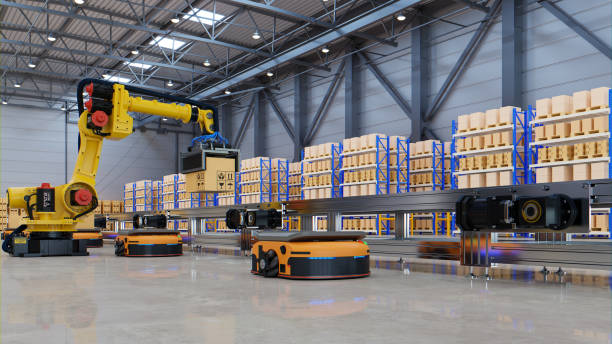
Operations managers hear a lot of noise about artificial intelligence, and much of it does not translate into anything they can act on this quarter. AI in warehouse automation is different. It is already reshaping how facilities forecast demand, route pickers, and schedule maintenance, and the pace of adoption is accelerating heading into 2026. The question for most operations managers is no longer whether to pay attention, but where to start.
MTLI Group works with operations teams across the US on automation projects that increasingly include AI-driven components, from predictive maintenance to intelligent routing, detailed further in MTLI Group's project portfolio. This blog looks at what is genuinely changing in AI in warehouse automation this year, separating the practical developments from the hype.
Why AI in Warehouse Automation Is Accelerating Now
Warehouse automation is not new, but the role AI plays inside it has shifted noticeably. Traditional automation followed fixed rules: a conveyor moved at a set speed; a sortation system followed a predetermined logic. AI in logistics adds a layer of decision-making that adjusts in real time based on data, rather than following a static program.
The U.S. Bureau of Labor Statistics has tracked this shift closely. Its Monthly Labor Review notes that warehousing firms are increasingly adopting warehouse management systems, automated guided vehicles, robots, and AI-based systems to operate more efficiently, with the resulting productivity gains expected to limit labor demand and slow employment growth in the warehousing and storage services industry through 2034. That is a federal labor agency confirming what operations managers already feel on the floor: automation adoption is not slowing down.
E-commerce growth is the other half of the story. Rising parcel volumes and tighter delivery windows mean facilities need to process more orders without simply adding headcount. Smart warehouse AI tools that improve picking accuracy or reduce travel distance per order deliver value precisely because they scale without a proportional increase in labor.
What Is Actually New in AI Warehouse Automation for 2026
Several developments separate this year's AI in warehouse automation landscape from what facilities saw even two or three years ago.
Predictive maintenance has matured. Sensors on conveyors, automated storage and retrieval systems, and other material handling equipment now feed data into AI models that flag likely failures before they happen. This shifts maintenance from a reactive, breakdown-driven schedule to a planned one, reducing unplanned downtime on systems that are expensive to keep idle.
Dynamic slotting has become mainstream. Instead of assigning storage locations once and leaving them static, AI-based slotting systems continuously adjust product placement based on order patterns, seasonality, and velocity. This reduces the distance workers and equipment travel to fulfill orders, which compounds into meaningful time savings across a full shift.
Computer vision now supports quality checks and safety monitoring. Cameras paired with AI models can flag damaged goods, verify order accuracy, and monitor unsafe conditions like blocked aisles or improper PPE use, tasks that previously required manual spot checks.
Autonomous mobile robots have grown more capable. Rather than following fixed tracks, modern robots use AI-based navigation to reroute around obstacles and adjust to layout changes without reprogramming the entire system, a capability covered in more depth in MTLI Group's automation and robotics integration work.
AI in Logistics: Beyond the Four Walls of the Warehouse
AI in logistics extends past the building into how goods move between facilities and customers. Demand forecasting models now incorporate a wider range of inputs, including weather patterns, regional sales trends, and supplier lead times, producing forecasts that adjust faster than traditional statistical models.
Route optimization tools apply similar logic to outbound shipments, adjusting delivery routes in real time based on traffic, weather, and last-minute order changes. For operations managers running a distribution network with multiple facilities, this connects directly to inventory placement decisions inside each warehouse, particularly for third-party logistics providers managing inventory on behalf of multiple clients.
The table below compares traditional automation approaches with AI-enabled approaches across common warehouse functions.
| Warehouse Function | Traditional Automation | AI-Enabled Approach |
|---|---|---|
| Storage slotting | Fixed locations, manually reassigned | Continuously adjusted based on order data |
| Equipment maintenance | Scheduled at fixed intervals | Predicted based on sensor data and usage patterns |
| Pick path routing | Static, rule-based paths | Dynamically adjusted based on current order mix |
| Quality inspection | Manual spot checks | Continuous computer vision monitoring |
| Demand forecasting | Historical trend analysis | Multi-variable models updated in real time |
| Robot navigation | Fixed tracks or guided paths | Adaptive navigation around changing layouts |
Where AI in Warehouse Automation Delivers the Clearest Return
Not every AI application delivers the same value, and operations managers evaluating where to start benefit from focusing on areas with the clearest, most measurable payoff.
Predictive maintenance tends to show returns quickly because unplanned downtime on automated systems is expensive and easy to quantify. Facilities running conveyor systems or automated storage and retrieval equipment often see this as a natural starting point since the underlying automation infrastructure already exists.
Labor allocation and task assignment benefit from AI models that match worker skill sets and current location to incoming tasks, reducing idle time between assignments. This works particularly well in facilities with high order variability, were static task assignment leaves gaps in coverage.
Inventory forecasting reduces both stockouts and excess holding costs, and the data required, historical order patterns and current trends, already exist in most warehouse management systems, making this an accessible entry point.
Facilities newer to automation sometimes assume AI requires replacing existing systems entirely. In practice, many AI capabilities layer on top of existing material handling equipment and warehouse management software rather than requiring a full system replacement.
Building the Workforce and Process Side of AI Adoption
Technology alone does not deliver results without changes to how teams work. The Bureau of Labor Statistics has also examined the broader occupational impact of automation and AI, noting that although automation reduces demand for certain warehouse roles over time, the technology has also created new positions focused on managing and maintaining automated systems, even as some traditional stock-handling roles see slower growth than in prior decades.
This shift matters for workforce planning. Operations managers introducing AI in warehouse automation need to budget training on new systems, not just the capital cost of the technology itself. Staff who previously handled manual picking or slotting decisions often move into oversight and exception-handling roles, which requires a different skill set and a deliberate transition plan.
Facilities planning a broader automation retrofit alongside AI adoption should sequence workforce training to align with each phase of the rollout, rather than treating training as an afterthought once the system goes live. This kind of phased approach is one MTLI Group outlines in more detail on its company overview page.
Common Pitfalls When Adopting AI Warehouse Automation
Facilities moving into AI warehouse automation for the first time tend to run into a similar set of obstacles.
Data quality gaps undermine AI models before they have a chance to prove their value. A forecasting or slotting model is only as good as the historical data feeding it, and warehouses with inconsistent inventory records or incomplete order histories often see disappointing initial results.
Underestimating integration of work is another common issue. AI tools need to connect with existing warehouse management systems, and this integration work is frequently more time-consuming than the AI component itself. This is especially true in automotive parts distribution, where legacy systems and just-in-time delivery schedules add extra complexity to any new integration.
Treating AI as a one-time deployment rather than an ongoing process limits long-term value. Smart warehouse AI systems improve over time as they process more data, but only if someone is monitoring performance and adjusting parameters as conditions change.
How MTLI Group Supports AI Warehouse Automation Projects
MTLI Group works with operations teams across the US and Canada to plan and execute automation projects that increasingly include AI-driven components, from predictive maintenance sensors to dynamic slotting systems. Services include warehouse automation design and integration, racking and storage layout, and installation of the material handling infrastructure that supports these systems.
With over 40 years of experience and more than 15,000 completed projects, MTLI Group understands how AI-enabled systems fit into the physical layout of a facility, including power, connectivity, and structural requirements that automated equipment depends on. This experience helps operations managers avoid the integration gaps that often slow down AI adoption.
Planning Your Next Step in AI Warehouse Automation
AI warehouse automation is no longer an experimental add-on. It is becoming a standard part of how facilities forecast demand, maintain equipment, and route both workers and robots through the building. The clearest returns tend to come from predictive maintenance, dynamic slotting, and forecasting, areas where data already exists, and integration work is more manageable. Facilities that treat AI as a phased, ongoing process rather than a single deployment tend to see stronger long-term results than those expecting an immediate, one-time fix.
MTLI Group supports operations teams planning the physical and structural side of AI warehouse automation projects, from initial layout assessment through installation. Reach out to MTLI Group to discuss automation options for your facility.