Few statistics make the case for automation as clearly as this one: from 2019 to 2024, labor productivity in warehousing and storage declined 7.4% per year, even as hours worked in the sector climbed 8.0% annually, the steepest increase of any of the 31 service-providing industries the Bureau of Labor Statistics tracks (U.S. Bureau of Labor Statistics, Productivity and Costs by Industry, 2026). In plain terms, the sector has been adding labor hours faster than it has been adding output. For 3PL providers competing on cost per order, that trend is not sustainable without a different approach to how work actually gets done on the floor.
Conveyor automation is one of the most direct ways to reverse that trend inside a single facility. MTLI designs and installs conveyor systems for 3PL providers across the U.S., and this guide breaks down how to calculate the actual return on that investment, where the savings come from, and what determines whether a project pays off quickly or slowly.
Why Conveyor Automation Matters More for 3PL Providers Specifically
Third-party logistics providers operate under a unique pressure that distinguishes them from single-brand warehouses: margins depend on moving other companies' freight efficiently, often across multiple client contracts with different volume patterns and service requirements. A 3PL that cannot move product through its facility quickly loses ground on cost per order, which directly affects client retention and new business pricing.
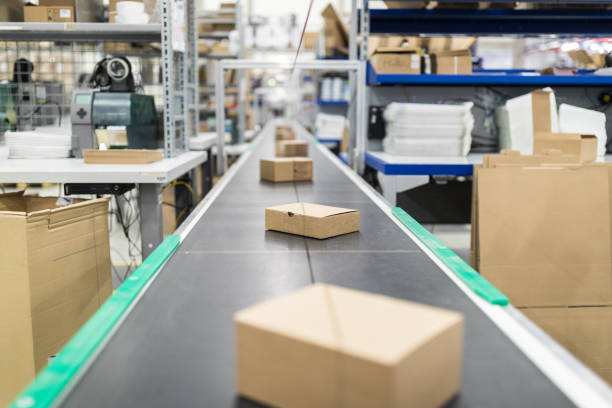
Conveyor systems address this pressure by removing one of the largest sources of non-value-added time in a facility: manual transport between processing stations. Instead of workers walking or driving pallets and totes from receiving to sorting to packing, a conveyor moves product continuously and predictably, which gives 3PL operators a more consistent cost basis to quote against new client volume.
How Conveyor Automation Actually Reduces Cost
A conveyor system reduces cost through several distinct mechanisms, not just one.
- Reduced manual transport. Workers spend less time physically carrying or driving goods between stations, freeing labor hours for higher-value tasks like quality checks.
- Faster sortation. Automated sortation routes packages to the correct outbound lane without manual sorting, cutting the time between processing and shipping.
- Lower error rates. Conveyor systems integrated with barcode scanning catch misrouted items before they reach the wrong truck, reducing costly reshipment.
- Consistent throughput. A conveyor runs at a steady, predictable pace regardless of staffing levels, which smooths out the volume swings that manual operations struggle with during peak periods.
- Reduced physical strain. Less manual lifting and carrying lowers injury risk in the roles most exposed to repetitive strain.
Manual Transport vs. Conveyor Automation
| Process Step | Manual Transport | Conveyor Automation |
|---|---|---|
| Movement between stations | Worker carries or drives product | Continuous automated movement |
| Sortation accuracy | Manual sorting, higher error risk | Barcode-verified automatic routing |
| Throughput consistency | Varies with staffing levels | Steady regardless of headcount |
| Peak season scaling | Requires added temporary labor | Existing capacity absorbs volume increase |
| Physical strain on workers | High, repetitive carrying and lifting | Low, machine handles transport |
Calculating Warehouse Conveyor ROI
A useful warehouse conveyor ROI calculation starts with the labor hours currently spent on manual transport and sortation, since this is the cost the conveyor most directly replaces. Track how many worker-hours per shift go toward moving product between processing stages, then estimate how much of that time a conveyor system would eliminate based on similar installations.
From there, factor in three additional categories that affect the full return:
- Error reduction savings. Estimate the current cost of mis-sorts, including reshipment and any client penalties for late or incorrect deliveries.
- Throughput gains. Calculate the value of handling additional volume in the same facility footprint without adding proportional labor.
- Maintenance and operating costs. Include the ongoing cost of running and servicing the conveyor system, not just the installation price.
Most 3PL facilities recover their conveyor investment within one to three years, depending on order volume and the complexity of the installation. Higher-volume facilities with consistent year-round throughput typically see faster payback than facilities with sharp seasonal swings, since the conveyor's fixed cost spreads across more orders.
Typical Conveyor Automation Payback by Facility Type
| Facility Profile | Order Volume | Typical Payback Window |
|---|---|---|
| High-volume, consistent throughput | Steady year-round | 1 to 2 years |
| Moderate volume, seasonal peaks | Variable, strong peak season | 2 to 3 years |
| Lower volume, multi-client mix | Variable, multiple contracts | 2.5 to 4 years |
| Specialized handling requirements | Lower volume, complex sortation rules | 3 to 5 years |
What Drives 3PL Automation Decisions Beyond Cost
While the financial case matters most, 3PL automation decisions also factor in client expectations. Larger clients increasingly expect their 3PL partners to demonstrate operational consistency, particularly around order accuracy and delivery timing. A facility that automates its sortation and transport processes can offer more reliable service-level commitments than one that depends heavily on manual labor availability.
This becomes especially relevant when a 3PL provider is bidding for new client contracts. Demonstrating an automated, scalable facility often strengthens a proposal more than a lower headline price, since clients increasingly weigh reliability and consistency alongside cost when choosing a logistics partner.
Safety Considerations for Conveyor Installations
Conveyor systems introduce mechanical hazards that need proper guarding from the start. Federal regulations require guarding wherever moving machine parts create a hazard to workers, and conveyor pinch points, nip points, and transfer areas are common sources of citation when guards are missing or bypassed (Occupational Safety and Health Administration, 29 CFR 1910.212). Planning guard placement and emergency stop locations during the design phase, rather than retrofitting them after installation, keeps the system both compliant and safer to operate from day one.
Common Mistakes 3PL Providers Make with Conveyor Projects
A few recurring issues affect the actual return 3PL operators see from conveyor investments:
- Sizing the system for current volume only. A conveyor installed without margin for growth becomes a bottleneck again within a few years as client volume increases.
- Underestimating integration time with existing software. Conveyor systems need to communicate with warehouse management software, which often takes longer to configure than the physical installation itself.
- Skipping a true before-and-after cost baseline. Without accurate current labor cost data, it becomes difficult to prove the actual return once the system is running.
- Ignoring multi-client variability. A 3PL handling several distinct client profiles needs a flexible conveyor and sortation design, not one optimized for a single product type.
- Underbuilding maintenance planning. A conveyor that breaks down frequently erodes the labor savings it was installed to capture.
Planning a Conveyor Project for a Multi-Client Facility
3PL facilities face a planning challenge that single-brand warehouses do not: the conveyor and sortation system needs to handle multiple distinct product types, packaging formats, and shipping requirements, often changing as client contracts shift. A flexible system design, with sortation logic that adapts to different client rules, protects the investment as the client mix evolves over time.
MTLI designs conveyor systems with this flexibility in mind, working with 3PL operators to understand current and likely future client profiles before finalizing the system layout. This approach reduces the risk of a conveyor system that fits today's contracts but constrains tomorrow's growth.
How MTLI Supports Conveyor Automation Projects for 3PL Providers
MTLI manages conveyor automation projects from initial facility assessment through installation and ongoing support. Our warehouse automation team designs systems matched to actual order profiles and client variability, rather than a generic conveyor layout. For facilities needing structural or electrical changes to support the new system, our construction and general contracting team manages that work as part of the same project.
Our installations crews handle the physical build and software integration, and our facility management services keep the system running reliably once it is operational, protecting the labor savings the conveyor was installed to deliver.
Making the Case for Conveyor Automation
Given a sector where labor hours have grown faster than output for several consecutive years, conveyor automation offers 3PL providers a direct way to reverse that trend inside their own facilities. The return depends on accurate cost baselines, realistic payback expectations, and a system designed for the actual client mix a facility serves, not a generic installation.
If your company operates in 3PL and logistics or warehousing and distribution, MTLI can assess your facility and build the ROI case for conveyor automation specific to your order profile. Contact MTLI to start a conveyor automation assessment for your operation.