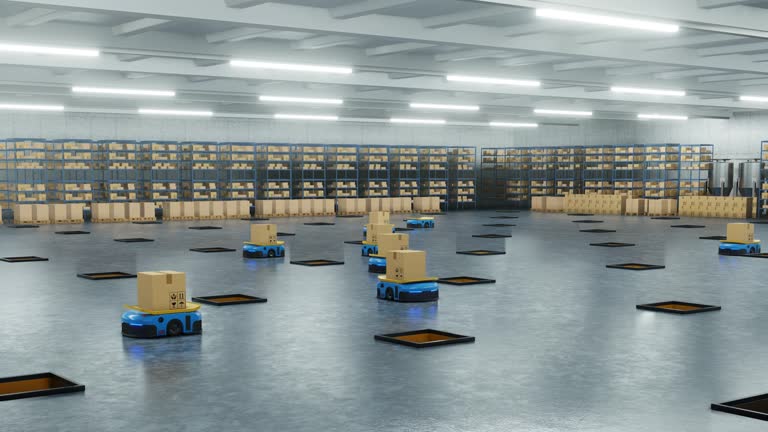
Moving products from one point to another may seem simple, but the right automation system can make a major difference in warehouse efficiency. Some robots follow fixed routes to move goods between designated locations. Others navigate around obstacles and adjust their paths as warehouse conditions change. These approaches reflect the key difference between automated guided vehicles (AGVs) and autonomous mobile robots (AMRs).
This guide explains how AGVs and AMRs differ, where each one fits, and what to ask before you buy. The team at MTLI Group install both types, so the comparison below focuses on how these robots behave on a working floor. If you are weighing AMR warehouse robots against a guided-vehicle setup, start here.
AGVs and AMRs at a Glance
Automated guided vehicles (AGVs) and autonomous mobile robots (AMRs) both transport materials without a human driver, but they navigate warehouse floors differently. AGVs follow predefined routes using guides such as magnetic tape, wires, or reflectors. AMRs use sensors and digital maps to navigate their surroundings and adjust routes when conditions change.
MTLI’s robotics and warehouse automation services support both technologies, from equipment selection to installation and integration. The right choice depends on your facility layout, material handling needs, and how often your workflows change.
Here are the main differences to consider:
- Route control: AGVs follow fixed guides, while AMRs build and use a digital map
- Obstacle handling: AGVs stop and wait, while AMRs can steer around a blocked aisle
- Setup effort: AGVs need floor guides, while AMRs need mapping and reliable wireless coverage
Many facilities end up using AMR warehouse robots for flexible flows and guided vehicles for steady, heavy routes.
How AGV Systems Follow a Fixed Path
Traditional guided vehicles rely on guides placed in or on the floor. Common guide types include magnetic tape, embedded wire, painted lines, and reflectors that a laser reads. The vehicle reads the guide, follows it, and stops when something blocks the way. That makes motion very predictable, which suits repeat routes such as dock-to-storage runs or line feeding.
Guided vehicles also come in several forms, including tuggers that pull carts, unit-load carriers, and forklift-style models for pallets. Matching the form to the load is as important as choosing the guide type.
Guided vehicles tend to shine in a few situations:
- Heavy, steady loads that travel the same route all day
- Simple behavior that is easy to train around and certify
- Long, repetitive flows with little day-to-day change
The tradeoff is change. Moving a route means moving the guide, and that takes time and floor work.
How AMR Warehouse Robots Navigate and Decide
AMRs build a live map using sensors such as lidar and cameras. They plan a route, watch for obstacles, and adjust on the fly. Most autonomous mobile robots warehouse projects begin with a floor survey, followed by a map that the whole fleet shares. Because the map lives in software, adding a new pick zone or closing an aisle often takes a configuration change instead of a floor project.
A fleet manager assigns tasks and prevents traffic jams between robots. Good fleet software also connects to the systems that already run your building:
- Order and inventory data from your warehouse management system
- Task release and routing through a warehouse control and execution platform
- Charging schedules that keep enough robots active during peak hours
Clean data and steady wireless coverage matter more here than they do for guided vehicles.
AGV vs AMR: A Side-by-Side Comparison
The table below puts the main differences next to each other:
| Factor | AGV | AMR |
|---|---|---|
| Navigation | Fixed path set by tape, wire, or reflectors | Live map built from onboard sensors |
| Obstacle response | Stops and waits | Reroutes around the obstacle |
| Layout changes | Needs new guides or reprogramming | Routes updated in software |
| Infrastructure | Floor guides and path hardware | Wireless coverage and mapping |
| Typical load | Heavy pallets and carts on fixed lines | Totes, carts, and pallets across flexible flows |
| Best fit | Repeat, high-volume routes | Changing layouts and goods-to-person picking |
No single row decides the choice. The mix of rows that matter most to your operation does.
Choosing by Layout, Load, and Change
Start by looking at how your warehouse operates day to day. If pallets follow the same routes and workflows rarely change, AGVs may be a practical choice. If your facility frequently changes storage zones, adds new products, or adjusts to seasonal demand, AMRs offer more flexibility.
Before choosing a system, consider these questions:
- Route Stability: How often do transport routes or storage zones change?
- Load Requirements: What is the heaviest load, and how far must it travel?
- Floor Layout: Does the facility have open spaces, narrow aisles, ramps, or mezzanine floor systems?
- Shared Traffic: How often do robots need to move around workers and other equipment?
These factors help you match the technology to the task instead of choosing a system that doesn't fit your workflow.
You can also combine both technologies. For example, a facility might use AGVs for predictable transport along a main route and AMRs to supply workstations where demand changes throughout the day. Starting with one clearly defined task lets your team measure results, address issues, and expand automation as needed.
Where AMR Warehouse Robots and AGVs Pay Off
The right mobile robot depends on how materials move through your facility and how often those workflows change. E-commerce warehouses often benefit from AMRs because order volumes and picking routes can shift throughout the day. Manufacturing plants may prefer AGVs for predictable tasks, such as supplying production lines.
Automation can also reduce reliance on forklifts for repetitive transport. In fact, OSHA estimates that forklift incidents cause about 35,000 serious and 62,000 non-serious injuries each year.
Common applications include:
- E-commerce Picking: AMRs transport shelves, totes, or orders to picking stations.
- Production Line Supply: AGVs deliver components along established routes.
- Pallet Transfers: Either system can move pallets between zones, depending on route stability and site conditions.
- 3PL and Cross-Dock Operations: AMRs offer flexibility when customer needs, and material flows change frequently.
The best choice comes down to matching the robot to the task. Businesses planning ecommerce fulfillment automation may start with AMRs for picking support, then expand as demand grows. During peak seasons, flexible fleets can also help facilities handle higher volumes without relying as heavily on temporary labor.
What the Investment Looks Like and How to Pay for It
The cost of warehouse robotics depends on fleet size, payload capacity, software requirements, and the work needed to prepare your facility. AGV systems may require investment in defined routes and floor modifications, while AMRs often need reliable wireless coverage, mapping, and software integration. Your payment model also affects the initial investment and long-term costs.
This table compares the common ways to pay:
| Ownership model | Upfront cost | Flexibility | Best fit |
|---|---|---|---|
| Buy outright | Highest | Fleet is yours to modify | Stable operations with capital available |
| Lease | Moderate | Fixed term with upgrade options | Sites that want predictable payments |
| Robotics-as-a-Service | Lowest | Add or reduce robots as demand moves | Seasonal or fast-growing operations |
Remember to account for costs beyond the robots themselves. Wireless network upgrades, charging stations, floor repairs, software licenses, and employee training can all affect the total investment. Including these expenses in your initial budget makes proposals easier to compare and helps prevent unexpected costs later.
Safety Rules for Mixed Traffic
When robots share space with employees, forklifts, and other equipment, safety must be built into the deployment plan from the beginning. ANSI/A3 R15.08 provides safety guidance for industrial mobile robots, including requirements and recommendations relevant to their integration and use. Its three-part structure addresses different aspects of mobile robot safety, including system integration and application.
A solid safety plan usually includes:
- A risk assessment for each zone the robots enter
- Marked crossings and speed limits near people
- Training for pickers, supervisors, and maintenance staff
- Clear right-of-way rules for forklifts and robots
Pilot testing helps as well. A small trial in one zone shows how robots and people actually behave together, and it gives the team a chance to adjust speed limits and crossings before the full rollout.
Keeping a Mixed Fleet Running
Regular maintenance helps keep warehouse robots reliable and reduces the risk of unexpected downtime. Wheels can wear down, sensors can collect dust, and software may need updates to maintain performance. A clear schedule for automated system maintenance helps teams catch issues early and keep equipment operating as expected.
A practical maintenance routine should include:
- Daily visual checks of robots and charging stations
- Weekly sensor cleaning and wheel inspection
- Monthly battery and charger checks
- Software updates scheduled outside peak hours
Spare parts planning counts as well. Keeping a few wheels, batteries, and sensors on hand shortens repairs.
Choosing a Warehouse Robotics Company
The robot is only part of the project. The right partner assesses your workflow, selects hardware that fits, and ties it into your software and building systems. Look for a warehouse system integrator such as the MTLI Group that owns installation as well as software. Ask how the partner handles commissioning, operator training, and support after go-live.
Our team is brand-agnostic across more than 500 manufacturer partners, so the recommendation starts with your data: throughput, SKU profile, ceiling height, and budget. One team handles selection, installation, integration, and support. That cuts the handoffs that often slow rollouts of AMR warehouse robots and guided vehicles.
Ready to Put AMR Warehouse Robots or AGVs to Work?
The right choice depends on your routes, load requirements, and how often your operations change. Assess these factors, test the robots in real working conditions, and expand gradually as you see results. A phased rollout also gives your team time to learn about the new system and build confidence. Need help evaluating your layout? Contact the MTLI team to discuss your goals. We're happy to help you find the right fit.