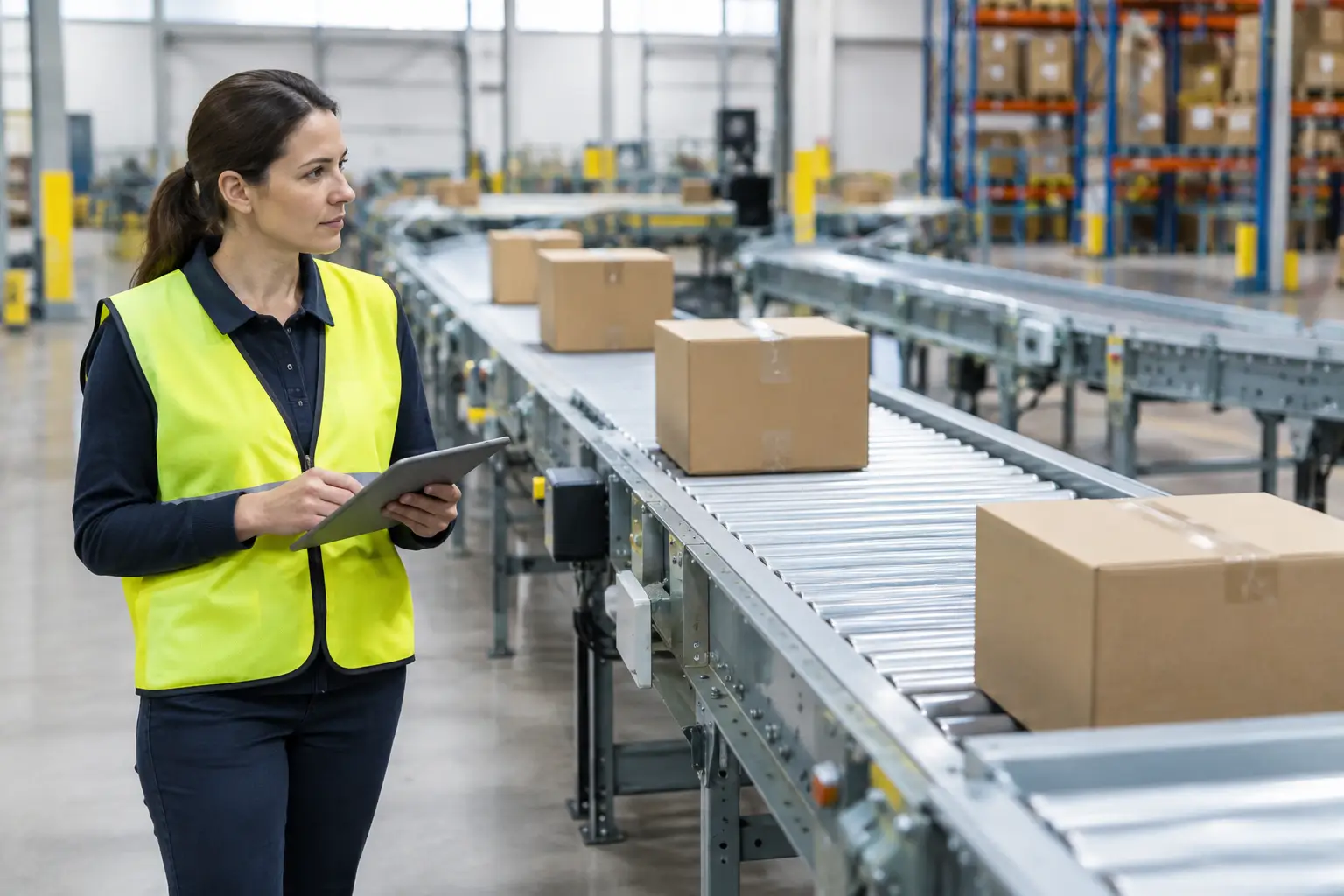
A conveyor line rarely fails at a convenient time. It fails during peak volume, after a new customer launch, or when labor is already stretched thin. Knowing when to replace warehouse conveyors is therefore not simply a maintenance question. It is a capacity, safety, and business-continuity decision.
The right answer depends on the condition of the equipment, the cost of keeping it running, and whether the system still supports the operation you need to run. A conveyor that moves cartons may appear serviceable while quietly creating downtime, product damage, labor workarounds, and missed shipping windows. The goal is to identify that point before a repairable issue becomes an unplanned capital emergency.
When to Replace Warehouse Conveyors Instead of Repairing Them
Conveyors are designed for long service lives, but they are not permanent infrastructure. Motors, gearboxes, bearings, rollers, belts, controls, and safety devices wear at different rates. Replacing individual components is often the right move, especially when the conveyor layout remains appropriate and failures are isolated.
Replacement becomes the stronger business case when repairs no longer restore predictable performance. If maintenance crews are repeatedly addressing the same zones, sourcing obsolete parts, or relying on temporary fixes to keep product moving, the system has moved beyond routine upkeep. The decision should be based on total operating impact, not the price of the next replacement motor or belt.
A practical review compares the annual cost of repairs, downtime, emergency labor, lost productivity, and product damage against the cost of modernization or replacement. It should also account for the throughput the operation needs over the next three to five years. A system that meets today's volume but cannot support planned growth may warrant replacement before its components fully fail.
1. Downtime Is Becoming Frequent or Hard to Predict
A single failure does not justify a new conveyor system. Repeated interruptions are different. When stoppages occur often enough that supervisors build recovery time into the shift, the conveyor has become an operational constraint.
Track more than total downtime. Look at where outages occur, how long it takes to diagnose them, and whether failures create downstream congestion. A short stop at an induction point, merge, sorter interface, or shipping lane can idle a much larger area of the facility. If the maintenance team cannot predict which section will fail next, planning labor and protecting service levels become much harder.
Frequent downtime may point to a targeted retrofit rather than full replacement. However, if failures are spread across mechanical and control components, replacing one section at a time can create an uneven system with new equipment tied to aging infrastructure.
2. Repair Costs Are Rising Without Improving Reliability
Maintenance spending should produce reliability. If repair costs rise year after year while uptime remains flat or declines, the operation is likely investing in a diminishing asset.
Pay attention to recurring expenses that are easy to overlook: expedited parts, overtime, outside service calls, temporary conveyors, production delays, and damage claims. These costs often sit in different budgets, which can make an aging conveyor line appear less expensive than it actually is.
Parts availability is another clear indicator. Older systems may require discontinued components, custom fabrication, or long lead times. A repair strategy that depends on one remaining supplier or a limited stock of used parts carries significant operational risk. When critical spares cannot be obtained within an acceptable recovery window, replacement planning should begin immediately.
3. The Conveyor No Longer Matches Your Product Mix or Volume
Warehouse operations change faster than many conveyor systems. Carton sizes shift, order profiles become more variable, packaging materials change, and distribution channels introduce new handling requirements. A line designed for stable case flow may struggle with small parcels, irregular products, polybags, totes, heavier loads, or higher peak rates.
Symptoms include frequent jams, poor tracking, accumulated product at merges, manual rework, and operators stepping in to bridge gaps in the process. These workarounds are not just inconvenient. They reduce the value of automation and introduce safety and quality risks.
Before replacing the system, confirm whether a redesign of specific zones can solve the problem. New accumulation logic, transfers, diverts, controls, or product-handling equipment may extend the useful life of the main conveyor. But if the overall line lacks the speed, width, elevation changes, accumulation capacity, or layout needed for future demand, a phased patchwork approach may cost more than a coordinated replacement.
4. Safety Issues Are Increasing
Safety concerns require immediate attention, whether the final solution is repair, retrofit, or replacement. Damaged guarding, worn emergency stops, exposed pinch points, inconsistent lockout/tagout provisions, failing sensors, and unstable conveyor sections should never be normalized as part of daily operations.
Older equipment can also create compliance challenges when safety standards, controls architecture, and guarding expectations have changed since the original installation. A retrofit may address individual deficiencies. Yet when safety upgrades require extensive modification throughout the line, a replacement project can provide a cleaner, more defensible long-term result.
The operational impact matters as well. A system that demands frequent manual intervention near moving equipment increases exposure even if no incident has occurred. Reducing those interventions should be part of the replacement evaluation.
5. Controls and Automation Are Obsolete
Mechanical components receive most of the attention, but controls often determine whether an older conveyor remains viable. Aging PLCs, unsupported drives, unreliable photo eyes, and limited diagnostic capability can turn a minor fault into a lengthy outage.
Modern controls can provide better zone logic, visibility into fault conditions, energy management, and integration with warehouse management, warehouse control, and sortation systems. The value is not technology for its own sake. It is faster recovery, better flow decisions, and more useful operating data.
Still, controls modernization is not always a reason to replace every conveyor section. If the frame, rollers, motors, and layout remain sound, a controls retrofit can be a high-value project. The key question is whether the mechanical system can take advantage of the improved controls without creating new bottlenecks.
6. Labor Is Filling Gaps the System Should Handle
When associates routinely push product, clear predictable jams, manually scan exceptions, or move cartons around non-functioning zones, labor is compensating for equipment limitations. Those tasks may seem manageable during normal volume, but they become costly during seasonal peaks, staffing shortages, and schedule changes.
Measure how many labor hours are devoted to conveyor-related exceptions. Also measure the indirect effect: delayed picks, missed carrier cutoffs, reduced pack-station productivity, and supervisors diverted from managing the operation. If the conveyor requires permanent workarounds, it is no longer supporting efficient material flow.
7. The Facility Layout Has Changed
Expansion, relocation, new racking, added automation, or changes in receiving and shipping can make an existing conveyor layout obsolete even when the equipment itself is in reasonable condition. A line that was correctly sized for the original building may now force unnecessary travel, cross traffic, or poor staging practices.
This is where replacement should be evaluated as part of a broader facility plan. Conveyor decisions affect storage design, dock flow, mezzanines, workstations, power, fire protection, and future automation. Treating each element as a separate project can create rework and avoidable disruption later.
A turnkey project approach helps align those dependencies before equipment is ordered. MTLI Group regularly evaluates conveyor modernization alongside facility construction, racking, automation integration, and installation sequencing so operational constraints are addressed as one scope.
8. The Business Case Supports Planned Replacement
The best time to replace a conveyor is usually before failure forces the decision. Planned work allows the operation to select equipment based on real requirements, obtain long-lead components, stage installation, train teams, and schedule cutovers around lower-volume periods.
A replacement business case should include more than equipment cost. Consider expected throughput, avoided downtime, reduced maintenance expense, labor savings, safety improvements, energy use, product damage, and the life expectancy of the new system. Include the cost of installation downtime and the mitigation plan required to protect customer commitments during the project.
Plan the Cutover as Carefully as the Equipment
A sound replacement decision can still produce a poor outcome if installation disrupts operations. Detailed site verification, phasing, temporary flow plans, clear ownership of permits and utilities, commissioning procedures, and operator training all matter. For high-volume facilities, work may need to occur by zone, during weekends, or across carefully controlled shutdown windows.
The most useful next step is a condition and capacity assessment that looks beyond visible wear. Review failure history, maintenance records, product flow, control systems, safety conditions, layout constraints, and growth plans together. That process gives leadership a practical choice between repair, targeted modernization, phased replacement, or a full system redesign - before the conveyor makes the choice for them.