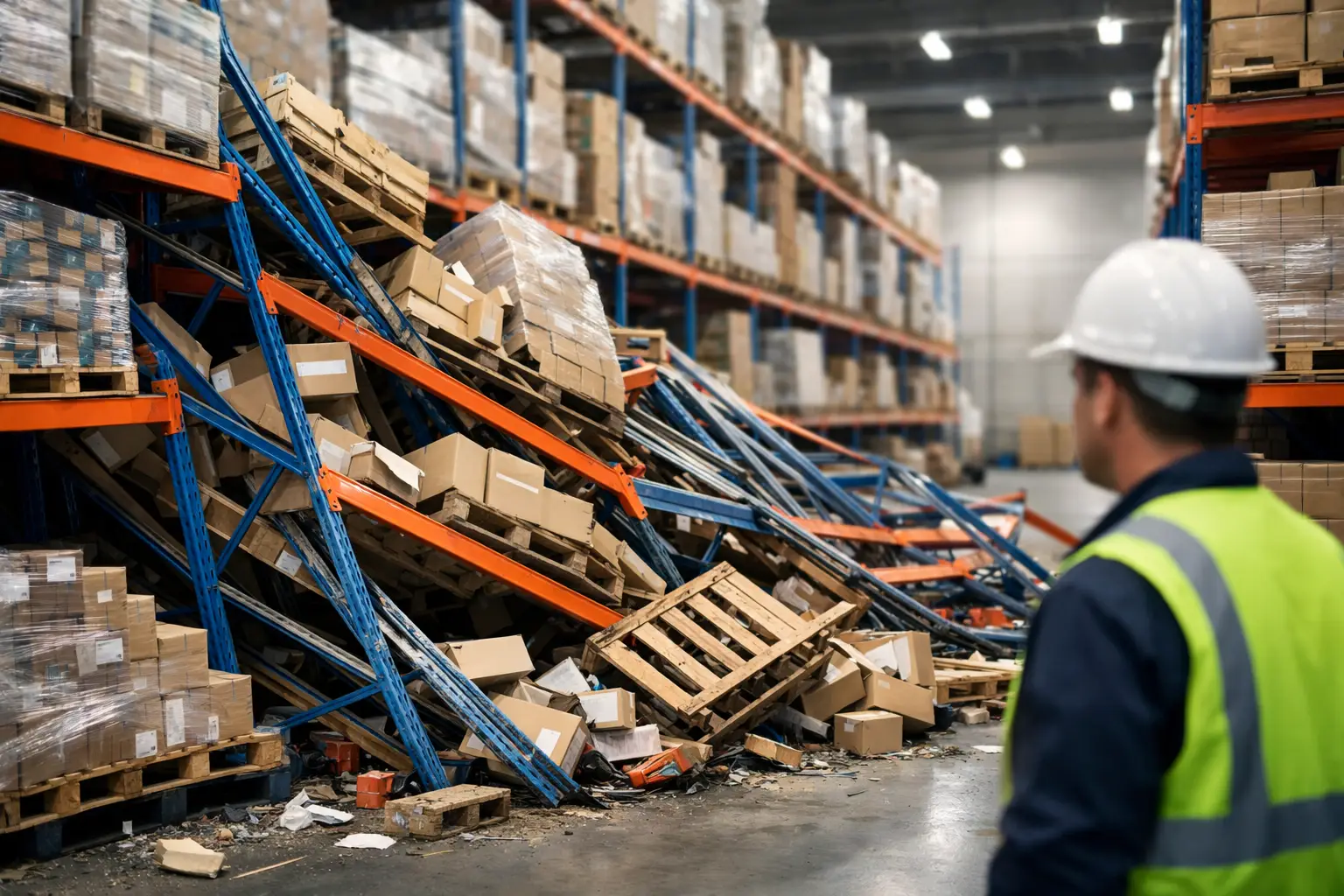
A pallet rack collapse rarely begins with one dramatic failure. More often, it starts with a bent upright that remains in service, an unreported forklift strike, a load placed on the wrong beam level, or a layout change that no longer matches the rack’s engineered capacity. Understanding what causes pallet rack collapse helps operations leaders prevent a localized defect from becoming a serious safety event, inventory loss, and prolonged interruption to throughput.
For distribution centers, manufacturing plants, cold storage facilities, and 3PL operations, rack safety is not a one-time installation consideration. It is an operating discipline that connects engineering, equipment selection, driver behavior, maintenance, inspection, and change control.
What Causes Pallet Rack Collapse in Active Warehouses?
Pallet racking is designed as a connected structural system. Uprights, beams, braces, anchors, connectors, decking, load levels, and base conditions work together to carry specified loads. When one component is damaged, improperly configured, overloaded, or changed without review, it can reduce the system’s ability to safely transfer forces through the structure.
The most common causes are forklift impact, overloaded or improperly distributed loads, damaged components, inadequate anchoring, poor installation, unapproved modifications, and missed inspections. Environmental conditions and building-floor issues can also contribute, particularly in cold storage, food and beverage, and older industrial facilities.
The critical operational point is that a rack can appear usable while its load capacity has already been compromised. A slight upright twist or a displaced anchor may not stop the next putaway cycle. Under a heavy load or another impact, however, the remaining capacity can disappear quickly.
Forklift Impact and Undetected Structural Damage
Forklift contact is among the leading causes of pallet rack damage. Impacts occur at upright base plates, lower braces, beam ends, frame columns, and aisle-facing protectors. They may happen during pallet placement, travel in narrow aisles, turning, trailer loading, or recovery from a misaligned load.
Not every strike causes an immediate collapse. That is precisely why impact damage requires a defined response. Repeated low-speed contact can bend an upright, crack a weld, loosen an anchor, distort a beam connector, or shift the rack out of plumb. The damage may be small at first, but it changes how the system carries load.
Rack protection helps reduce exposure, but it does not replace disciplined truck operation. Guards can also conceal damage if they are not included in routine inspections. Facilities should require operators to report impacts immediately, then ensure qualified personnel assess the affected bay before it is returned to normal use.
Overloading and Load Distribution Failures
Every pallet rack system has a defined load capacity based on the rack configuration, beam length, upright frame, number of beam levels, bracing, seismic requirements, anchorage, and pallet characteristics. Capacity is not determined by how much product appears to fit into the opening.
Overloading may occur when product weights change, pallets are consolidated, denser SKUs are introduced, or a warehouse uses beam levels for loads they were not designed to support. A common issue is changing from lightweight packaged goods to beverage, automotive, metal, paper, or bulk materials without reevaluating the rack structure.
Load distribution matters as much as total weight. A pallet that is off-center, overhanging excessively, damaged underneath, or carrying an unstable load can apply forces differently than the rack design assumed. Beam deflection, damaged connectors, and uneven loading between bays are warning signs that should not be normalized.
Warehouse teams also need clear, current load plaques. If capacity signage is missing, outdated, or no longer reflects the current configuration, supervisors and operators have no reliable field reference for safe loading decisions.
Pallet Condition Is Part of Rack Safety
A rack can be correctly specified and still be exposed to failure by poor pallet condition. Broken stringers, cracked deck boards, protruding nails, incompatible pallet dimensions, and excessive pallet overhang can create concentrated loading or unstable storage. In drive-in, pushback, and other high-density systems, pallet quality becomes even more consequential because clearances are tighter and the load interacts directly with rails or carts.
Improper Installation, Anchoring, and Unauthorized Changes
Installation quality determines whether engineered rack performance can be achieved in the field. Frames must be correctly assembled, beams fully seated and secured, bracing installed as designed, and anchors selected and installed for the floor conditions and applicable requirements. Racks must also be plumb, level, and aligned within appropriate tolerances.
Inadequate or damaged anchors are a serious concern. Anchors transfer forces from the rack to the concrete slab. Missing anchors, loose hardware, incorrect anchor types, poor embedment, or cracked concrete can allow movement that increases stress across the system. A facility with an aging slab, heavy point loads, moisture exposure, or previous construction work may need a closer review before rack is installed or reconfigured.
Unauthorized modifications create another frequent risk. Removing beams to create a larger opening, adding storage levels, changing beam elevations, replacing components with unmatched parts, relocating a row, or tying rack into another structure can all alter the original design. Even changes that seem practical for a short-term operational need should be reviewed by a qualified rack professional.
Mixing components across manufacturers also requires caution. Similar-looking beams and frames are not necessarily compatible. Connector geometry, steel thickness, hole patterns, locking devices, and rated capacities vary. A connection that seats imperfectly can disengage under load or impact.
How Poor Inspections Lead to Pallet Rack Collapse
Inspection failures do not physically damage rack, but they allow damage and unsafe conditions to remain in service. That makes them a major answer to the question, what causes pallet rack collapse.
Operators are closest to the rack and should identify obvious problems during normal work: impacts, dislodged beams, missing safety clips, leaning loads, damaged pallets, or rack components that look bent or out of alignment. Supervisors should reinforce that reporting damage is an operational control, not a productivity failure.
Formal inspections add a more systematic layer. A qualified inspector can identify upright deformation, connector damage, missing bracing, anchor issues, excessive beam deflection, floor problems, and capacity concerns that may not be obvious during daily activity. Inspection frequency depends on traffic levels, rack type, forklift activity, product weight, and facility conditions. High-traffic operations generally require more frequent review than low-use storage areas.
When damage is found, the response should be based on risk. Some conditions warrant immediate unloading and isolation of the affected area. Others may allow controlled use until repair, but only after competent assessment. The mistake is leaving a visibly damaged component in service because the rack has not failed yet.
Environmental and Facility Conditions That Increase Risk
Racking operates within a building, and building conditions affect rack performance. Corrosion can reduce component strength in humid, wet, or washdown environments. Cold storage facilities face additional considerations around temperature, condensation, ice, floor movement, and equipment operating clearances.
Vehicle traffic patterns can change as well. A newly installed conveyor, charging station, guardrail, or pick module may narrow maneuvering space and increase impact exposure. Expansion projects can introduce new equipment and heavier inventory without a corresponding rack review.
Seismic design requirements vary by location and facility conditions. Rack designed for one use, location, or load configuration should not automatically be assumed suitable after a relocation or major operational change. This is one reason relocations and reconfigurations benefit from an integrated review of the rack, slab, material handling equipment, and current storage profile.
A Practical Prevention Program
Preventing collapse requires more than replacing damaged steel after an incident. The strongest programs establish ownership across operations, safety, maintenance, and facility leadership. They pair engineered rack design with defined inspection routines, clear capacity information, operator training, documented impact reporting, and timely repairs using compatible rated components.
Before adding storage levels, changing pallet types, increasing SKU density, introducing heavier product, or moving rack to a different building, verify the system’s capacity and installation requirements. This step can prevent an apparently simple capacity project from creating an unplanned structural risk.
Turnkey facility partners such as MTLI Group can coordinate rack assessment, storage design, installation, relocation, repair, and material handling integration under one project scope. For operations managing change at scale, that coordination helps avoid gaps between the designed system and the way it is ultimately used.
A safe rack system is not defined by how long it has stood without incident. It is defined by whether its current condition, loads, configuration, and operating environment still match the conditions it was designed to handle.