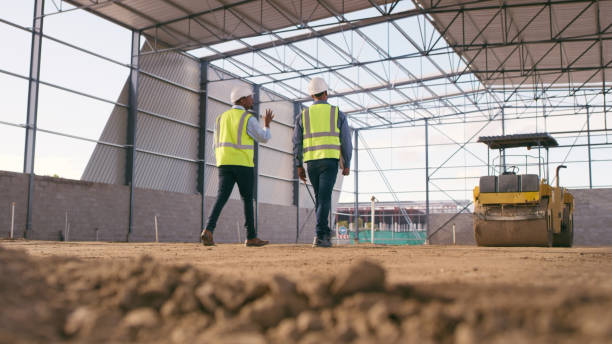
Compare warehouse expansion vs new construction costs, timelines, and disruption. Learn which option fits your site and goals, read now.
Operations directors facing capacity constraints eventually land on the same question: expand the current facility or build a new one from the ground up. Both paths solve the same underlying problem, not enough space, but they come with very different costs, timelines, and operational disruptions. Making the right call requires a clear look at the specific factors driving the decision, not a default toward whichever option seems simpler on the surface.
This blog walks through how to evaluate warehouse expansion against new construction, what factors should drive the decision, and where each option tends to make more financial and operational sense. MTLI Group provides construction and general contracting services across the US and Canada, working with operations teams on both expansion and new build projects.
Why This Decision Matters More Than It Looks
The choice between warehouse expansion and new construction affects far more than just square footage. It determines capital outlay, project timeline, ongoing operational disruption during construction, and how well the resulting facility supports the business for the next decade.
According to the U.S. Census Bureau, construction put in place for warehousing and storage facilities reached $38.5 billion in 2024. A meaningful share of that figure includes expansion and renovation activity on existing buildings, not just new ground-up builds. Operations directors are not alone in weighing this decision; it is one of the most common capital planning questions in industrial real estate today.
When Warehouse Expansion Makes Sense
Expanding an existing facility means adding square footage, height, or capacity to a building the company already owns or leases long-term. This path tends to make sense under a specific set of conditions.
The site has available land or vertical capacity
A warehouse expansion that adds onto an existing building footprint requires available land adjacent to the current structure. Vertical expansion options, including adding mezzanine levels, depend on existing clear height and structural capacity. The mezzanine installation process is one of the fastest ways to add usable space without expanding the building footprint at all.
The current location still works
If the facility's location supports labor availability, transportation access, and proximity to customers or suppliers, there is little reason to relocate. A distribution center expansion at a well-positioned site preserves all the operational advantages of the current location while adding the capacity the business needs.
The existing structure is sound
Expansion only makes sense if the current building's foundation, structural system, and major mechanical systems are in good condition. A pre-expansion structural assessment confirms whether the building can support additional square footage or added height without significant remediation work.
The business needs capacity faster than new construction allows
Expansion projects generally move faster than ground-up builds because much of the site work, utility connections, and permitting groundwork already exists. For operations directors facing near-term capacity constraints, that speed advantage often outweighs other considerations.
When New Construction Makes More Sense
New construction means building a facility from the ground up, either on a new site or by replacing an existing structure entirely. Despite the higher upfront cost and longer timeline, several scenarios favor this path over warehouse expansion.
The current location no longer fits operational needs
If labor availability has tightened, transportation infrastructure has changed, or the customer base has shifted geographically, no amount of warehouse expansion fixes a location problem. New construction allows the business to select a site that matches current and future operational requirements.
The existing building cannot support modern specifications
Older facilities often have clear heights, column spacing, and floor load capacities that fall well short of what automated systems and modern racking require. Retrofitting these limitations is sometimes more expensive than building new, particularly when structural modifications are extensive.
The required capacity increase is too large for the current site
Some growth projections exceed what any reasonable expansion of the existing facility could accommodate. When the gap between current capacity and projected need is large, new construction on a properly sized site is often the more efficient path.
Warehouse construction from the ground up also gives operations directors full control over specifications: clear height, dock configuration, automation readiness, and layout, all designed around current operational requirements rather than constrained by an existing structure.
Comparing the Two Paths: Cost, Timeline, and Disruption
The table below summarizes how warehouse expansion and new construction typically compare across the factors that matter most to operations directors:
| Factor | Warehouse Expansion | New Construction |
|---|---|---|
| Typical project timeline | 4 to 9 months | 12 to 24 months |
| Capital cost relative to capacity added | Generally lower per square foot | Higher upfront, full specification control |
| Operational disruption | Moderate to significant if facility stays active | None until move-in |
| Site and location flexibility | Limited to current site constraints | Full flexibility on site selection |
| Specification control | Limited by existing structure | Full control over all specifications |
| Speed to additional capacity | Faster in most cases | Slower, but produces a fully modern facility |
Operational disruption deserves particular attention for operations directors. A warehouse expansion or warehouse renovation conducted while the facility remains active requires careful sequencing to avoid interrupting daily operations. Construction zones, material staging, and temporary access changes all need to be planned around ongoing shipping and receiving activity.
The Hybrid Path: Renovation Plus Expansion
Many projects do not fall cleanly into either category. A warehouse renovation combined with an expansion is common when a facility needs both updated infrastructure and additional space. This approach modernizes mechanical, electrical, and structural systems while adding square footage in the same project phase.
This hybrid path works well when the existing structure has good bones but outdated systems. Updating dock equipment, electrical capacity, lighting, and fire suppression at the same time as adding new square footage avoids the inefficiency of doing renovation work twice, once now and again when expansion eventually happens.
Installations work involved in this type of project often includes new racking systems, updated material handling infrastructure, and structural modifications to support both the renovated and expanded sections of the facility under one coordinated scope.
Evaluating Long-Term Capacity Needs Before Deciding
A common mistake in this decision is sizing the project for current needs rather than projected growth. Operations directors should evaluate capacity requirements over a 5 to 10 year horizon, not just the next budget cycle.
The table below outlines questions that help clarify whether warehouse expansion or new construction better fits a company's growth trajectory:
| Planning Question | Favors Expansion | Favors New Construction |
|---|---|---|
| Is projected growth moderate and steady? | Yes | Less likely needed |
| Is projected growth rapid or uncertain in direction? | Limited fit | Yes, more flexibility |
| Does the current site have room to grow further later? | Yes, supports phased growth | Less relevant |
| Are automation plans part of the growth strategy? | Depends on existing structure | Often better suited |
For facilities planning to add warehouse automation as part of a capacity increase, the existing building's clear height, column spacing, and floor load capacity should be assessed early. These factors often determine whether expansion can support automation or whether new construction is the more practical route.
What to Assess Before Committing to Either Path
Before choosing between warehouse expansion and new construction, operations directors should commission a few key assessments. A structural and condition assessment of the existing facility identifies what limitations, if any, exist for expansion. A capacity and throughput analysis projects future space and equipment needs based on realistic growth assumptions, not best-case projections. A cost comparison, built on actual quotes rather than rough estimates, compares expansion and new construction costs for the specific scenario at hand.
The U.S. Bureau of Labor Statistics projects continued growth in construction and extraction occupations through 2032, which affects labor availability and cost for both expansion and new construction projects. Factoring current labor market conditions into project timelines helps operations directors set realistic expectations regardless of which path they choose.
How MTLI Group Supports Both Expansion and New Construction Projects
MTLI Group works with operations teams on both warehouse expansion and new construction projects across the US and Canada. Services cover structural assessments, design and engineering, warehouse construction, renovation and tenant improvement work, racking and automation integration, and ongoing facility management.
With over 40 years of experience and more than 15,000 completed projects, MTLI brings the assessment capability and execution experience needed to help operations directors choose the right path and deliver the project on schedule.
For teams considering a full facility move instead of expansion, a relocation planning guide outlines what a relocation project involves. For a detailed look at project budgeting, the warehouse buildout cost guide breaks down typical cost ranges across project types. You can also learn more about MTLI Group and the full range of construction and facility services available.
Choosing the Right Path for Your Facility's Growth
Warehouse expansion and new construction both solve capacity constraints, but they fit different situations. Expansion makes sense when the current site, structure, and location still support the business and speed matters more than full specification control. New construction makes sense when the location no longer fits, the existing building cannot support modern requirements, or projected growth exceeds what the current site can accommodate.
A distribution center expansion or a ground-up build both require the same foundation for success: an accurate assessment of current conditions, a realistic projection of future needs, and a construction partner capable of executing the chosen path on time and within budget.
MTLI Group provides the assessment, design, and construction expertise operations directors need to evaluate warehouse expansion against new construction and execute whichever path fits the business best. Reach out to the MTLI Group team to discuss your facility's growth plans.