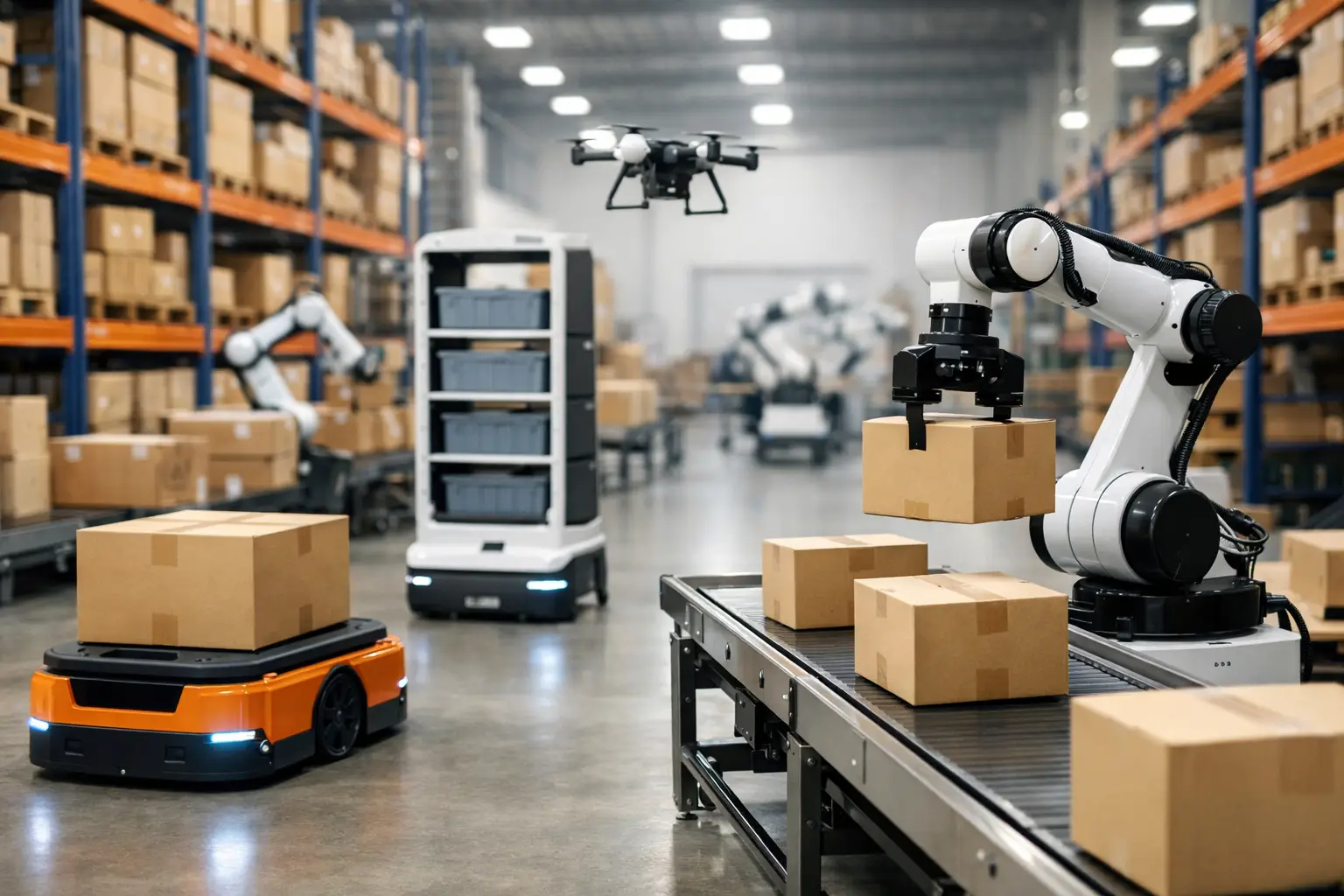
A warehouse can add conveyors, robots, and software yet still struggle to ship on time. The difference is not the amount of technology on the floor. It is whether the equipment, building, storage layout, controls, and operating model work as one system. That is the central issue behind warehouse automation trends 2026.
For operations leaders, automation decisions are moving beyond a simple labor-reduction calculation. Labor availability still matters, but so do service levels, SKU growth, peak-volume resilience, safety exposure, facility constraints, and the ability to recover quickly when a critical asset goes down. The strongest projects will be designed around total material flow and lifecycle execution, not a single piece of equipment.
Warehouse Automation Trends 2026: Integration Over Islands
The market is moving away from isolated automation investments that solve one bottleneck while creating another. A high-speed picking system has limited value if replenishment cannot keep pace. Autonomous mobile robots can improve travel time, but not if receiving, staging, charging, and exception handling were treated as afterthoughts.
In 2026, more organizations will prioritize integrated designs that connect storage, material handling equipment, warehouse controls, and facility infrastructure. That may include automated storage and retrieval systems, conveyor and sortation, robotic picking, AMRs, pallet handling, print-and-apply equipment, and warehouse execution software. The right mix depends on order profiles and operating constraints, not on which technology is receiving the most attention.
This shift places greater value on early project coordination. Clear floor loads, fire protection requirements, power distribution, network coverage, rack geometry, egress, maintenance access, and control-system interfaces must be resolved before installation begins. Retrofitting these elements after equipment arrives adds cost and creates avoidable downtime.
Physical infrastructure is part of the automation plan
Automation projects are often treated as equipment purchases. In practice, they are facility projects. Slab conditions can affect mobile robotics. Clear height and roof obstructions can determine whether an automated storage system is viable. Existing sprinkler coverage may need modification when storage density changes. Electrical capacity, battery charging locations, and ventilation can become schedule-critical issues.
For established facilities, the assessment should begin with a complete view of the building and current operation. That includes material flow from dock to storage to pack-out, as well as the condition of racking, conveyors, mezzanines, doors, lighting, safety guarding, and utilities. A phased plan is often the better choice when operations cannot pause for a full conversion.
Flexible Automation Will Outperform One-Size-Fits-All Designs
E-commerce variability, shorter product lifecycles, and changing customer requirements have made fixed workflows harder to justify in many environments. That does not mean every warehouse should deploy AMRs or pursue highly flexible robotics. It means the automation strategy should match the volatility of the operation.
Fixed automation remains highly effective where volumes are predictable, product dimensions are stable, and throughput requirements are consistently high. Conveyor, sortation, palletizing, and automated storage systems can deliver strong performance in these conditions. They are especially valuable when designed around a known flow and supported by a disciplined preventive maintenance program.
Flexible automation becomes more compelling when order profiles change frequently, labor must move across functions, or the facility needs to scale in smaller increments. AMRs can support picking, replenishment, case transport, and line-side delivery without extensive fixed conveyance. Robotics can reduce repetitive tasks in packing, depalletizing, palletizing, and piece handling, although performance still depends on product characteristics and exception rates.
The trade-off is operational complexity. Flexible systems require disciplined traffic rules, battery management, software governance, spare-parts planning, and trained supervisors. A pilot can validate the technology, but only a full operating model determines whether it will perform at scale.
Software and Controls Are Becoming the Operating Layer
Warehouse automation is increasingly defined by the quality of its controls architecture. As more systems communicate across the facility, warehouse management systems, warehouse control systems, warehouse execution systems, PLCs, robotics platforms, and machine interfaces must exchange accurate information in near real time.
The practical goal is not to add software for its own sake. It is to improve orchestration. The system should route work according to current conditions, balance labor and automated capacity, manage inventory movement, identify exceptions, and provide supervisors with usable operational visibility.
In 2026, buyers should pay close attention to interface ownership and long-term support. A project can perform well during commissioning but become difficult to maintain when multiple vendors control different portions of the logic. Define who owns the controls design, who supports integrations, how changes are documented, and how the operation will function if a connected system is unavailable.
Cybersecurity also belongs in the project scope. Networked equipment, remote access, industrial controls, and cloud-connected platforms create exposure that traditional facility teams may not be structured to manage. Segmented networks, access controls, patching responsibilities, backup procedures, and incident response plans should be established before go-live.
Automation ROI Will Be Measured Beyond Headcount
Labor savings remain a major driver, but the most credible business cases consider the full operating impact. Automation can improve order cycle time, inventory accuracy, pick density, dock utilization, ergonomic conditions, and capacity within an existing footprint. It can also reduce the disruption caused by turnover in high-demand labor markets.
A sound financial model should include capital cost, construction and installation work, controls integration, software, commissioning, training, maintenance, spare parts, energy consumption, and expected replacement cycles. It should also account for the cost of operational disruption during implementation.
Operations leaders should avoid assuming that every automated process eliminates labor. In many cases, labor shifts to exception management, replenishment, quality control, technical support, or higher-value process work. The better question is whether the system increases dependable throughput while lowering the cost and risk of each unit handled.
Useful measures usually include units per labor hour, order lead time, error rates, equipment availability, utilization, safety incidents, and cost per order. Baseline these measures before the project starts. Without a reliable baseline, post-launch performance discussions become subjective.
Uptime, Serviceability, and Safety Will Drive Design Choices
As facilities automate more critical material flow, downtime becomes more expensive. A failed conveyor zone, a control issue, or a depleted robot fleet can affect receiving, picking, packing, and shipping within hours. The design must therefore consider recovery as carefully as normal operation.
Serviceability begins with access. Maintenance teams need safe space around equipment, clear lockout points, appropriate guarding, documented procedures, and access to common wear parts. Remote monitoring can help identify developing issues, but it does not replace on-site maintenance capability or a dependable escalation plan.
Safety requirements are also becoming more integrated with automation design. Pedestrian routes, forklift travel, robot operating zones, rack protection, fall protection, emergency stops, and fire code compliance cannot be reviewed independently. The objective is to reduce exposure without creating workarounds that employees will bypass during peak periods.
For high-throughput facilities, redundancy may be justified in selected areas. This does not always mean duplicating an entire system. It may mean alternate conveyor paths, manual bypass procedures, extra charging capacity, spare critical components, or the ability to isolate a failed zone while the rest of the operation continues.
Brownfield Modernization Will Remain a Major Opportunity
Many North American warehouses were not built for current labor, storage, and order-fulfillment demands. Greenfield facilities offer design freedom, but brownfield modernization is often the faster path to capacity when a company has an established distribution network and limited appetite for relocation.
Brownfield projects require more disciplined execution because the building remains operational. Work may need to occur by zone, during off-hours, or through carefully controlled shutdown windows. Existing rack systems may require reconfiguration or replacement. Equipment installation may need to follow temporary material-flow plans so outbound shipping continues.
The most successful modernization programs establish a detailed sequence before work begins. That sequence should define operational cutovers, temporary storage, safety separation, contractor access, delivery staging, commissioning tests, and contingency actions. A turnkey approach is particularly valuable when construction, storage systems, automation, installation, and facility support must be coordinated under one accountable project structure.
What to Decide Before Selecting Technology
Technology selection should follow operational definition, not precede it. Before evaluating equipment, leadership teams should agree on expected demand, SKU characteristics, inventory strategy, service commitments, labor assumptions, growth plans, and acceptable disruption during implementation.
Four questions often expose gaps early in planning:
- What bottleneck is limiting throughput today, and what will limit it after demand grows?
- Which processes are stable enough to automate, and which need flexibility?
- What building, utility, code, and storage constraints affect the design?
- Who will maintain, troubleshoot, and improve the system after commissioning?
The answers create a better basis for comparing alternatives. They also help prevent a common mistake: purchasing a technology that performs well in a demonstration but does not fit the facility, workforce, or daily operating reality.
Automation in 2026 will reward companies that treat the warehouse as an interconnected operating asset. Start with the flow, validate the infrastructure, plan the transition, and build for the people who will run and maintain the system every day.