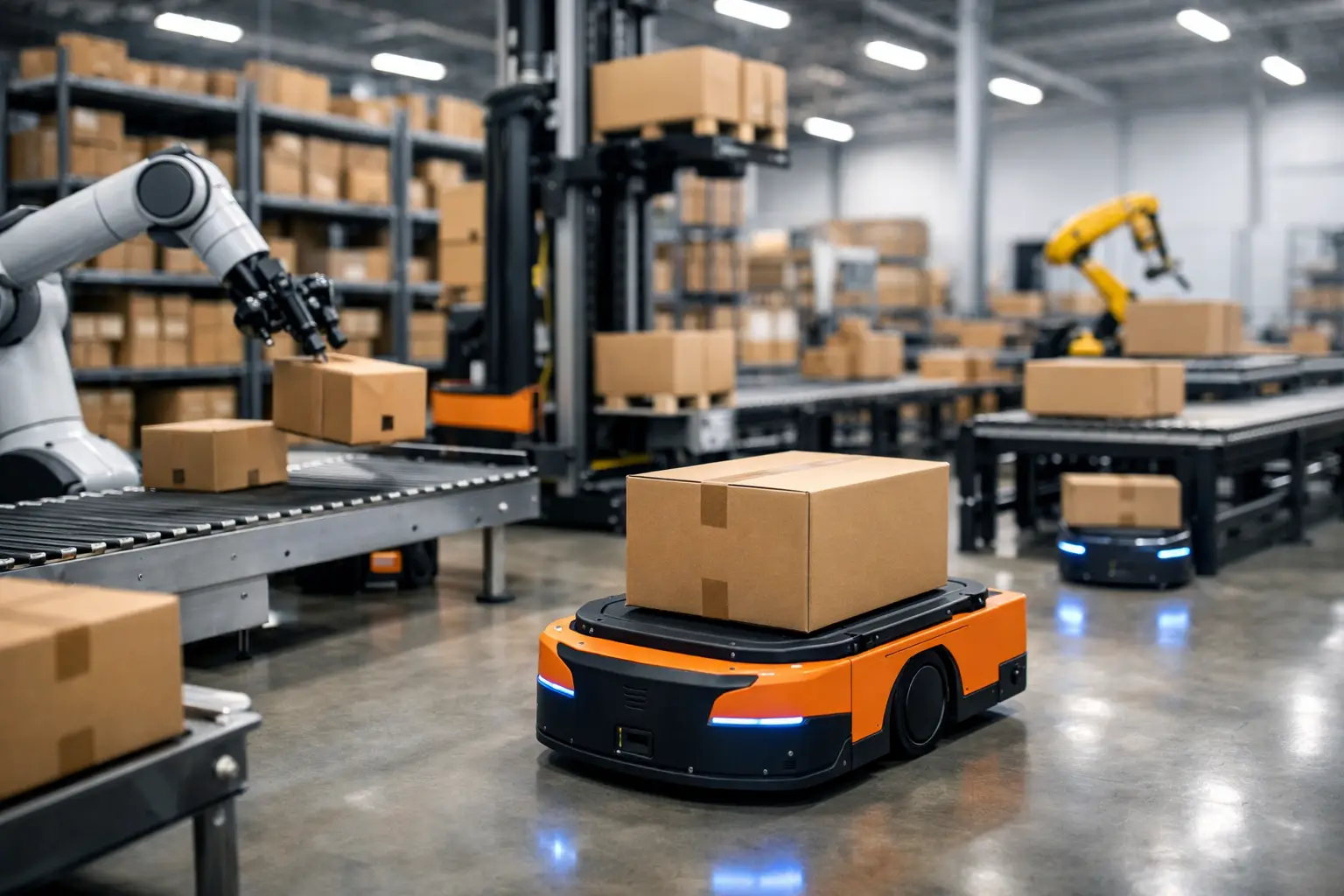
A warehouse does not need to be obsolete to hold back performance. Many distribution and manufacturing facilities have sound buildings, functional racking, and experienced teams, yet still lose time to manual travel, congested pick paths, disconnected systems, and inconsistent processes. Warehouse automation retrofit solutions address those constraints by upgrading targeted parts of an operating facility rather than requiring a full greenfield replacement.
For operations leaders, the objective is not automation for its own sake. It is higher throughput, better labor utilization, improved order accuracy, safer material flow, and a facility that can absorb changing volume without creating unacceptable disruption. The right retrofit begins with the operating problem, the existing building conditions, and a realistic plan for maintaining production during installation.
When a Retrofit Makes More Sense Than a New Facility
A new automated distribution center can offer a clean design and maximum flexibility. It also requires capital, time, real estate, permitting, startup planning, and a transition period that may not fit the business. A retrofit can be the better path when the current location remains strategically valuable, the building envelope is serviceable, and the operation needs measurable improvement on a shorter timeline.
This is common in facilities where demand has outgrown manual processes but has not yet justified a full relocation. It also applies when a company has acquired an existing operation, consolidated inventory, or inherited aging material handling equipment that no longer aligns with service-level requirements.
The trade-off is that existing facilities impose constraints. Clear height, column spacing, floor condition, fire protection, electrical capacity, dock configuration, and active production schedules all affect what can be installed and how quickly. A retrofit is not simply a smaller version of a new automation project. It requires disciplined field verification and careful integration with the facility already in use.
Start With Material Flow, Not Equipment
The most productive warehouse automation retrofit solutions are built around actual movement of inventory and orders. Before selecting equipment, project teams should understand where product enters, where it is stored, how it is picked or produced, where exceptions occur, and how orders leave the building.
A facility may appear to have a picking problem when the real constraint is replenishment. Another may struggle with shipping cutoffs because packed cartons accumulate before sortation. In manufacturing, the issue may be unreliable movement of components between work cells rather than storage density. Equipment selected without this analysis can shift congestion from one area to another.
A practical assessment should review current and forecasted order profiles, SKU velocity, inventory characteristics, labor travel, peak periods, error rates, and available space. It should also document building and utility conditions. Accurate data matters, but so does observation on the floor. The way a process is designed and the way it is performed during a peak shift are not always the same.
Identify the Constraint Worth Solving
Retrofit scope should be tied to a defined operational constraint. Typical priorities include reducing picker travel, increasing usable storage positions, automating repetitive transport, improving pack-and-ship flow, or creating more reliable movement between production and warehouse areas.
A focused scope often produces better results than attempting to automate every activity at once. For example, adding conveyor and sortation to a high-volume outbound lane may release capacity more quickly than redesigning the entire warehouse. In another operation, a vertical storage system or automated storage and retrieval solution may recover floor space needed for value-added services, staging, or production support.
Common Retrofit Approaches
The appropriate technology depends on product, throughput, building conditions, labor availability, and required service levels. No single automation platform fits every facility.
Conveyor systems remain effective for repeatable carton, tote, or case movement between fixed process points. A retrofit may add accumulation, diverts, print-and-apply integration, sortation, or packing lanes while preserving existing shipping operations. The design must account for maintenance access, egress, overhead clearances, and future expansion.
Autonomous mobile robots can be a practical option where routes and processes change frequently. They can support goods-to-person picking, putaway, replenishment, and material transport without extensive fixed conveyor infrastructure. Their flexibility is valuable, but they still require disciplined traffic rules, charging strategy, wireless coverage, and coordination with pedestrians and powered industrial equipment.
Automated storage and retrieval systems are often used when storage density, retrieval speed, and inventory control are primary concerns. Shuttle systems, vertical lift modules, pallet handling automation, and crane-based systems can improve cube utilization, especially where footprint expansion is limited. These solutions require close review of slab capacity, seismic requirements, fire protection, and rack interface conditions.
Pick modules, carton flow, pallet flow, and selective rack reconfiguration can also be part of an automation retrofit. Not every improvement requires a highly automated system. A redesigned storage and picking environment, paired with warehouse management system logic and directed replenishment, can materially improve throughput at a lower capital level.
Integration Is Where Retrofit Projects Succeed or Fail
Equipment is only one part of the project. The retrofit must work with the warehouse management system, warehouse control system, enterprise resource planning platform, labeling processes, safety systems, and the people who operate the facility.
Integration requirements should be defined early. Teams need clarity on who owns controls logic, system interfaces, data mapping, exception handling, testing, and acceptance criteria. A sorter that moves cartons quickly has limited value if labels cannot be validated, exceptions cannot be routed, or downstream shipping systems cannot keep pace.
Physical integration matters just as much. New automation may require structural steel, guards, electrical distribution, compressed air, network drops, fire protection modifications, and changes to existing racking. When these scopes are managed by separate vendors without a clear sequence, coordination gaps can create delays and rework.
A turnkey delivery approach helps reduce that risk by aligning facility modifications, storage systems, equipment installation, controls coordination, and commissioning under one accountable project structure. For complex retrofit work, the ability to coordinate construction and material handling scope is often as valuable as the automation technology itself.
Protect Throughput During Installation
The greatest concern in an active warehouse is usually not whether the equipment can be installed. It is whether the project can be completed without compromising customer commitments, production schedules, or safety.
Successful retrofit plans divide work into phases that preserve critical operating areas. Installation may occur during off-shifts, weekends, seasonal slow periods, or planned shutdown windows. Temporary staging, alternate travel routes, inventory relocation, and clear communication with supervisors are essential. The schedule should include time for unexpected field conditions, because existing facilities regularly reveal conditions that drawings do not show.
Commissioning should not be treated as the last administrative step. It is the transition from construction to operations. Testing needs to cover normal operating conditions, peak-rate performance, product variations, failure recovery, and exceptions. Operators and maintenance personnel should be trained before go-live, with clear procedures for manual fallback when needed.
Plan for Safety and Maintainability
Retrofitted automation must improve the work environment, not introduce unmanaged risk. Guarding, emergency stops, lockout procedures, pedestrian separation, fall protection, and equipment access need to be designed into the installation. Safety review should include how technicians will clear jams, replace components, inspect equipment, and perform preventive maintenance.
Maintainability is particularly important in facilities that operate multiple shifts. A system that performs well in a demonstration but requires frequent specialized intervention can create a new operational constraint. Spare parts strategy, local service support, controls documentation, and response procedures should be part of the scope from the beginning.
Build the Business Case Around Operational Capacity
A retrofit business case should extend beyond headcount reduction. Labor savings can be meaningful, but the full value may include higher order capacity, reduced overtime, improved inventory accuracy, fewer damages, better ergonomic conditions, and deferred building expansion.
The calculation should reflect the cost of doing nothing. If manual processes require more space, additional shifts, recurring temporary labor, or service-level concessions during peak periods, those costs belong in the evaluation. At the same time, assumptions should be tested against real operating data. Volume forecasts can change, and a system sized only for an aggressive growth scenario may be difficult to justify.
The strongest projects use phased investments where appropriate. A facility may first improve storage layout and outbound flow, then add mobile automation or higher-density storage as volume stabilizes. This approach preserves options while delivering early operational gains.
Choose a Partner That Can Execute in an Operating Facility
Retrofit projects demand more than product knowledge. The delivery team must understand building conditions, installation sequencing, live-site safety, controls integration, racking, utilities, and commissioning. It must also be prepared to make decisions when field conditions change.
For organizations managing complex facilities across North America, working with a single accountable partner can simplify procurement and reduce handoffs between construction, automation, storage, and installation providers. MTLI Group applies this integrated approach to help clients modernize critical facilities while maintaining focus on daily operations.
The right retrofit is the one that removes a specific constraint, fits the facility, and can be supported after go-live. Start with a clear view of material flow and operational priorities, then build a phased plan that gives the operation room to improve without putting current performance at risk.