Customers do not think about supply chains. They think about delivery dates. A checkout screen that shows a date too far out costs a sale, no matter how good the product is. For e-commerce brands, the speed gap between an order coming in and a package leaving the building is the single biggest factor separating fast operators from slow ones, and that gap is exactly where automation makes the biggest difference.
MTLI helps e-commerce brands across the U.S. design and build fulfillment centers that move orders out the door faster without sacrificing accuracy. This guide breaks down where automation actually speeds up e-commerce fulfillment, which technologies deliver the biggest gains, and how to plan an upgrade that fits your order volume.
Why Fulfillment Speed Has Become a Competitive Pressure
Online retail keeps growing as a share of total spending, and that growth is reshaping where job demand sits across the supply chain. Warehousing and storage employment is projected to grow 13.1% over the 2022 to 2032 period, driven largely by the continued expansion of e-commerce (U.S. Bureau of Labor Statistics, Spotlight on Statistics, 2026). The Bureau's longer-range projections through 2034 point the same direction, noting that the growth of e-commerce is expected to support employment growth in transportation and warehousing even as it reduces demand for brick-and-mortar retail (U.S. Bureau of Labor Statistics, Monthly Labor Review, 2026).
As order volume keeps climbing, brands compete on delivery speed almost as much as they compete on price. E-commerce fulfillment speed is no longer a backend operations detail. It shows up directly in customer reviews, repeat purchase rates, and cart abandonment when checkout shows a delivery date that feels too far away.
Where Manual Fulfillment Slows Orders Down
Before looking at automation, it helps to understand exactly where manual fulfillment loses time. The most common bottlenecks include:
- Walking time. Workers traveling on foot to locate items account for a large share of total picking time in manual operations.
- Order batching delays. Without smart software routing, workers may pick one order at a time instead of grouping similar orders for efficiency.
- Manual sorting errors. Misrouted packages require rework, which adds delay and increases the chance of a wrong shipment.
- Inconsistent peak capacity. Manual operations rely on adding temporary staff during sales events, which takes time to ramp up and often underperforms compared to a trained core team.
- Manual inventory checks. Physical counts slow down the process of confirming stock before an order ships.
Each of these points is a place where automation removes time without removing accuracy.
Core Technologies Behind Order Fulfillment Automation
Order fulfillment automation covers a range of equipment and software, each addressing a different part of the order cycle. The main components include:
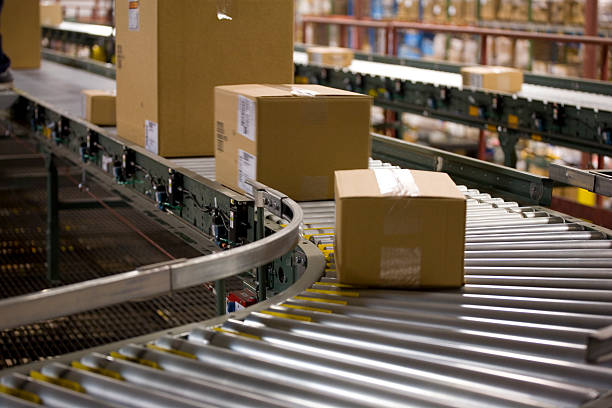
- Conveyor and sortation systems. These move packages between stations and route them to the correct shipping lane automatically, cutting the time it takes to move an order from packing to dispatch.
- Goods-to-person picking. Instead of workers walking to inventory, the system brings the product to a fixed picking station, which significantly reduces walking time per order.
- Automated Storage and Retrieval Systems (ASRS). Computer-controlled cranes retrieve totes or pallets from tall racking and deliver them directly to a picking or packing area.
- Warehouse management software. This software batches orders intelligently, directs workers or robots along the fastest route, and updates inventory in real time as items are picked.
- Automated packing stations. Some facilities use machines that measure each item and select the right box size automatically, reducing manual decision time at the packing stage.
Manual vs. Automated Fulfillment Speed Drivers
| Process Step | Manual Approach | Automated Approach |
|---|---|---|
| Order picking | Worker walks to each item | Goods arrive at a fixed station |
| Order routing | Manual sorting by staff | Conveyor and sortation systems route automatically |
| Inventory checks | Periodic manual counts | Real-time tracking through software |
| Peak volume handling | Temporary staff additions | Existing automated capacity absorbs spikes |
| Packing | Manual box selection | Automated sizing and packing stations |
How Fulfillment Center Automation Translates Into Faster Shipping
Fulfillment center automation is the broader measure of how well a facility turns inventory into shipped orders, and speed is one of its clearest outcomes. A facility with a poor layout, disconnected systems, or heavy reliance on manual counting will struggle to hit fast shipping windows no matter how hard the staff works.
Improving fulfillment center automation usually starts with mapping the actual order flow from the moment an order arrives to the moment it leaves the dock. Many e-commerce brands find that a large share of their delay sits in steps that feel routine, such as walking to a storage location or manually confirming a pick before packing. Addressing these steps with the right combination of automation and layout changes often shortens the order cycle more than any single piece of new equipment.
Calculating the Speed Gain From a Specific Upgrade
Brands considering e-commerce fulfillment automation often want a concrete sense of the time saved before committing budget. A useful way to estimate this is to track the current average time per order across each major step, then compare it against realistic benchmarks for the proposed system.
For example, a brand using fully manual picking might average several minutes of walking time per order. Replacing that with goods-to-person picking often cuts walking time to near zero, since the product comes to the worker. Multiplied across thousands of daily orders, even a modest per-order time saving adds up to a significant increase in daily shipping capacity.
Typical Fulfillment Automation Project Timeline
| Project Phase | Core Activity | Estimated Duration |
|---|---|---|
| Assessment | Order flow mapping, volume forecasting | 1 to 2 months |
| Design | Layout and equipment selection | 1 to 2 months |
| Construction | Floor and electrical preparation | 2 to 4 months |
| Installation | Equipment setup, software integration | 2 to 4 months |
| Launch | Staff training, phased go-live | 1 month |
Handling Peak Season Without Losing Speed
Seasonal sales events put the biggest strain on fulfillment speed, since order volume can spike well beyond normal daily levels. Warehouse hiring has historically surged ahead of peak season, with warehousing and storage employment climbing sharply year over year in the run-up to the holidays as operators scramble to add labor capacity. Manual operations typically respond this way, hiring temporary staff who take time to train and often do not reach the productivity of a trained core team within the short window of a sales event.
E-commerce fulfillment automated systems scale differently. A conveyor or goods-to-person system that already runs at a steady pace during normal periods can often absorb a volume spike without needing the same proportional increase in staff. This is one of the clearest advantages automation offers e-commerce brands that see sharp, predictable seasonal demand, such as the period leading into the winter holidays.
Planning a Fulfillment Centre Built for Speed
For brands building a new fulfillment center or significantly expanding an existing one, speed should be a design input from the start rather than something layered on after the building is finished. This means planning dock door placement, conveyor routing, and racking layout around the actual order flow, not just around available floor space.
MTLI manages this kind of project through our construction and general contracting services, combined with our warehouse automation team, so the building and the equipment are designed together. This coordinated approach matters most for brands in e-commerce fulfillment that need a facility built around fast, high-volume order cycles rather than a generic warehouse layout.
Common Mistakes E-Commerce Brands Make When Automating
Even well-funded automation projects run into avoidable issues:
- Automating the slowest step without checking the bigger picture. Speeding up one process step does not help if the next step in the chain becomes the new bottleneck.
- Underestimating software integration time. New equipment needs to communicate properly with existing order management systems, which takes more planning than most brands expect.
- Skipping a volume forecast. Equipment sized for current order volume can become a constraint within a year or two of fast growth.
- Ignoring staff training. Workers unfamiliar with new picking stations or sortation systems slow the process down during the transition period.
- Treating automation as a one-time project. Order patterns change over time, and systems need periodic review to stay matched to current volume.
Maintaining Speed Once Automation Is in Place
Fulfillment speed gains from automation only hold up with consistent maintenance. A conveyor running slightly out of alignment or a sensor drifting out of calibration can quietly add time back into the order cycle without an obvious failure. MTLI supports ongoing speed and reliability through our facility management services, which include scheduled inspections and rapid response support for any issue affecting order flow.
Working with MTLI on Your Fulfillment Speed Project
Improving e-commerce fulfillment speed is rarely solved with one piece of equipment. It usually requires a combination of building design, automated systems, and software working together as one coordinated plan. MTLI manages this process for e-commerce brands across the U.S., from initial facility assessment through equipment installation and ongoing maintenance. We also support relocations for brands moving into a fulfillment center designed around faster order cycles from day one.
Turning Fulfillment Speed Into a Competitive Advantage
For e-commerce brands, e-commerce fulfillment speed is now a direct driver of customer satisfaction and repeat business. The brands gaining ground are the ones treating their fulfillment center as a speed advantage rather than a fixed cost to manage. Automation, applied to the right steps in the order cycle, delivers measurable gains in both speed and accuracy.
If your brand operates a fulfillment center anywhere in warehousing and distribution or direct-to-consumer logistics, the right automation plan can shorten your order cycle without expanding your facility. MTLI works with e-commerce brands across the U.S. to design and build fulfillment centers ready for fast, high-volume order processing. Contact MTLI to start a facility assessment and find where your biggest speed gains are hiding.