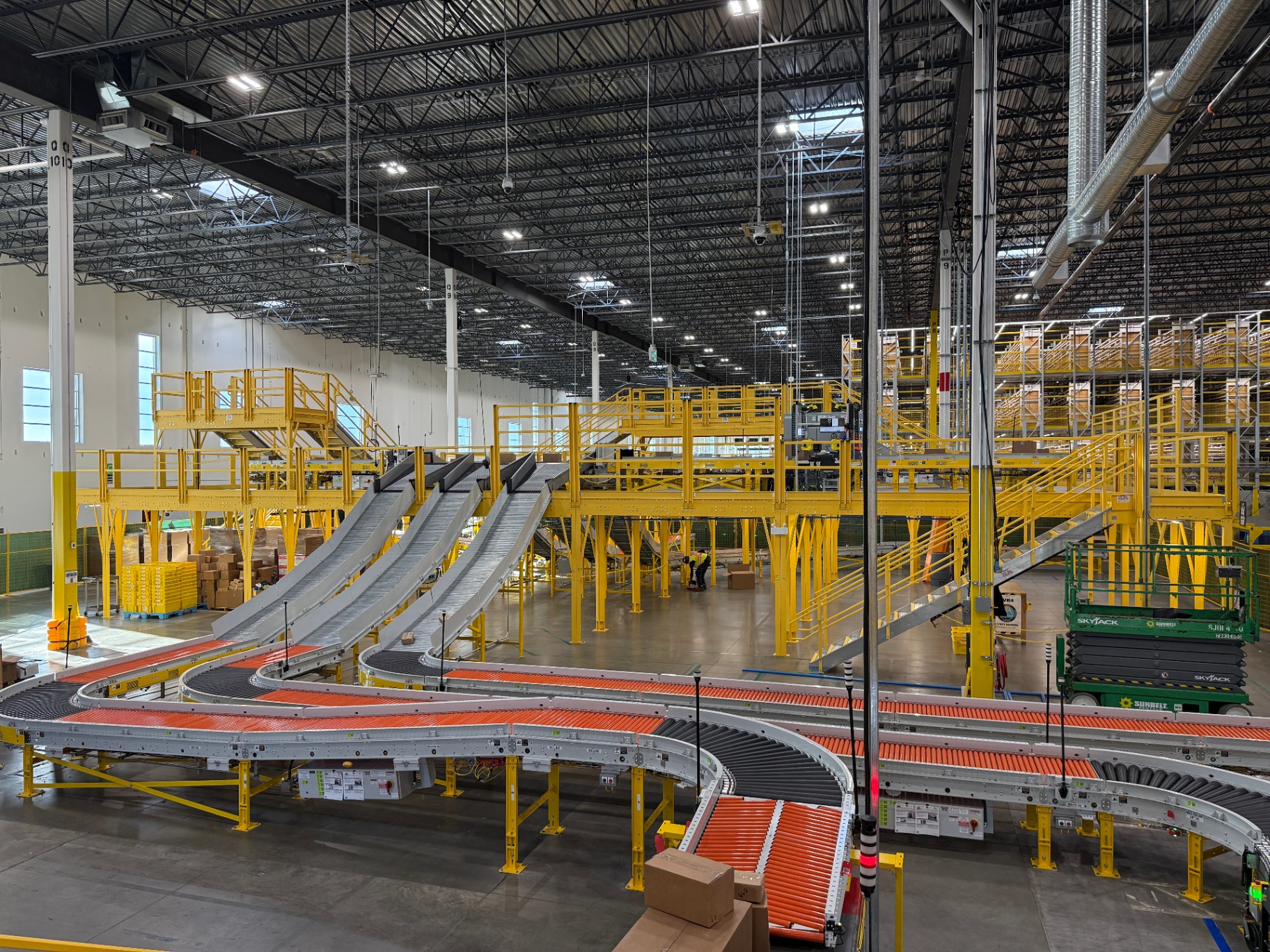
Operations managers across the country are watching the same line item creep up every quarter: payroll. Wages keep rising, qualified workers are hard to keep, and overtime adds up fast during peak season. If you run a distribution center or manufacturing facility, you have likely looked for ways to bring down warehouse labor costs without cutting into service levels.
Automation gives you a direct path to that goal. It does not replace your entire team, but it changes how that team spends its time. MTLI helps operations leaders across the U.S. plan and install the right automated systems to ease payroll pressure while keeping output steady. This guide breaks down where labor costs come from in a warehouse, which upgrades pay off fastest, and how to build a case your finance team will approve.
Where Warehouse Labor Costs Actually Come From
Before you can cut a cost, you need to know where it sits. In most facilities, labor spend breaks down into a few clear buckets:
- Picking and packing. Workers walking aisles to find and box items account for the largest share of labor hours in a typical warehouse.
- Receiving and put-away. Unloading trucks and shelving inventory takes steady staffing, especially during peak periods.
- Overtime and temporary labor. Seasonal spikes force many facilities to pay premium rates for short-term help.
- Error correction. Mis-picks and damaged goods require rework, which adds hidden hours that rarely show up on a labor report.
- Training and turnover. High staff turnover means you constantly pay to onboard new workers who are not yet at full speed.
Each of these areas responds differently to automation. Picking and packing usually offer the fastest payback, since they involve the most repetitive walking and lifting. Receiving and error correction follow close behind once you add barcode scanning and guided workflows.
How Labor Reduction Automation Changes the Equation
Labor reduction automation does not eliminate jobs outright. It shifts your team away from repetitive physical tasks and toward system oversight, quality checks, and exception handling. This shift is where most of the labor savings come from.
Consider a mid-size distribution center that relies on manual picking. Workers might walk several miles per shift just to fill orders. Replace that walk with a goods-to-person setup, where a conveyor system brings the product to a fixed picking station, and the same worker can complete far more orders in the same shift. You are not cutting headcount as much as you are multiplying what each person can do.
Automated Guided Vehicles (AGVs), driverless carts that move pallets and totes along programmed paths, handle another common labor drain: internal transport. Instead of paying a forklift operator to shuttle pallets across the floor all day, an AGV fleet runs the same routes continuously and frees that operator for higher-value work, such as quality inspection or inventory audits.
Manual vs. Automated Labor Allocation
| Task | Manual Operation | Automated Operation |
|---|---|---|
| Order picking | Worker walks to each item location | Goods arrive at a fixed picking station |
| Internal transport | Forklift operator drives pallets manually | AGV moves pallets along set routes |
| Inventory counts | Staff perform physical counts on a schedule | Sensors and software track stock in real time |
| Error correction | Staff manually recheck mis-picked orders | Barcode scans confirm accuracy at each step |
| Peak season staffing | Temporary hires added for rush periods | Existing automated capacity absorbs volume spikes |
This table shows the pattern that drives most labor savings: automation removes walking, driving, and manual counting, the three activities that consume the most non-value-added hours in a typical shift.
The Productivity Side of the Equation
Lowering cost is only half the story. The other half is warehouse productivity, meaning how much output you get per labor hour. A facility that automates its slowest tasks usually sees a direct lift in output per worker, which matters just as much to your bottom line as the wage savings.
U.S. labor data backs up this connection. Nonfarm business sector labor productivity rose 2.8% year-over-year in the first quarter of 2026, driven by stronger output growth relative to hours worked (U.S. Bureau of Labor Statistics, 2026). The agency's own employment projections go further for this sector specifically, noting that warehousing firms are increasingly adopting automation tools such as warehouse management systems, automated guided vehicles, and robotics, and that the resulting productivity gains are expected to limit labor demand and slow employment growth in warehousing and storage compared to other industries (U.S. Bureau of Labor Statistics, Monthly Labor Review, 2026). In plain terms, facilities that automate are getting more output without adding proportional headcount.
Calculating the Return on a Labor-Focused Upgrade
Operations managers need numbers their finance department will accept, not vague promises. Calculating the return on a labor-focused automation project starts with a clear before-and-after comparison of labor hours, error rates, and throughput.
A simple framework looks like this:
- Baseline your current labor cost per order. Track total picking, packing, and transport hours, then divide by order volume.
- Estimate the new labor requirement. Ask your automation partner for realistic throughput numbers based on similar projects, not best-case marketing figures.
- Factor in error reduction. Fewer mis-picks mean fewer returns, less rework, and lower shipping costs from corrections.
- Include turnover savings. Easier, less physically demanding jobs tend to keep staff longer, which lowers recruiting and training costs.
- Add maintenance and software costs. Be honest about the ongoing cost of running the new system, not just the upfront price.
Most facilities see payback within two to four years, depending on order volume and the type of equipment installed. High-volume facilities with strong seasonal peaks often see faster returns because automation absorbs volume spikes that would otherwise require expensive temporary labor.
Typical ROI Timeline by Automation Type
| Automation Type | Typical Investment Level | Common Payback Window |
|---|---|---|
| Conveyor and sortation systems | Moderate | 1 to 2 years |
| Automated Storage and Retrieval Systems (AS/RS) | High | 3 to 5 years |
| AGVs for internal transport | Moderate to high | 2 to 3 years |
| Goods-to-person picking stations | Moderate | 1.5 to 3 years |
| Barcode and scanning upgrades | Low | Under 1 year |
These timelines vary by facility, but they give operations managers a starting point for budget conversations. Smaller, targeted upgrades such as scanning and conveyor improvements tend to pay back quickly, while large structural systems like AS/RS installations take longer but deliver bigger long-term gains in both labor cost and storage density.
Common Mistakes That Erode Labor Savings
Many facilities invest in automation and still see disappointing results. The reasons are usually predictable:
- Automating the wrong process first. Upgrading a task that already runs efficiently wastes budget that could fix a real bottleneck.
- Skipping staff training. Workers who do not understand the new system slow it down or work around it.
- Underestimating maintenance needs. Equipment that breaks down frequently erases labor savings through downtime.
- Poor facility layout planning. Automated systems installed without proper space planning create new bottlenecks instead of removing old ones.
- No phased rollout. Trying to automate everything at once increases risk and disrupts daily operations during the transition.
A phased approach, where you tackle your highest-labor-cost task first and expand from there, gives you measurable proof points before committing to larger investments.
Staffing Strategy After Automation
Reducing warehouse labor costs does not mean reducing your workforce to a skeleton crew. The best-run automated facilities reassign staff rather than simply cutting positions. Workers who once spent a shift walking aisles can move into roles such as system monitoring, quality control, maintenance support, or order exception handling.
This shift also helps with recruitment. Physically demanding warehouse jobs have higher turnover and are harder to fill in a tight labor market. Roles built around overseeing automated systems tend to attract and retain staff more easily, since the work is less physically taxing and often pays a comparable or higher wage.
Clear communication matters here. Staff who understand that automation is meant to remove the hardest physical tasks, not their jobs, adapt faster and support the transition instead of resisting it.
Planning Your Automation Project with MTLI
Reducing labor costs through automation works best when construction, equipment installation, and software integration are planned as one project rather than several disconnected vendor contracts.
MTLI manages this process for facilities across the U.S. from initial facility assessment through to staff training and ongoing maintenance support. Our teams coordinate the structural work, the construction and general contracting needed to prepare your building, and the equipment installation itself, so your project moves on one timeline with one point of contact. We also support relocations for businesses that need to move operations into a facility built for automation from the ground up.
Bringing Down Warehouse Labor Costs for the Long Term
Cutting warehouse labor costs is not a one-time project. It is an ongoing process of identifying where your team spends the most non-value-added time and applying the right tool to remove that burden. Automation, paired with smart staffing decisions and phased investment, gives operations managers a clear path to lower costs and steadier output, even as wages and hiring pressures continue to climb nationwide.
If you manage a facility in warehousing and distribution, 3PL and logistics, or manufacturing, the right automation plan can free up budget that is currently locked into repetitive manual labor. MTLI works with operations teams to build that plan and execute it without disrupting daily output. Contact MTLI to start a facility assessment and see where your biggest labor savings are hiding.