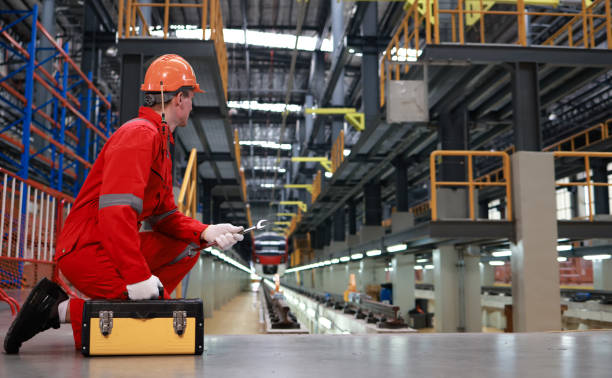
Maintenance teams know the pattern well. A conveyor motor runs fine for months. Then it fails on a Tuesday afternoon during peak shipping hours. And the whole shift scrambles to reroute product while a technician chases down the problem. Reactive repairs like this are expensive, disruptive, and largely preventable once a facility has the right data in front of it. The equipment usually gives some warning before it fails; the challenge is catching that warning before the breakdown, not after.
A predictive maintenance warehouse program is designed to solve exactly that problem. It uses equipment data to identify developing faults before they become costly failures. Maintenance teams can schedule repairs at the right time and reduce unnecessary disruption.
For over four decades, MTLI Group has helped warehouses build more reliable maintenance strategies. In this guide, we explain the key elements of predictive maintenance and how to put them into practice.
What Predictive Maintenance Actually Costs Versus Saves
Teams pitching a maintenance warehouse program to leadership usually need to answer one question first: does the investment actually pay for itself. The honest answer depends on facility size and equipment mix. But a few patterns hold across most warehouse environments.
Sensor and monitoring hardware represents the upfront cost, and pricing varies widely depending on the type of equipment being monitored:
- Vibration sensors for rotating equipment typically cost the least per unit and are the fastest to deploy
- Thermal imaging systems require a higher upfront investment but cover a broader range of failure types
- Oil and fluid analysis programs often carry ongoing lab costs rather than a large upfront hardware expense
The savings side of the equation shows up less in hardware line items and more in avoided disruption. Unplanned downtime carries costs beyond the repair itself. This includes idle labor, missed shipping windows, and rush freight to cover delayed orders. Facilities that shift even their most critical equipment from reactive to predictive maintenance tend to see the clearest return first. This is since that is where unplanned downtime does the most damage to daily operations.
Maintenance teams building the business case internally often find it easier to frame the investment around a small pilot rather than a facility-wide rollout. Monitoring a handful of high-risk assets for two or three months gives leadership real, facility-specific numbers to evaluate, rather than asking them to approve a full program based on industry averages alone. That pilot data also becomes the reference point for expanding the program to additional equipment later.
What Predictive Maintenance Actually Means for a Warehouse
Facilities generally run maintenance warehouse program under one of three models, and the differences between them matter more than most teams realize:
- Reactive maintenance fixes equipment after it fails. This means downtime is unplanned, and repair costs run higher due to rush parts and emergency labor.
- Preventive maintenance services equipment on a fixed schedule regardless of its actual condition. This reduces surprises but often means healthy parts get replaced early.
- Predictive maintenance uses real-time condition data, such as vibration, temperature, and power draw, to schedule service based on how a piece of equipment is actually performing.
The numbers clearly show why reactive maintenance creates long-term problems. A National Institute of Standards and Technology study found 3.3 times more downtime in facilities relying on reactive repairs. Those facilities also experienced 16 times more defects. Predictive maintenance delivered much stronger results. It reduced downtime by 15% and defect rates by 87% compared to preventive maintenance alone. For a maintenance team responsible for keeping a distribution center running, that gap can make a significant difference in warehouse operations.
How a Predictive Maintenance Warehouse Program Extends Equipment Lifespan
Equipment does not fail randomly. It fails because of accumulated wear. And a predictive maintenance warehouse program is built around catching that wear before it turns into a breakdown.
This approach extends equipment life in a few specific ways:
- Fewer stress cycles. Catching a misaligned belt or an overheating bearing early prevents the surrounding components from absorbing extra strain while the original problem goes unnoticed.
- Right-timed part replacement. Instead of replacing a part on a fixed calendar, teams replace it when the data shows it is actually nearing the end of its useful life. This avoids both premature replacement and unexpected failure.
- Reduced secondary damage. A conveyor motor that fails suddenly can damage belts, rollers, or product in the process. Catching the early warning signs limits the failure to the original component.
- More accurate capital planning. Condition data gives facility managers a realistic picture of when major equipment will need replacement, rather than guessing based on age alone.
Different equipment types respond to predictive maintenance in different ways, as the table below outlines.
| Equipment Type | Common Failure Mode | Predictive Signal to Monitor |
|---|---|---|
| Conveyor systems | Motor overheating, belt misalignment | Vibration, motor temperature |
| Forklifts and MHE | Battery degradation, hydraulic wear | Battery cycle data, fluid analysis |
| ASRS and robotics | Bearing wear, drive component fatigue | Vibration signature, cycle counts |
| HVAC and refrigeration | Compressor strain, refrigerant loss | Pressure readings, temperature drift |
| Racking and structural systems | Load stress, structural fatigue | Load sensors, visual inspection data |
Facilities running high-density storage racking systems benefit especially from this kind of monitoring. This is since structural stress on racking is far harder to catch through routine visual inspection alone.
Warehouse Equipment Monitoring: The Technology Behind the Data
Warehouse equipment monitoring is what makes predictive maintenance possible in the first place. Without a steady stream of condition data, a maintenance team is back to guessing on a fixed schedule.
The most common monitoring methods include:
- Vibration analysis: This detects imbalance, misalignment, or bearing wear in rotating equipment before it produces an audible or visible problem.
- Thermal imaging: It identifies overheating components, electrical hot spots, and friction points that standard visual inspection would miss.
- Oil and fluid analysis: This flags contamination or wear particles in hydraulic and lubrication systems before they cause component failure.
- Power draw monitoring: It catches motors working harder than normal, often an early sign of mechanical resistance building somewhere in the system.
Workforce demand for this kind of technical monitoring work is growing alongside the technology itself. In fact, the Bureau of Labor Statistics projects 13% employment growth for industrial machinery mechanics, maintenance workers, and millwrights from 2024 to 2034. It also forecasts about 54,200 openings each year. The industry is placing greater value on condition monitoring and early intervention. That means preventing failures has become just as important as fixing them.
Maintenance Automation and the Shift from Reactive to Predictive
Maintenance automation ties sensor data to action. Rather than a technician manually reviewing readings, automated systems flag anomalies, generate work orders, and route alerts to the right person before a component fails.
A typical automated monitoring setup includes:
- Condition monitoring sensors installed directly on critical equipment
- A centralized data platform that aggregates readings across the facility
- Automated alert thresholds that flag readings outside normal operating ranges
- Integration with a computerized maintenance management system (CMMS) so flagged issues automatically generate work orders
- Historical trend tracking that helps teams spot slow degradation patterns over months, not just sudden spikes
The table below compares the three maintenance approaches side by side. This is based on how facilities in the NIST survey allocated their maintenance spending.
| Maintenance Approach | Typical Facility Reliance | Relative Downtime Impact |
|---|---|---|
| Reactive maintenance | 45.7 percent of surveyed spending | Highest, no advance warning |
| Preventive maintenance | 31.8 percent of surveyed spending | Moderate, some unnecessary service |
| Predictive maintenance | 17.3 percent of surveyed spending | Lowest, service tied to actual condition |
Building a Predictive Maintenance Warehouse Program: Where to Start
Maintenance teams do not need to sensor every piece of equipment on day one. A phased approach delivers value faster and builds internal buy-in along the way.
Start with these steps, in order:
- Identify your critical assets first. Rank equipment by how much downtime it would cause if it failed unexpectedly. Conveyor spines, primary charging stations, and refrigeration units usually rise to the top of this list.
- Install monitoring on the highest-risk equipment. Begin sensor deployment where a failure would hurt the most, rather than spreading a limited budget thin across low-risk assets.
- Connect sensor data to your CMMS. Data that sits in a separate dashboard nobody checks does not change maintenance outcomes. Integration with the work order system, alongside proper equipment installation practices from day one, is what makes the data actionable.
- Set realistic alert thresholds. Thresholds set too tight generate alert fatigue, while thresholds set too loose miss real problems. Expect to tune these over the first few months.
- Train the maintenance team on the new workflow. A predictive maintenance warehouse program only works if technicians trust the alerts and know how to respond to them.
| Program Phase | Typical Duration | Key Activity |
|---|---|---|
| Asset criticality assessment | 2 to 3 weeks | Ranking equipment by downtime risk |
| Sensor installation on priority assets | 3 to 5 weeks | Deploying monitoring on highest-risk equipment |
| CMMS integration and alert tuning | 4 to 6 weeks | Connecting data to work orders, adjusting thresholds |
| Team training and rollout | 2 to 3 weeks | Building technician trust in the new workflow |
Common Pitfalls Maintenance Teams Should Avoid
A few mistakes show up repeatedly in facilities rolling out predictive maintenance for the first time:
- Sensoring too much equipment at once instead of starting with critical assets
- Skipping CMMS integration, which leaves condition data disconnected from actual work orders
- Setting alert thresholds without a tuning period, leading to alert fatigue
- Assuming the technology replaces technician judgment rather than supporting it
Avoiding these missteps keeps a rollout focused and gives the maintenance team confidence in the system from the start. Facilities weighing this against a broader automated system upkeep plan often find the two efforts overlap more than expected. This is since both depend on the same underlying condition data.
How MTLI Group Supports Predictive Maintenance Warehouse Programs
A predictive maintenance program delivers value only when the technology, equipment, and maintenance process work together. MTLI Group's strategic facility management services bring these elements together through condition monitoring, preventative maintenance, and practical maintenance planning. From conveyors and racking to HVAC and material handling systems, we help facilities reduce downtime and improve equipment reliability.
For more than four decades, warehouse operators across North America have trusted MTLI Group to improve equipment reliability and reduce operational risk. With over 15,000 completed projects, we know how to prioritize critical assets, implement effective monitoring systems, and create maintenance programs that teams can manage with confidence.
Extending Equipment Lifespan Through a Predictive Maintenance Warehouse Program
A predictive maintenance warehouse program delivers the greatest value with a structured, long-term approach. Start with your most critical assets and expand the program as results become measurable. Over time, maintenance becomes more predictable, equipment lasts longer, and costly downtime becomes less frequent.
If there's an opportunity to improve equipment reliability in your facility, MTLI Group can help identify it. We'll assess your operation, prioritise critical assets, and recommend a predictive maintenance strategy that delivers lasting value. Connect with our team today.