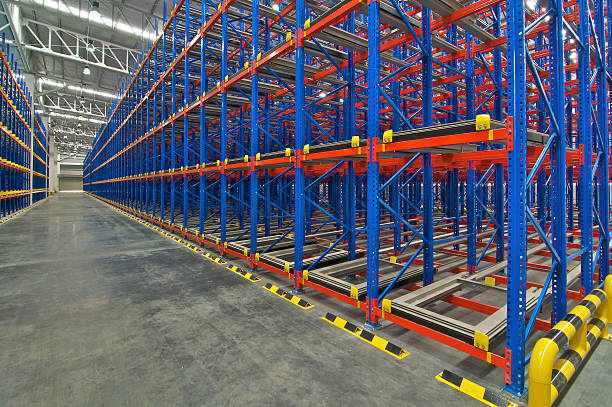
Warehouse managers comparing storage options usually land on the same two finalists: selective racking, the system that gives access to every pallet, or drive-in racking, the system that packs in the most product per square foot. Both solve real problems. Neither is the right answer for every facility, every product, or every aisle. Picking the wrong one means living with the consequences for years, since racking is not something most operations replace on a whim.
MTLI helps warehouse managers across the U.S. weigh these two systems against actual order data instead of guesswork. This guide breaks down how selective and drive-in pallet racking compare, where each one wins, and what the wrong choice costs over time.
What Selective Racking Does Well
Selective racking is the most common system found in U.S. warehouses, and for good reason. Every pallet sits directly accessible from the aisle, which means a forklift operator can reach any single pallet without moving another one out of the way first.
This direct access makes selective racking the natural fit for operations running many SKUs with frequent picking activity. A facility shipping hundreds of different products needs that kind of access, since waiting to dig out a buried pallet costs time on every single order. The tradeoff is floor space. Selective racking needs aisles wide enough for a forklift to maneuver and turn, which means more square footage spent on aisles relative to the pallets actually stored.
What Drive-In Racking Does Well
Drive-in racking flips that tradeoff. Forklifts drive directly into the rack structure itself, placing pallets on rails that run several pallets deep in a single lane. This dramatically increases how much product fits in a given footprint, since there is no wide aisle separating every row.
The catch is access. Only the front and back pallets in each lane are reachable without moving other pallets first. This makes drive-in racking a strong fit for bulk storage of a single product type with low turnover, such as seasonal inventory or raw materials bought in large batches, but a poor fit for an operation that needs to pull individual SKUs throughout the day.
Selective Racking vs. Drive-In Racking
| Factor | Selective Racking | Drive-In Racking |
|---|---|---|
| Pallet access | Every pallet directly accessible | Only front and back pallets per lane |
| Storage density | Lower, more aisle space needed | Higher, minimal aisle space |
| Best fit | Many SKUs, frequent picking | Few SKUs, bulk storage |
| Forklift maneuvering | Standard aisle turning required | Forklift enters the rack structure directly |
| Inventory rotation | Easy, any pallet pulled anytime | Harder, follows last-in-first-out by lane |
| Typical cost per pallet position | Lower equipment cost, higher floor cost | Higher equipment cost, lower floor cost |
How Order Profile Should Drive the Decision
The right choice between these two systems comes down to one question: how often does each product actually move? A warehouse manager who maps inventory by velocity, meaning how frequently each SKU gets picked, usually finds the answer fairly quickly.
Fast-moving products that ship daily belong in selective racking systems near the shipping dock, where pickers can reach them without delay. Slow-moving products that arrive in bulk and sit for weeks or months belong in drive-in racking, where the density gain outweighs the access tradeoff. Most warehouses end up running both systems at once, applying each one to the part of their inventory where it actually fits.
What Goes Wrong When the Match Is Off
Choosing the wrong pallet racking system for a given product type creates problems that show up gradually rather than all at once. Drive-in racking used for fast-moving SKUs slows down picking, since workers cannot reach buried pallets without repositioning the ones in front. This adds labor time to every order involving that product, and the cost compounds across thousands of picks per week.
Selective racking used for bulk, low-turnover freight wastes floor space the opposite way. Wide aisles sit underused next to product that rarely needs urgent access, when that same square footage could have held two or three times the inventory in a denser system. Neither mistake causes a single dramatic failure. Both quietly drain efficiency and space over months and years.
Safety Considerations for Each System
Forklift activity inside racking carries real risk, and the two systems present different hazard profiles. Selective racking involves more forklift turning and maneuvering in open aisles, which increases exposure to pedestrian-forklift interactions, one of the leading causes of forklift-related fatalities according to federal workplace safety research (National Institute for Occupational Safety and Health, CDC).
Drive-in racking introduces a different hazard: the forklift operates inside a confined rack structure with rails on either side, which raises the stakes of any contact between the vehicle and the rack itself. Industry data shows that the large majority of rack damage traces back to forklift impacts, and drive-in systems concentrate that contact risk into a tighter space than open selective aisles. Either system requires trained operators, clear traffic patterns, and a regular inspection schedule for both the racking and the trucks operating around it.
Typical Implementation Considerations
| Consideration | Selective Racking | Drive-In Racking |
|---|---|---|
| Aisle width needed | Wider, standard forklift turning radius | Minimal, no turning required inside lanes |
| Primary hazard | Pedestrian and forklift interaction in open aisles | Rack contact from forklift entering tight lanes |
| Inspection focus | Beam and frame damage across many access points | Rail alignment and lane-end damage |
| Operator training emphasis | Aisle traffic management | Precision entry and exit from tight lanes |
Calculating the Real Cost Difference
Warehouse managers weighing these two options should run the numbers on both density and labor, not just the upfront equipment price. Drive-in racking typically costs more per rack section but reduces the floor space needed per pallet stored, which can lower or delay the cost of leasing additional square footage. Selective racking costs less per section but uses more floor area, which only pencils out well when the access speed it provides actually reduces labor hours on high-turnover products.
A simple way to estimate this: calculate the cost per pallet position for each system, including both the pallet racking itself and the floor space it occupies at current lease or ownership rates. Then weigh that number against the labor cost of picking from each system based on how often the stored product actually moves. The system with the lower total cost for a given product's velocity is usually the right choice for that zone.
Common Mistakes Warehouse Managers Make
A few recurring mistakes show up when facilities choose between these systems:
- Choosing one system for the entire building. Forcing all inventory into selective or all into drive-in ignores the fact that different products have different access needs.
- Underestimating aisle width requirements. Selective racking installed with aisles too narrow for the forklift fleet in use creates daily maneuvering problems.
- Ignoring inventory rotation needs. Drive-in racking used for products with strict shelf life or rotation requirements can trap older stock behind newer pallets.
- Skipping a velocity analysis before buying. Purchasing racking based on available floor space rather than actual product movement data often leads to a poor match.
- Treating racking as a one-time decision. Product mix changes over time, and a layout that fit two years ago may no longer match current order patterns.
How MTLI Helps Warehouse Managers Choose
MTLI assesses a facility's actual inventory velocity, building structure, and order profile before recommending a pallet racking system. Our storage and racking solutions team designs mixed layouts that put selective racking where access speed matters most and drive-in or other high-density systems where bulk storage makes more sense. We also handle the installations work directly, including anchoring, load capacity signage, and final inspection, so the racking meets safety standards from day one.
For facilities needing structural changes to support a new layout, our construction and general contracting team manages floor reinforcement and electrical work as part of the same project, rather than treating racking and construction as separate contracts.
Making the Right Call for Your Warehouse
Selective racking and drive-in racking solve different problems, and most warehouses benefit from running both rather than picking one system for the entire building. The right mix depends on a clear look at which products move fast and which ones sit for weeks at a time. Getting this match right saves labor hours and floor space for years, while getting it wrong quietly drains both.
If your facility operates in warehousing and distribution or 3PL and logistics, MTLI can map your inventory and recommend the right combination of pallet racking systems for your actual order profile. Contact MTLI to start a facility assessment and find the layout that fits your warehouse.