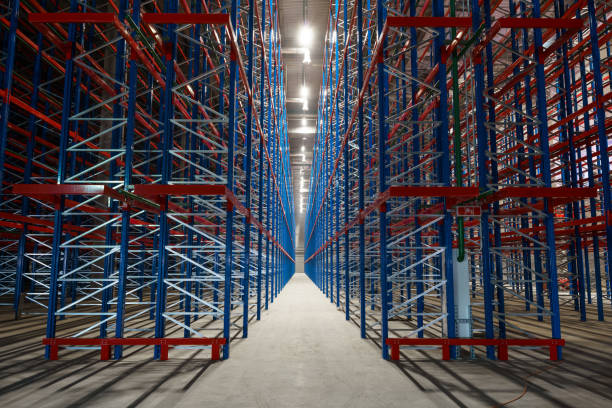
Storage space costs money, and in most logistics facilities, a large share of that space goes unused. Aisles run wider than they need to, ceilings go untouched above eye level, and pallets get stacked in ways that slow down picking instead of speeding it up. For logistics companies running tight margins on every square foot, choosing the right pallet racking systems is one of the most direct ways to fix this without signing a bigger lease.
MTLI designs and installs racking systems for logistics companies across the U.S., matching the system to the building, the product, and the order volume. This guide covers the main types of racking, how to choose between them, the safety standards that govern them, and what it actually costs to get the layout wrong.
What Pallet Racking Systems Actually Do
A pallet racking system is a structural framework of vertical frames and horizontal beams built to hold palletized goods above the floor, often stacked several levels high. Instead of stacking pallets directly on top of one another, which limits access and risks crushing the bottom load, racking lets a facility store and retrieve any pallet on its own.
The core purpose of pallet racking systems is straightforward: hold the most inventory possible in the smallest footprint while keeping every pallet reachable. Get this decision right, and nearly everything downstream improves, from how fast workers fill orders to how much room is left for next year's growth. Many facilities also pair pallet racking with industrial shelving for smaller, hand-loaded items that do not sit well on a standard pallet.
Main Types of Pallet Racking
No two logistics operations look the same, so the right racking depends on order volume, how fast each product turns over, and how much selectivity (direct access to any pallet without moving others) the operation actually needs.
- Selective pallet racking. The most common type. Every pallet sits directly accessible from the aisle. High selectivity, but it uses more floor space per pallet stored.
- Drive-in racking. Forklifts drive directly into the rack structure to place pallets on rails. Works well for high-density storage of a single product type, but limits access to the front and back pallets in each lane.
- Push-back racking. Pallets sit on nested carts that push back as new pallets load from the front. This raises density while keeping one point of access per lane.
- Pallet flow racking. Pallets move by gravity along sloped rails, supporting first-in-first-out rotation for products with shelf life or strict rotation needs.
- Cantilever racking. Built for long, irregular freight, such as pipe, lumber, or steel bar stock, that does not fit standard pallet dimensions.
Pallet Racking Types Compared
| Racking Type | Storage Density | Pallet Selectivity | Best Fit |
|---|---|---|---|
| Selective racking | Low to moderate | High | Many SKUs, frequent picking |
| Drive-in racking | High | Low | Bulk storage, few product types |
| Push-back racking | Moderate to high | Moderate | Medium-velocity inventory |
| Pallet flow racking | High | Moderate | Perishable or rotating stock |
| Cantilever racking | Varies | High for long items | Pipe, lumber, and bar stock |
Most logistics facilities run more than one type at once, matching each zone to the freight stored there rather than forcing a single layout across the whole building.
Pallet Racking vs. Industrial Shelving
Logistics companies often ask whether they need racking, shelving, or both. The two systems solve different problems. Pallet racking is built for palletized loads moved by forklift or pallet jack. Industrial shelving is built for hand-loaded freight, such as small parts, loose cartons, or archived records that never arrive on a pallet.
Most facilities run a mix of both. A receiving dock might rely on pallet racking for bulk freight, while a small-parcel picking zone uses shelving that a worker can reach by hand. Using the wrong system in the wrong zone wastes capacity fast. Shelving loaded with palletized freight cannot carry the weight safely, and racking holding small loose items leaves most of its storage volume sitting empty.
How Racking Choice Affects Daily Throughput
The racking layout a company chooses has a direct effect on daily operations, since it shapes how far workers travel, how easily they reach each pallet, and how much rework comes from misplaced freight. A poorly planned layout forces pickers to walk further for common SKUs or wait while forklifts maneuver through cramped aisles.
Selective racking supports fast picking because workers reach any pallet directly. Drive-in and push-back systems trade some of that speed for density, which works well when a company stores large volumes of a few SKUs rather than picking many small, varied orders. A simple rule helps here: keep fast-moving freight in the most accessible racking near shipping, and push slow-moving stock into denser storage further from the dock. This single change often improves daily throughput more than any new equipment purchase.
Storage Systems and the Cost of Getting the Layout Wrong
Choosing the wrong storage systems for a facility's actual order profile carries a real cost, even though it rarely shows up as a single line item. A facility running selective racking everywhere when half its inventory barely moves wastes floor space that denser racking could have captured. A facility running drive-in racking for fast-moving SKUs slows down picking and adds labor hours that a more accessible layout would have avoided.
Logistics companies that map their inventory by velocity before choosing racking avoid both mistakes. Fast movers get accessible storage. Slow movers get dense storage. The layout follows the data instead of a generic default.
Safety Standards Every Logistics Company Must Know
Pallet racking carries real structural risk when it is poorly designed, installed, or maintained. OSHA does not publish one dedicated pallet rack standard, but it regulates racking through several general provisions, including the requirement that storage areas stay free of hazards that could cause tripping or collapse, and that materials stacked in tiers be secured against sliding or falling (Occupational Safety and Health Administration, 29 CFR 1910.176).
OSHA also frequently references ANSI MH16.1, the Specification for the Design, Testing, and Utilization of Industrial Steel Storage Racks, when determining whether a racking hazard counts as a recognized, preventable risk under its General Duty Clause. The standard covers structural design, load capacity, anchoring, and inspection requirements, and OSHA cites it directly in many enforcement actions tied to rack collapses or overloading.
A practical compliance routine for any logistics company includes:
- Posting accurate load capacity placards on every rack section.
- Running monthly internal inspections for visible damage, such as bent beams or missing safety pins.
- Scheduling an annual inspection by a qualified rack engineer.
- Anchoring every rack section to the floor with bolts rated for the load.
- Removing freight from a damaged rack section immediately rather than waiting for a scheduled repair window.
Skipping these steps is not just a safety risk. OSHA inspections that turn up damaged or unanchored racking commonly result in General Duty Clause citations, and insurance carriers increasingly ask for documented inspection records during policy reviews.
Calculating the Financial Return of a Racking Upgrade
Many logistics companies treat racking as a fixed cost rather than an investment with a measurable return. In practice, the right system often pays for itself through better density and a more efficient layout, which lowers the labor and equipment time needed to move the same volume of freight.
Consider a facility converting from a basic selective layout to a mixed system using push-back racking in its high-density zones. The denser storage holds the same inventory in a smaller footprint, delaying the cost of leasing additional space. Many companies also see lower forklift travel time per order once the layout matches actual product velocity, which reduces labor hours over time.
Typical Racking Upgrade Payback Periods
| Upgrade Type | Primary Benefit | Typical Payback Window |
|---|---|---|
| Selective to push-back conversion | Increased storage density | 2 to 4 years |
| Adding mezzanine storage | More usable vertical space | 3 to 5 years |
| Pallet flow installation | Improved stock rotation | 2 to 3 years |
| Rack-supported building structure | Combines storage with building shell | 4 to 7 years |
Run these numbers against your own labor and lease costs before committing to a major upgrade, since payback periods shift with order volume and local industrial rent.
Common Mistakes Logistics Companies Make with Racking
Even experienced operators run into avoidable problems when planning or maintaining their racking:
- Buying racking before mapping the layout. Purchasing standard sections without a layout plan often wastes space or creates aisles that do not fit the forklifts in use.
- Ignoring floor load limits. Adding height to existing racking without checking the floor's load rating risks structural failure.
- Skipping inspections. Treating racking as permanent infrastructure rather than equipment that wears down over time leads to preventable accidents.
- Mixing incompatible components. Using beams or frames from different manufacturers without engineering approval can compromise the structure's rated capacity.
- Overlooking future flexibility. Designing racking with no room to adjust beam heights or add sections limits the ability to adapt as product lines change.
Working with MTLI on Your Racking Project
Choosing and installing pallet racking systems is rarely a standalone decision. It connects to a facility's building structure, equipment fleet, and daily picking workflow. MTLI manages this as one coordinated project rather than treating racking as separate from construction or installation work. Our storage and racking solutions team assesses your building, recommends racking types suited to your product mix, and handles the structural and electrical work the new layout needs.
We also support construction and general contracting for companies that need floor reinforcement or building changes alongside the racking, and our installations crews manage the physical build from rack erection to final safety sign-off. For logistics companies consolidating multiple sites, our relocations team supports the transition into a facility built around a more efficient racking plan from day one.
Choosing the Right System for Your Facility
Selecting the right pallet racking systems comes down to matching storage type, order profile, and building structure to a layout that supports both density and speed. Whether a facility needs a simple selective setup, a denser warehouse racking layout, the decision affects daily operations for years, so it is worth getting the layout and compliance details right from the start.
If your company operates in warehousing and distribution or 3PL and logistics, the right pallet racking systems plan can free up significant floor space without expanding your building. MTLI works with logistics companies across the U.S. to design, install, and maintain racking built for their specific freight profile. Contact MTLI to start a facility assessment and find the racking layout that fits your space.