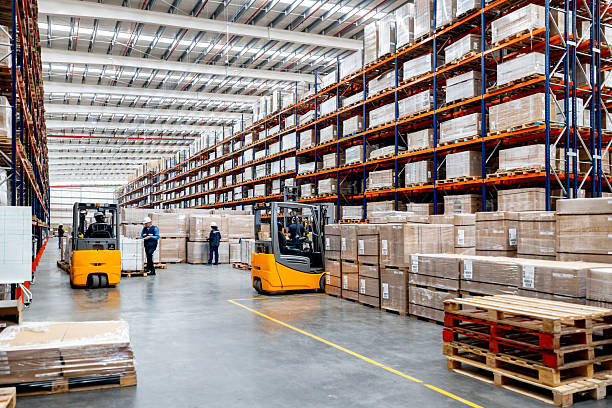
Moving a warehouse or production plant is nothing like moving an office. Machinery has to come apart before it can be transported, racking has to be disassembled and reinstalled without damage, and every day the facility sits offline is a day of lost output. Industrial relocation services exist because this kind of move demands planning most general movers have never had to think through.
MTLI Group provides industrial relocation services built specifically around the demands of warehouses, plants, and distribution centers.
The Real Timeline Behind a Plant or Warehouse Move
A facility relocation rarely runs on a single timeline. It runs on several overlapping ones: the lease or purchase timeline for the new site, the production or fulfillment schedule that can't simply stop, and the physical move itself, which has to thread between the two without creating a gap in operations.
Most industrial relocation services projects start planning three to six months before the physical move, sometimes longer for facilities with heavy or specialized machinery. Our facility relocation guide walks through what that planning window typically includes, from site readiness checks to the sequencing of equipment shutdown and restart.
The Moving Pieces a Relocation Team Has to Track
A warehouse or plant relocation involves far more than loading trucks. Racking has to be disassembled in a documented order so it can be rebuilt correctly at the new site. Machinery needs to be powered down, disconnected, and often partially dismantled before it can travel safely. Utilities, from electrical service to compressed air lines, need to be live and tested at the new location before equipment arrives, not after.
This is where good industrial relocation services earn their value, since coordinating all of these moving pieces on one schedule is what separates a smooth transition from a stalled one. Automated systems add another layer of complexity entirely. Facilities relocating an automated storage and retrieval system have to plan for recalibration at the new site, since these systems depend on exact positioning that rarely survives a move without adjustment. Conveyor systems carry similar risk. Our conveyor systems team disconnects, transports, and reinstalls these systems as a coordinated unit rather than a collection of loose parts, since even small misalignment during reassembly can throw off an entire line.
Matching the Mover to the Move
Not every relocation provider handles the same scope of work, and understanding the difference matters before signing a contract.
Standard commercial movers handle furniture, office equipment, and light fixtures, but generally lack the rigging, crane, and machinery expertise a production floor requires. A dedicated machinery moving company specializes in disconnecting, transporting, and resetting heavy equipment, often including electrical reconnection. Full-scope industrial relocation services go further still, managing racking, machinery, and automated systems together under one project plan rather than three separate vendor contracts.
| Provider Type | Typical Scope | Best Fit |
|---|---|---|
| Standard Commercial Mover | Furniture, office equipment | Office relocations only |
| Machinery Moving Company | Equipment rigging, transport, reconnection | Plants with heavy machinery |
| Full-Scope Industrial Relocation Services | Racking, machinery, automation, utilities | Warehouses and plants with mixed systems |
Businesses coordinating equipment reinstallation alongside the move often route that work through a dedicated installations team, since resetting machinery correctly at a new site takes the same precision as installing it for the first time.
Why More Facilities Are Relocating Right Now
Relocation activity across U.S. manufacturing and logistics has stayed active, driven in part by a steady wave of production returning to domestic soil. The Reshoring Initiative projects that roughly 240,000 manufacturing jobs will be announced through reshoring and foreign direct investment in 2025, continuing a trend of companies moving production closer to U.S. customers. Each of those projects typically involves standing up a new facility or relocating an existing one, work that falls squarely on industrial relocation services.
The broader labor market backs this up too. Opening establishments added 1.6 million jobs nationally in the fourth quarter of 2025 alone, according to Bureau of Labor Statistics data, a meaningful share of which reflects new or relocated facilities coming online. For businesses in manufacturing, this pace of activity means finding a qualified factory relocation company has become more urgent, not less, as competition for experienced industrial relocation services grows alongside demand.
Counting the Real Cost of a Move
The visible costs of a relocation, trucking, labor, and equipment rental, are usually the easiest to estimate. The harder number to pin down is downtime, since every day a facility sits between old and new locations without full operations is lost revenue that rarely shows up in the initial moving quote.
A move planned around commercial construction work at the new site carries additional cost risk if the two timelines aren't coordinated closely, since equipment can arrive before a facility is actually ready to receive it. Businesses in warehousing and distribution feel downtime costs especially hard, since a paused fulfillment operation can mean missed shipping commitments that carry financial penalties well beyond the cost of the move itself. Industrial relocation services that price in downtime from the start, rather than treating it as an afterthought, give a far more accurate picture of total project cost.
| Cost Category | Often Underestimated | Why It Matters |
|---|---|---|
| Downtime | Yes | Lost production or fulfillment revenue |
| Equipment Recalibration | Yes | Automated systems need reset time |
| Utility Readiness | Sometimes | Delays if new site isn't move-in ready |
| Rigging and Machinery Transport | Rarely | Usually quoted clearly upfront |
Where Relocation Plans Fall Apart
The most common failure point is sequencing. Moving racking before machinery, or machinery before utilities are confirmed live at the new site, creates bottlenecks that cascade through the entire schedule. Industrial relocation services need a clear, documented order of operations before the first truck leaves the old facility, not one worked out on the fly mid-move.
Choosing a provider based on price alone, without confirming they've actually handled equipment as complex as yours, is another frequent mistake. Not every mover has experience with automated systems, and a certified installation partner matters for facilities relying on conveyors, ASRS, or other automated equipment that needs precise recalibration after transport. Businesses serving 3PL and logistics clients face a particularly high cost for these missteps, since client contracts often depend on uninterrupted service through the transition.
How MTLI Runs a Facility Relocation
MTLI Group manages industrial relocation services as a single coordinated project rather than a patchwork of separate vendors handling racking, machinery, and utilities on their own timelines. Our team builds the sequencing plan first, confirming the new site is ready before a single piece of equipment leaves the old one.
This same team also handles reinstallation at the new location, so racking, machinery, and automated systems get set up by people who understand how they're meant to function, not just how to load them onto a truck. Our facility relocation services cover this full scope under one contract, start to finish.
Plan Your Move With MTLI's Industrial Relocation Services
A warehouse or plant move succeeds or fails on planning, not just execution. Industrial relocation services that coordinate racking, machinery, and automated systems as one project, rather than three separate ones, are what actually keep downtime and cost under control.
MTLI Group delivers industrial relocation services for manufacturers, warehouses, and distribution centers across the country. Contact our team to start planning your move.