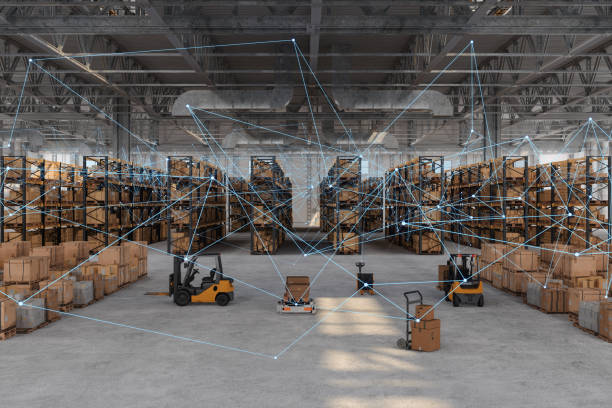
A pallet rack and a six-axis robotic arm have almost nothing in common, except that both have to go in correctly the first time, or a facility pays for it later. Most operations end up hiring separate specialists for each: one crew for racking, another for conveyors, a third for robotics, none of them talking to each other about how the pieces fit together. That fragmented approach is exactly what a full-scope installation partner is meant to replace.
MTLI Group handles the entire spectrum of industrial equipment installation under one team, starting with automation equipment installation that covering everything from basic material handling systems through advanced robotics.
One Team, Every Type of Equipment
The case for a single installation partner isn't really about convenience. It's about what happens at the seams between equipment types when nobody owns the whole picture. A racking system installed without accounting for the robot that will eventually work beside it means expensive rework once that robot arrives. A conveyor line built before anyone consulted on the electrical team means retrofitting power and controls after the fact instead of building them in.
Heavy equipment installations carry this risk more than most, since the margin for error shrinks as loads and precision requirements grow. Our work across heavy equipment projects reflects that reality directly, treating structural, mechanical, and electrical scope as one coordinated job rather than three separate contracts stitched together after the fact. The same logic applies to heavy industrial installations more broadly, where a single missed clearance measurement or overlooked load path can force a costly redesign mid-project.
What Falls Under Industrial Equipment Installation Services
Our industrial equipment installation services is broader than most people expect, covering far more than the obvious big-ticket machinery.
Storage and racking systems form the baseline for most facilities, whether selective pallet racking or high-density configurations built for specific product mixes. Conveyor and sortation systems move product through a facility and increasingly carry their own electrical and control requirements. Processing equipment, the machinery that actually transforms raw material into finished product, demands precise alignment and often specialized utility connections. Our processing equipment installation team handles this category specifically, since it tends to carry tighter tolerances than general material handling work.
Automated storage and retrieval systems sit at the more complex end of the spectrum, requiring exact coordination between structural racking, motors, and software. ASRS installation work has to account for all three simultaneously, since a system that's mechanically sound but poorly synced with its control software will still underperform.
Racking, Robotics, and Everything Between: Matching Equipment to Method
Different equipment categories call for genuinely different installation approaches, and matching method to equipment type is what separates a well-run project from a rushed one.
Static storage equipment, like racking and shelving, is largely a structural and mechanical exercise, with success measured in load capacity and anchor integrity. Powered material handling equipment, like conveyors and sortation systems, adds an electrical and controls layer that has to work in sync with the mechanical build. Robotics adds a further layer still, requiring precise calibration, safety zoning, and integration with a facility's broader control architecture before the equipment can run unsupervised.
| Equipment Category | Primary Installation Focus | Complexity Level |
|---|---|---|
| Racking and Shelving | Structural, load capacity | Lower |
| Conveyors and Sortation | Mechanical plus electrical controls | Moderate |
| Processing Machinery | Precision alignment, utility connections | Moderate to high |
| Robotics | Calibration, safety zoning, system integration | Highest |
Facilities in manufacturing tend to run the widest mix of these categories under one roof, often installing racking, processing equipment, and robotics within the same project. Operations in warehousing and distribution lean more heavily on the storage and material handling end of the spectrum, though robotics adoption is growing quickly there too.
Why Robotics Installation Demand Is Climbing Fast
Robotics has moved well past early-adopter territory into a genuine growth market, and the order data backs that up clearly. North American companies ordered 26,441 robots valued at $1.7 billion in the first nine months of 2025, a 6.6 percent increase in units and a 10.6 percent jump in revenue compared to the same period the year before, according to the Association for Advancing Automation. Notably, non-automotive sectors accounted for the majority of that growth, a sign that robotics adoption is broadening well beyond the industries that pioneered it.
Skilled labor to install and maintain this equipment is growing right alongside demand for the machines themselves. The Bureau of Labor Statistics projects employment for industrial machinery mechanics, maintenance workers, and millwrights, the trades most directly tied to this kind of installation, to grow 14 percent from 2025 to 2035, a pace well above the average for all occupations. For facilities weighing whether to bring robotics in-house or lean on an outside partner, that tightening labor market makes an experienced installation partner increasingly valuable rather than optional.
What Separates a Capable Robotics Installation Company from the Rest
Robotics installation demands a different skill set than general equipment work, and not every contractor claiming automation experience actually has it.
| Capability | What to Verify | Why It Matters |
|---|---|---|
| Safety Zoning Expertise | Documented experience with robot safety standards | Prevents injury and compliance failures |
| Controls Integration | In-house electrical and software capability | Avoids handoff gaps between vendors |
| Calibration Precision | Track record with similar robot classes | Determines actual production accuracy |
| Post-Install Support | Ongoing maintenance and troubleshooting offered | Keeps systems running after handover |
A robotics installation company without genuine electrical integration expertise typically outsources that piece, which reintroduces the exact coordination gap a single-vendor approach is supposed to eliminate. Our electrical automation services team works directly alongside robotics installers on every project for this reason, keeping controls, power, and mechanical work under one roof rather than split across separate contracts.
Installation Errors That Cost More Than the Fix
The most expensive mistakes in industrial equipment installation rarely show up on day one. A robot installed slightly out of calibration might still function, just not accurately enough to meet production tolerances, and that gap often goes unnoticed until a quality issue traces back to it weeks later.
Skipping proper safety zoning is a more immediate risk, and one regulators take seriously. Robots operating without correctly configured guarding or light curtains create real injury risk for anyone working nearby. Poor sequencing between structural and equipment installation causes a different kind of problem: racking or platforms built before final equipment dimensions are confirmed, forcing rework once the actual machinery shows up. Coordinating equipment installation within the broader commercial construction timeline, rather than treating it as a separate project bolted on afterward, avoids most of this friction before it starts.
MTLI's Reach Across Equipment Types
MTLI Group installs across the full range of industrial equipment, from basic racking through advanced robotics, using the same accountable team from planning through commissioning. This breadth means a facility doesn't need to coordinate separate vendors for storage, material handling, and robotics on the same project.
Our teams bring direct experience with heavy industrial equipment specifically, the category where load calculations, clearance planning, and utility coordination matter most, and where a general contractor without this background is most likely to run into trouble.
Work With a Robotics Installation Company Built for the Whole Job
Industrial equipment installation services cover a lot more ground than most people realize, and treating each equipment category as a separate project usually costs more in coordination headaches than it saves in specialization. Our industrial equipment installation services can also handle the racking, conveyors, and processing equipment around it to deliver a facility that actually works as one connected system from day one.
MTLI Group serves industrial equipment installation services for a full-scope robotics installation company for businesses across the country, covering everything from racking to robotics under one team. Contact our team to talk through your next equipment installation project.