Automation projects fail for reasons that often have nothing to do with the robots or conveyors themselves. A control panel sized for the wrong load. A PLC installation that nobody tested under real production conditions. Wiring run without enough capacity for the next expansion phase. By the time these problems surface, the equipment is already installed and the fix costs far more than it would have during planning. This is why industrial electrical contractors belong at the table from the first design conversation, not brought in after the automation plan is already finished.
MTLI coordinates electrical work directly into every automation project we deliver for industrial companies across the U.S. This guide explains how electrical systems support automation, what to plan for before equipment arrives, and what goes wrong when electrical work gets treated as an afterthought.
Why Electrical Planning Comes Before Equipment Selection
Most automation equipment, from conveyors to robotic arms to control systems, depends on a power supply that matches its exact load requirements. Choosing equipment first and figuring out the electrical infrastructure afterward almost always leads to a mismatch, whether that means insufficient panel capacity, wiring that cannot handle peak draw, or a control system with no clear path to existing building infrastructure.
Industrial electrical contractors who get involved during the design phase can size panels, plan conduit runs, and identify any utility service upgrades the project needs before a single piece of equipment is ordered. This sequencing matters because electrical infrastructure changes, such as upgrading a service entrance or adding a new transformer, often take longer to schedule than the automation equipment itself.
Core Electrical Components Behind an Automation Project
A typical automation project depends on several layers of electrical infrastructure working together correctly.
- Power distribution. Main panels, subpanels, and breakers sized to handle both current equipment and planned future expansion.
- Motor controls. Variable frequency drives and starters that regulate conveyor, robotic, and other motorized equipment.
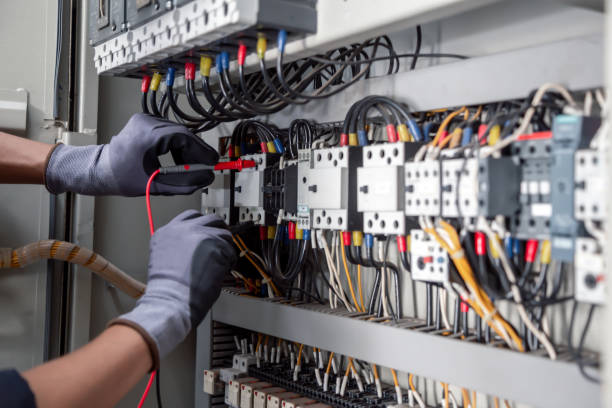
- PLC and controls wiring. The wiring and panel work that connects programmable logic controllers to sensors, motors, and the broader control system.
- Low-voltage systems. Wiring for sensors, scanners, and network connections that let automated equipment communicate with warehouse management software.
- Grounding and bonding. Critical for protecting both equipment and workers from electrical faults, particularly in facilities with significant motor and controls activity.
Electrical Components and Their Role in Automation
| Component | Primary Function | Risk if Undersized |
|---|---|---|
| Main and subpanels | Distribute power to equipment zones | Breaker trips, equipment shutdowns |
| Motor controls | Regulate conveyor and robotic motor speed | Equipment damage, inconsistent performance |
| PLC wiring and panels | Connect controllers to sensors and motors | Signal errors, automation downtime |
| Low-voltage systems | Support sensors and network connectivity | Communication failures between systems |
| Grounding and bonding | Protect equipment and workers from faults | Shock hazards, equipment damage |
What PLC Installation Actually Involves
PLC installation is more than mounting a controller in a panel and running wire to it. A programmable logic controller needs to communicate reliably with every sensor, motor, and safety device in its zone, which means the physical wiring, the panel layout, and the software programming all need to align with each other.
A poorly planned PLC installation creates problems that are hard to diagnose later. Wiring run without proper labeling makes troubleshooting slower. Panels installed without adequate working clearance create both a maintenance headache and a compliance issue, since federal standards require sufficient access space around electrical equipment for safe servicing (Occupational Safety and Health Administration, 29 CFR 1910.303).
Safety Standards Governing Industrial Electrical Work
Electrical hazards carry serious risk, and federal data reflects that reality. OSHA's electrical general requirements and wiring methods standards together generate more citations annually than its machine guarding standard, with manufacturing, retail, and transportation and warehousing among the industries most frequently cited (Occupational Safety and Health Administration, 29 CFR 1910.303). The Bureau of Labor Statistics tracks thousands of electrical exposure injuries and roughly 150 fatalities each year across U.S. workplaces.
A compliant warehouse electrical systems installation needs to address several recurring inspection points:
- Maintaining adequate working clearance around all panels and control cabinets.
- Properly labeling circuit breakers and disconnect switches.
- Using equipment listed or labeled for its specific application and location.
- Guarding any live parts operating at 50 volts or more against accidental contact.
- Maintaining insulation integrity throughout the installation, free from damage or improper grounding.
Skipping these details during installation creates risk that often surfaces during an OSHA inspection rather than during normal operation, which makes it far more costly to address after the fact.
Why Warehouse Electrical Systems Need Capacity for Future Growth
A common mistake in automation planning is sizing electrical infrastructure for current equipment only. Warehouse electrical systems designed without margin for future expansion become a bottleneck the moment a company wants to add a second conveyor line, additional robotics, or a higher-capacity ASRS installation.
Planning for this in advance means sizing main service capacity with room to grow, running conduit large enough to add circuits later without major rework, and designing panel layouts with open breaker slots reserved for future equipment. This upfront planning costs more initially but avoids the far higher cost of a full electrical retrofit a few years down the line.
Typical Electrical Scope by Automation Project Phase
| Project Phase | Electrical Activity | Estimated Duration |
|---|---|---|
| Design | Load calculations, panel sizing, utility coordination | 3 to 6 weeks |
| Permitting | Electrical permit submission and approval | 2 to 4 weeks |
| Rough-in | Conduit runs, panel installation, wiring | 4 to 10 weeks |
| Controls integration | PLC installation, sensor wiring, testing | 3 to 6 weeks |
| Commissioning | Load testing, safety inspection, final sign-off | 1 to 2 weeks |
Coordinating Electrical Work with Construction and Automation Teams
One of the most common sources of delay in automation projects is poor coordination between industrial electrical contractors, the general contractor, and the automation integrator. When these three teams work from different versions of the plan, conflicts surface during installation rather than during design, when they are far cheaper to fix.
Industrial companies benefit most when one provider manages all three pieces together. The electrical contractor knows exactly what the automation equipment requires because the same team designed the building, the power distribution, and the equipment layout as one connected plan, rather than three separate projects that happen to share a building.
Common Mistakes Industrial Companies Make with Electrical Planning
A few recurring issues show up across automation projects that skip proper electrical planning:
- Selecting automation equipment before assessing electrical capacity. This often forces costly panel and service upgrades after equipment has already been ordered.
- Underestimating future expansion needs. Wiring and panels sized only for current equipment become a constraint within a year or two of growth.
- Treating PLC installation as a software-only task. The physical wiring and panel layout matter just as much as the programming for reliable operation.
- Skipping working clearance requirements. Panels installed without adequate access space create both safety risk and inspection failures.
- Splitting electrical work across multiple uncoordinated vendors. This increases the chance of conflicting assumptions about load capacity and wiring routes.
How MTLI Coordinates Electrical Work into Automation Projects
MTLI’s industrial electrical contractors manage electrical planning as part of every automation project we deliver, not as a separate contract handled after the fact. Our warehouse automation team works directly with our electrical specialists during the design phase to size power distribution, plan PLC installation, and confirm capacity for future expansion before any equipment is ordered.
This coordination extends into our construction and general contracting work, where electrical rough-in happens alongside structural changes rather than as a separate phase. Our installations teams handle the controls integration and final commissioning, and our facility management services support ongoing electrical maintenance once the system is running.
Building Electrical Infrastructure That Supports Automation Long-Term
Reliable automation depends on electrical infrastructure planned alongside the equipment, not added after the fact. Industrial electrical contractors who understand both the mechanical and controls side of automation prevent the capacity gaps, compliance issues, and integration delays that slow down so many projects.
If your company operates in manufacturing or warehousing and distribution, MTLI can plan and install the electrical infrastructure your automation project actually needs, from initial load calculations through final commissioning. Contact MTLI to discuss the electrical scope of your next automation project.