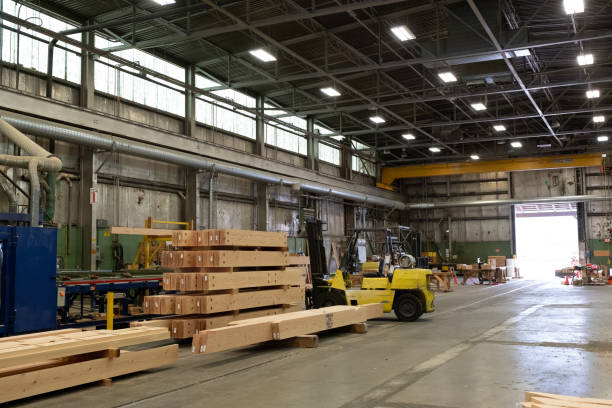
Every operations manager who has lived through a facility move, a plant shutdown, or a distribution center consolidation knows the same fear: the day operations stop and do not restart on schedule. Facility transitions carry real risk, but that risk comes from poor planning, not from the transition itself. With the right sequencing, most facilities move, expand, or wind down without a single missed shipment.
MTLI Group manages facility relocations and transitions for operations teams across the US, coordinating everything from equipment moves to full decommissioning projects. This blog walks through how facility transitions get managed without downtime, what typically goes wrong when they do not, and how operations managers can plan a transition that keeps the business running.
Why Facility Transitions Put Operations at Risk
Facility transitions are physically demanding work. Equipment gets disconnected, racking gets disassembled, and material handling systems move between locations, often on a tight timeline with little room for error. According to the U.S. Bureau of Labor Statistics, the transportation and warehousing sector reported a nonfatal injury incidence rate of 4.3 cases per 100 full-time equivalent workers in 2023, nearly double the rate of 2.2 across private industry overall. That gap reflects the physical nature of the work these operations depend on every day, and it climbs further during intensive periods like a facility transition, when normal routines are disrupted and unfamiliar tasks increase.
Downtime risk compounds this concern. A distribution center that goes dark for even a few unplanned days can miss delivery windows, strain customer relationships, and create a backlog that takes weeks to clear. Operations managers rightly treat facility transitions as high-stakes events, not routine projects.
The good news is that downtime is largely preventable. Facilities that experience serious disruption during a transition usually skipped a planning step somewhere, not because the transition itself was impossible to manage smoothly.
Types of Facility Transitions Operations Managers Face
Facility transitions come in several forms, and the right management approach depends on which type is underway.
Full relocation moves an entire operation from one facility to another, including inventory, equipment, racking, and staff. This is the highest-risk transition type because it requires the old facility to keep functioning until the new one is ready to take over.
Warehouse decommissioning winds down a facility entirely, whether due to a lease ending, a plant closure, or consolidation into another site. Decommissioning involves removing equipment, restoring the space to its required condition, and managing the disposal or resale of assets no longer needed.
Facility consolidation merges two or more operations into a single site, often to reduce overhead or improve efficiency. Consolidation projects require careful sequencing since two active operations are converging into one space.
Expansion transitions involve adding capacity to an existing operation, sometimes while that operation continues running at full volume in the unaffected portion of the building.
Each transition type carries its own downtime risks, but they share a common solution: sequencing the work in phases rather than attempting a single cutover.
The Phased Approach to Facility Transitions
A phased transition breaks the move into stages, keeping enough of the operation running at all times to maintain order fulfillment while work proceeds elsewhere in the facility. This approach costs more in coordination time than a single weekend shutdown, but it dramatically reduces the risk of extended downtime.
Pre-transition assessment comes first. Before any equipment moves, a walkthrough of both the current and destination sites identifies structural constraints, utility connections, and any work that needs to happen before the move itself can begin.
Parallel operations keep critical functions active in the original location while the new site comes online. For a full relocation, this might mean running receiving and shipping from the old facility while racking and automation get installed at the new one.
Sequenced equipment moves prioritize which systems move first based on what the operation can least afford to lose. Non-critical storage areas often move early, while core conveyor and sortation systems move last, once the destination site is fully prepared to receive them.
Contingency planning accounts for the inevitable delay, whether a permit takes longer than expected or a piece of equipment needs unplanned repair during disassembly. Facilities that build buffer time into the schedule absorb these delays without the transition falling behind.
Comparing Transition Approaches
The table below compares the three most common approaches operations managers use for facility transitions, along with the tradeoffs each one carries.
| Transition Approach | Downtime Risk | Coordination Complexity | Best Suited For |
|---|---|---|---|
| Single cutover (weekend or short shutdown) | High if anything goes wrong | Low | Small facilities, simple moves |
| Phased transition with parallel operations | Low | High | Mid-size to large facilities |
| Rolling transition (department by department) | Moderate | Moderate | Facilities with distinct operational zones |
Most mid-size and large facilities benefit from a phased or rolling approach. The added coordination effort pays for itself by protecting order fulfillment throughout the move.
Industrial Relocation Planning: What the Timeline Actually Looks Like
Industrial relocation planning starts well before the first piece of equipment gets disconnected. A realistic timeline for a mid-size facility relocation typically spans four to nine months, depending on the scope of construction needed at the destination site and how much of the current operation needs to keep running during the move.
The early planning phase includes site selection or preparation, a detailed inventory of equipment and racking that needs to move, and coordination with the construction and general contracting team if the destination site needs buildout work before it can receive operations.
Labor coordination deserves particular attention during industrial relocation planning. Moving crews, riggers, electricians, and installation teams all need to work in sequence without stepping on each other's timelines. A facility that books these trades independently often ends up with gaps where no work happens while different teams wait for their turn, or worse, conflicts where two trades need the same space at the same time.
Communication with customers and suppliers rounds out the planning phase. Operations managers who notify key accounts of the transition timeline in advance, along with any temporary changes to delivery windows, avoid the reputational damage that comes from surprising customers with an unexplained delay.
Warehouse Decommissioning: A Different Set of Priorities
Warehouse decommissioning follows a different logic than relocation planning, since the goal is winding down operations rather than standing up a new site. Three priorities dominate a decommissioning project.
Equipment removal and disposition determines what happens to racking, conveyor systems, and material handling equipment that will not move to another location. Some equipment gets sold or transferred to another facility, while aging or incompatible equipment often gets liquidated.
Environmental and lease compliance matters heavily in decommissioning projects. Many commercial leases specify the exact condition a space must be returned to, and falling short of those requirements creates costly disputes with landlords after the fact.
Asset recovery captures value from equipment and materials that would otherwise go to waste. A structured asset recovery process, run alongside the physical decommissioning work, often offsets a meaningful portion of the total project cost.
Warehouse decommissioning projects that skip proper planning around these three areas tend to run longer and cost more than expected, particularly when lease compliance issues surface late in the process.
Pre-Transition Checklist by Phase
The table below outlines the key tasks operations managers should confirm at each stage of a facility transition, whether the project involves relocation, consolidation, or decommissioning.
| Phase | Key Tasks | |
|---|---|---|
| Planning (2 to 4 months out) | Site assessment, equipment inventory, trade scheduling, permit applications | |
| Pre-move preparation (4 to 8 weeks out) | Racking and automation readiness at destination, labor crew confirmation, customer notifications | |
| Execution | Phased or sequenced equipment moves, parallel operations where needed, daily progress tracking | |
| Post-transition | Final inspections, lease compliance sign-off, asset disposition records, performance review |
Working through each phase in order, rather than compressing planning to save time upfront, is what protects the timeline once execution begins.
Common Pitfalls That Cause Unplanned Downtime
A few recurring mistakes account for most of the downtime that facility transitions experience. Underestimating the time needed for permits and inspections at the destination site is one of the most frequent. Utility connections, fire suppression systems, and occupancy permits all take longer than most schedules assume, particularly in jurisdictions with backlogged inspection departments.
Sequencing equipment moves without regard to operational priority is another common issue. Moving the equipment that is easiest to disconnect first, rather than the equipment the operation can most afford to be without, often leaves critical systems stranded mid-move when the schedule slips.
Finally, facilities that treat labor coordination as an afterthought frequently discover that riggers, electricians, and installation crews are not available on the days the schedule requires them. Booking these trades as part of a single coordinated project, rather than through separate vendors managing their own calendars, closes this gap.
How MTLI Group Manages Facility Transitions Without Downtime
MTLI Group coordinates facility transitions end to end, from initial site assessment through equipment moves, warehouse decommissioning, and post-transition facility management. Services include relocation planning and execution, construction and buildout work at destination sites, racking and storage system moves, and installation and recommissioning of automation and material handling equipment.
With over 40 years of experience and more than 15,000 completed projects, MTLI Group brings the trade coordination that phased transitions require, managing riggers, electricians, and installation crews under one schedule rather than leaving operations managers to coordinate multiple vendors independently. This single point of accountability is what keeps sequencing on track when a facility transition spans several months. MTLI Group's experience spans manufacturing facilities and third-party logistics operations, each of which brings its own transition requirements around equipment complexity and customer commitments.
For teams weighing whether a relocation or an on-site expansion better fits their situation, the warehouse expansion versus new construction guide breaks down that decision in more detail.
Planning Facility Transitions That Protect Operations
Facility transitions do not have to threaten daily operations. Relocation, warehouse decommissioning, consolidation, and expansion each carry distinct planning requirements, but they all benefit from the same core discipline: phased sequencing, realistic timelines, and coordinated labor across every trade involved. Operations managers who invest in this planning upfront consistently see smoother transitions than those who compress the schedule to save time early on.
MTLI Group supports operations teams through every stage of a facility transition, from the first site assessment to the final inspection. Contact the MTLI Group team to discuss how your next facility transition can be planned and executed without downtime.