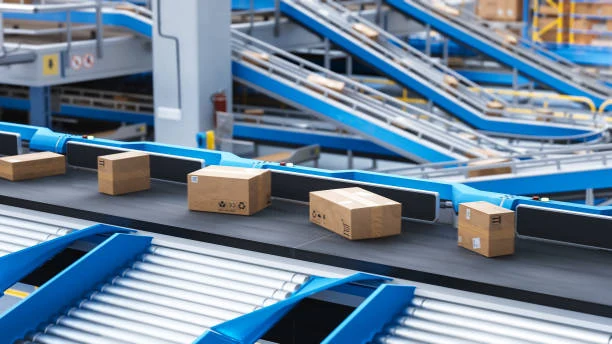
Every parcel that leaves a distribution center has to end up in the right truck, at the right dock, headed to the right zip code, and it has to get there fast enough to hit a shipping cutoff. That single task, sorting product accurately at high speed, is where a lot of facilities either keep pace with order volume or fall behind it. Sortation systems exist to solve exactly this bottleneck, and operations managers dealing with rising parcel counts are looking at them more seriously than ever.
MTLI Group designs and installs sortation systems as part of a broader warehouse automation practice, building solutions sized to actual order volume rather than a one-size-fits-all conveyor package. This piece walks through how sortation works, where automated sorting systems earn their keep, and what separates a system that scales well from one that becomes a bottleneck of its own.
Non-store retail sales, the category that captures most e-commerce activity, rose 12.2 percent year over year as of the U.S. Census Bureau's May 2026 retail trade report. Every one of those additional online orders eventually needs to be sorted by destination somewhere in the fulfillment chain, and that steady climb in parcel volume is a major reason sortation has moved from a nice-to-have to a core piece of warehouse infrastructure.
What Sortation Systems Actually Do
At its simplest, a sortation system takes a stream of mixed products or parcels and routes each one to the correct destination, whether that's an outbound truck, a packing station, or a specific client's order zone. Conveyor sortation handles the physical movement, while sensors, barcode scanners, and control software handle the decision-making about where each item needs to go.
The technology ranges from straightforward diverter arms on a conveyor line to high-speed cross-belt and tilt-tray systems capable of processing thousands of items an hour. Automated sorting systems generally fall into a few common categories, each suited to different volume levels and product types.
| Sortation Type | How It Works | Typical Use Case |
|---|---|---|
| Diverter (pusher/arm) | Mechanical arm pushes items off the main line | Lower volume, simpler sortation needs |
| Cross-belt sorter | Small belts on a loop tilt or shift to release items | High-speed parcel and small item sorting |
| Tilt-tray sorter | Trays tip to drop items into the correct chute | Mixed-size items at moderate to high volume |
| Shoe sorter | Sliding shoes guide items along the belt to an exit lane | Fragile or irregular items needing gentle handling |
Choosing between these usually comes down to item size, fragility, and how many destinations the system needs to sort into at once.
Why More Facilities Are Investing in Sortation Now
Order volume isn't the only pressure pushing facilities toward automated sorting systems. Labor availability plays just as large a role, since manual sortation is repetitive, physically demanding work that's become harder to staff consistently. A conveyor sortation line doesn't call in sick during peak season, and it processes at a steady rate regardless of shift changes or turnover.
There's also an accuracy argument. Manual sortation error rates climb as fatigue sets in over a shift, while a properly tuned automated system holds a consistent error rate whether it's hour one or hour ten. For operations managers tracking mis-ship rates and the cost of reshipping incorrect orders, that consistency adds up quickly across a full year of volume.
Safety Considerations Baked Into Sortation Design
Moving equipment carries real risk if it isn't guarded and maintained properly. OSHA's general machine guarding standard requires that any machine part, function, or process capable of causing injury be safeguarded, and the agency has noted that workers who operate and maintain machinery suffer roughly 18,000 amputations, lacerations, crushing injuries, and abrasions, along with more than 800 deaths, every year across U.S. workplaces. Sortation lines, with their moving belts, diverters, and pinch points, fall squarely within the equipment this standard is meant to address.
A well-designed sortation system builds guarding, e-stops, and clear signage into the installation from the start rather than adding it after the fact. Our installation crews follow this approach on every project, since retrofitting safety features onto a live sortation line later is both more expensive and more disruptive than including them at the outset.
Manual Sorting vs. Automated Sortation Systems
Operations managers weighing whether to automate an existing manual sortation process often want a direct comparison of what changes.
| Factor | Manual Sorting | Automated Sortation Systems |
|---|---|---|
| Throughput | Limited by staff headcount and fatigue | Consistent, scalable with equipment capacity |
| Accuracy | Varies by shift and individual worker | Stays steady once the system is calibrated |
| Labor need | High, and scales directly with volume | Lower per unit sorted, though oversight still needed |
| Peak season handling | Requires temporary hiring and training | Runs at rated capacity without a hiring cycle |
| Upfront investment | Minimal | Higher, with a defined payback period |
Facilities with lower, steady volume sometimes find manual sortation still makes financial sense. Once volume climbs past a certain threshold, though, the labor cost and error rate of manual sorting usually tips the equation toward automation.
Sizing a Sortation System to Real Volume
One of the more common mistakes in sortation planning is sizing a system for projected future volume instead of current, verified throughput. Oversized systems sit underutilized and cost more than necessary, while undersized ones become the exact bottleneck they were meant to eliminate.
A few factors shape the right size and type of system:
Peak-to-average volume ratio. A facility with sharp seasonal spikes needs a system built to handle peak days without becoming an expensive, mostly idle asset the rest of the year.
Item variability. Facilities sorting a wide range of sizes and weights typically need a more flexible system, such as a tilt-tray or shoe sorter, than one handling a narrow, consistent product range.
Facility layout. Aisle widths, ceiling height, and dock positioning all affect where a sortation line can physically go. Our team in storage and racking frequently coordinates with automation planning so racking and conveyor paths don't compete for the same floor space.
Integration with existing systems. A sortation line needs to communicate with the warehouse management system in real time, so integration testing deserves as much attention during planning as the physical equipment itself.
Installation and Commissioning Realities
Getting a sortation system physically installed is only part of the project. Commissioning, the process of testing and calibrating the system under real operating conditions, often takes longer than the physical installation itself. Our MHE installation teams build commissioning time into every project schedule from the start, since a system that looks complete on paper still needs real-world testing before it can run at full rated capacity.
Electrical capacity is another detail that gets missed in early planning. Sortation equipment draws meaningful power, and facilities upgrading from manual processes sometimes discover their existing electrical infrastructure needs work before the new system can even be powered on, which is why coordinating with a construction and general contracting team early avoids a late-stage scramble.
Keeping a Sortation System Running at Capacity
Sortation equipment sees constant use, and wear on belts, motors, and sensors adds up faster than on equipment used intermittently. A facility maintenance plan built specifically around a sortation line, rather than a generic warehouse maintenance schedule, catches wear before it causes an unplanned stoppage during a high-volume shipping day.
Where Sortation Systems Deliver the Clearest Return
Sortation earns its investment fastest in operations with high parcel counts and tight shipping windows.
| Operation Type | Why Sortation Matters Most |
|---|---|
| E-commerce fulfillment | High SKU counts and same-day cutoffs |
| 3PL and logistics | Sorting for multiple client accounts on one floor |
| Retail distribution | Splitting inventory between stores and online orders |
E-commerce fulfillment operations tend to see the fastest payback from sortation, since parcel volume and shipping deadlines leave little margin for manual sorting delays. Retail distribution centers increasingly need sortation that can split inventory between store replenishment and direct-to-consumer orders out of the same building.
MTLI Group's Role in Sortation System Projects
MTLI Group manages sortation projects from initial volume analysis through commissioning and beyond, coordinating racking, electrical, and installation work under one contract rather than splitting the project across vendors who rarely talk to each other. That coordination matters most in the weeks after installation, when a system still needs fine-tuning based on how it actually performs under real order volume.
With more than 40 years in the industry and over 15,000 completed projects across North America, our team has sized and installed enough sortation systems to know how to match equipment to real throughput data instead of optimistic projections. For facilities also weighing an warehouse automation upgrade alongside sortation, we plan both pieces together so the equipment works as one connected system rather than two separate investments bolted together after the fact.
Considering Sortation Systems for Your Facility?
Sortation systems pay off fastest for operations dealing with rising parcel volume, tight shipping windows, or a labor market that makes manual sorting harder to staff consistently. The right system depends on your actual order data, not a generic equipment package sized for someone else's facility.
Our team at MTLI Group can walk through your volume numbers and help map out a sortation project sized to your real operation. Reach out through our quote request page whenever you're ready to talk about specifics.