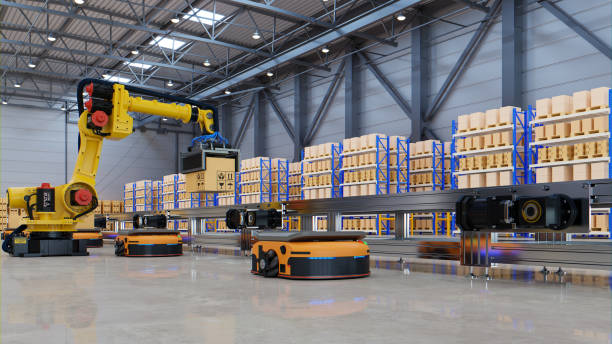
Running out of warehouse space does not always mean you need a larger building. Automated storage and retrieval systems (ASRS) can help facilities make better use of their existing footprint by using vertical space and automating how inventory is stored and retrieved.
These systems can look complex from the outside, but the basic idea is straightforward. Automated equipment moves inventory within a high-density storage structure, while software coordinates where products are stored and when they need to be retrieved. The right system depends on your inventory, available space, throughput, and workflow.
With over four decades of experience in material handling and automation, MTLI Group understands what it takes to plan an effective ASRS solution. Leveraging that knowledge, we'll explain how these systems work, where they fit best, and how to choose the right ASRS system supplier.
What Is an ASRS, and Why Do Facilities Use One?
An automated storage and retrieval system (ASRS) uses a combination of storage structures, machinery, and software to automatically place and retrieve inventory. Depending on the system, cranes, shuttles, or robotic equipment move pallets, totes, or bins within a high-density storage area. This reduces the need for workers to spend time traveling through aisles to locate and retrieve products.
Facilities often turn to ASRS when traditional storage methods start creating space, labor, or productivity challenges. Key benefits include:
- Improved space utilization: ASRS can use vertical space and compact storage layouts to hold more inventory in the same footprint.
- Reduced manual handling: Automated equipment takes care of repetitive storage and retrieval movements.
- Improved accuracy: Software-controlled storage helps track inventory locations and reduce retrieval errors.
- Faster workflows: Products can be retrieved and delivered to the next stage of the operation with less manual travel.
In other words, ASRS is not just about automation for its own sake. It is about solving a real space and labor constraint that many growing facilities eventually run into.
That need is becoming more important as facilities look for ways to handle growing demand with a limited labor pool. According to the Bureau of Labor Statistics, employment of hand laborers and material movers is expected to grow slower than the average for all occupations over the next decade.
The Main Types of ASRS Systems
Not all ASRS systems are designed to handle the same type of inventory or workflow. The right option depends on factors such as what you store, how quickly inventory moves, your available space, and the height of your facility.
| System Type | How It Works | Best Fit |
|---|---|---|
| Unit-load ASRS | Cranes move full pallets in and out of storage | High-volume pallet storage |
| Mini-load ASRS | Cranes handle totes or cartons instead of pallets | Case and each-level picking |
| Shuttle-based systems | Shuttles move within racking levels to retrieve totes | High-throughput, dense storage |
| Vertical lift modules | Trays move vertically to a fixed access point | Smaller footprint, lower volume |
Facilities handling large volumes of pallets often find unit-load ASRS a good fit. Operations dealing with smaller, faster-moving products may benefit more from mini-load or shuttle-based systems. Vertical lift modules can also be useful when space is limited but full-scale storage automation is not necessary.
Building height is another important factor. Taller facilities can often take greater advantage of crane-based systems. On the other hand, vertical lift modules may work better where ceiling height is more limited. Evaluating these requirements early can help you choose a system that fits your building instead of creating costly changes later.
How the Retrieval Process Actually Works
An ASRS retrieval may look complex from the outside, but the basic process is fairly simple. The system receives a request, finds the right inventory, retrieves it automatically, and records the movement. The exact equipment involved depends on whether the facility uses cranes, shuttles, lifts, or another type of ASRS technology.
- A warehouse management system sends a retrieval request to the ASRS software
- The crane, shuttle, or lift mechanism locates and retrieves the requested item
- The item is delivered to a designated pick or pack station
- The system logs inventory movement automatically, keeping records accurate in real time
This creates a continuous flow of information between the warehouse maintenance system and the storage equipment. Managers can see where inventory is located and track movements without depending entirely on manual updates.
It also helps facilities manage changes in demand. When order volumes increase, automated retrieval can handle more activity without requiring workers to spend additional time walking through storage aisles. That can make it easier to scale operations during peak periods.
What to Look for in an ASRS System Supplier
Choosing the right ASRS system supplier is just as important as choosing the right technology. Even a well-designed system can create problems if it does not fit your building, integrate with your existing software, or receive the right support after installation.
Before signing a contract, look closely at:
- Engineering capability: Can the supplier design a system around your specific building height, floor load, and inventory profile?
- Integration experience: Has the supplier connected ASRS systems to a WMS similar to yours before?
- Installation ownership: Does the supplier use in-house field teams, or does the work go to subcontractors?
- Ongoing support: Is there a maintenance program in place once the system goes live?
Skipping these questions can leave you with a system that looks good on paper but struggles to perform at full capacity. The right ASRS system supplier should take the time to understand your facility, identify potential constraints, and recommend a solution around your actual operation.
At MTLI Group, we take that approach. With more than 4 decades of experience in material handling and automation, we can help you evaluate your facility and plan the right ASRS solution. Our team also manages the work from engineering through installation and ongoing support. Contact us today to discuss your ASRS requirements and explore the right solution for your facility.
Evaluating the Cost and ROI of an ASRS System
ASRS systems represent a significant investment, and costs vary widely based on system type, storage capacity, and building modifications required. Unit-load systems with structural warehouse racking tend to cost more upfront than smaller vertical lift modules. But they also handle far greater volume over time.
According to the U.S. Census Bureau's Annual Capital Expenditures Survey, U.S. nonfarm employer businesses spent $12.96 billion on robotic equipment in 2022. This reflects how much capital facilities are putting toward automation investments like ASRS.
A few factors that influence ROI timelines:
- Current labor costs tied to manual picking and storage
- How much usable floor space the system frees up
- Order accuracy improvements and reduced error-related costs
- Throughput gains during peak seasons
Looking at labor savings alone does not tell the full ROI story. ASRS can also help you make better use of available space, improve throughput, and reduce costly inventory errors. A qualified ASRS system supplier can evaluate these factors based on your specific operation to give you a clearer picture of the potential return.
Challenges to Plan for Before Installing ASRS
ASRS can improve storage capacity and warehouse efficiency, but getting the system in place takes careful planning. The technology must fit your building, connect with existing systems, and support the way your team works. Overlooking any of these areas can lead to delays or unexpected changes during installation.
Common challenges include:
- Structural requirements: Floors, ceilings, and other building components may need upgrades to support the system.
- Existing racking: Current pallet warehouse racking may need to be modified or replaced.
- Electrical upgrades: Automated equipment may require additional power capacity or new electrical infrastructure.
- System integration: The ASRS must communicate properly with your WMS and other warehouse technology.
- Employee training: Staff need to understand new workflows, controls, and safety procedures before the system goes live.
The earlier these requirements are identified, the easier they are to manage. A knowledgeable automation partner should assess your facility before installation and address potential issues during the design phase rather than after equipment arrives on the floor.
Is an ASRS System Right for Your Facility?
Not every warehouse needs an ASRS system. Facilities with lower order volume, ample floor space, or highly variable inventory may find the investment difficult to justify right now.
ASRS tends to make the most sense when:
- Floor space is limited and expansion is not a realistic option
- Order volume has grown to a point where manual retrieval creates bottlenecks
- Labor availability is inconsistent or increasingly expensive
- Inventory accuracy has become a recurring operational issue
If several of these apply to your facility, it is worth having a detailed conversation with an ASRS system supplier about what a system could look like for your specific building.
Think beyond your current storage needs, too. If your facility is growing steadily, planning for automation while space and infrastructure are still available can make the process much easier. Retrofitting a fully occupied warehouse later can be more disruptive and difficult to manage.
Preparing Your Facility Before Installation Begins
Even after choosing a system, there is groundwork to complete before installation day. Facilities that prepare ahead of time tend to see smoother rollouts with fewer delays.
Steps worth taking before installation begins:
- Confirm structural readiness: Have an engineer verify the building can support the added weight and height of the system
- Review power capacity: Automated equipment often needs more electrical capacity than existing systems provide
- Plan for downtime: Even phased installations usually require some disruption to daily operations
- Train staff early: Introducing your team to new workflows before go-live reduces confusion during the transition
Facilities that treat these steps as part of the project timeline, rather than an afterthought, generally experience a much smoother go-live.
Why Work with MTLI Group as Your ASRS System Supplier
An ASRS project involves more than selecting the right equipment. The system needs to fit your storage goals, building, infrastructure, and day-to-day workflow. That is where MTLI Group brings a broader approach, combining automation expertise with the facility services needed to make the entire project work together.
Our experience spans more than four decades and over 15,000 completed projects. We can help evaluate your existing space, plan the storage configuration, and coordinate the supporting work required for implementation. This includes racking, electrical systems, installation, and other facility requirements.
We also stay involved after the system is operational. Through facility management & master GC services, we can help your ASRS continue performing as your facility and storage needs change. The goal is to give you a solution that works not only at launch, but for the years that follow.
Planning Your Next Step With ASRS
Choosing an ASRS is about more than increasing storage capacity. The right system should fit your inventory, workflow, building, and long-term growth plans while delivering value that makes sense for your operation.
A thoughtful evaluation can help you avoid choosing a system based only on capacity or technology. Look at your current storage challenges, future demand, available space, integration requirements, and expected ROI before making a final decision.
If you're considering ASRS, MTLI Group can help you understand what the process could look like for your facility. Contact our team to explore your requirements and discuss the next step.