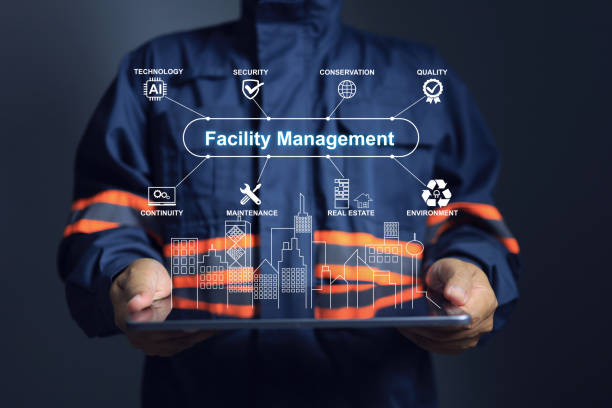
A conveyor that jams at 2 a.m., a racking system flagged during an inspection, an HVAC unit that fails right before a heat wave. None of these events feel dramatic on their own, but stacked together across a year, they explain why so many operations managers now treat facility maintenance services as a core part of running a warehouse or plant rather than an afterthought handled when something breaks.
MTLI Group provides facility maintenance support to industrial operators across North America, built around catching problems early instead of reacting to them after the fact. This piece looks at what industrial maintenance actually covers, why preventative facility maintenance pays for itself, and how to structure a program that protects uptime without draining the budget.
The National Institute of Standards and Technology reports that US manufacturers spent $50 billion on reported maintenance and repair in 2016, with maintenance costs commonly running between 15 and 70 percent of the cost of goods sold depending on the industry and how well the program is managed. That range is wide because the gap between a well-run maintenance program and a poorly run one shows up directly on the bottom line.
Defining Facility Maintenance Services Beyond the Basics
Facility maintenance services get lumped together in a lot of operations conversations, but they cover a wider scope than most people initially assume. The work spans building systems, material handling equipment, racking structures, electrical infrastructure, and the safety systems tied to all of it. A facility that only budgets for HVAC and lighting repairs is missing the equipment categories most likely to cause a costly shutdown.
Industrial maintenance in particular has to account for machinery under constant load, from conveyors and automated storage systems to dock doors and forklifts. This equipment wears differently than office building systems, and a maintenance plan copied from a commercial property template usually misses the failure points that actually shut down a warehouse floor.
Three Approaches to Keeping Equipment Running
Most facilities fall into one of three maintenance strategies, and the difference between them has a real cost impact.
| Maintenance Type | When It Happens | Typical Outcome |
|---|---|---|
| Reactive maintenance | After equipment fails | Highest repair cost, unplanned downtime, rushed labor |
| Preventive maintenance | On a fixed schedule or usage cycle | Predictable costs, lower failure rate, some unnecessary servicing |
| Predictive maintenance | Based on monitored equipment condition | Lowest downtime, most efficient use of labor, higher upfront setup |
NIST's review of maintenance economics found that companies investing in proactive facility maintenance services have reported reductions in equipment breakdowns, product defects, and operational downtime, along with improvements in labor productivity and overall output. While the exact results vary across industries and individual studies, the evidence consistently shows that relying solely on reactive maintenance is the most expensive approach over the long term. Implementing planned facility maintenance services helps businesses improve equipment reliability, reduce unexpected disruptions, and lower total maintenance costs over the life of their assets.
Why Preventative Facility Maintenance Changes the Cost Equation
Preventative facility maintenance shifts spending from emergency repairs to scheduled service, and the timing difference matters more than it seems. A scheduled repair happens during a planned maintenance window, often with parts ordered in advance and labor scheduled around normal operations. An emergency repair happens whenever the equipment fails, often requiring rush shipping on parts, overtime labor, and lost production time layered on top of the repair cost itself.
OSHA's guidance on hazard prevention specifically recommends that employers conduct routine preventive maintenance of equipment, facilities, and controls to help prevent incidents due to equipment failure, tying maintenance directly to workplace safety rather than treating it as a pure cost center. Bureau of Labor Statistics data backs up why this matters in industrial settings specifically: transportation and warehousing carried a nonfatal injury and illness rate of 4.4 cases per 100 full-time workers in 2023, among the highest of any major private industry sector, with manufacturing not far behind.
Building a Facility Maintenance Program That Actually Holds Up
A maintenance program only works if it is specific to the equipment and layout of the facility running it. A few components show up in almost every program that performs well over time.
Equipment inventory and criticality ranking. Not every piece of equipment deserves the same attention. Ranking assets by how much a failure would cost in downtime helps prioritize where preventive schedules matter most.
Scheduled inspection intervals. Racking, conveyor systems, dock equipment, and electrical panels each have different wear patterns and inspection needs. Our storage and racking team builds inspection schedules around load history and usage patterns rather than a generic calendar interval.
Spare parts planning. Facilities that stock common failure-prone parts avoid the delay of waiting on a rush order once equipment goes down, which is often the longest part of an unplanned repair.
Documentation and records. Keeping a clear history of repairs, inspections, and part replacements makes it easier to spot recurring issues and supports compliance during audits or insurance reviews.
Emergency response protocols. Even a strong preventive program needs a plan for the failures that happen anyway. Fast response with a clear escalation path limits how long a facility stays down when something unexpected occurs.
Where Maintenance Priorities Shift by Facility Type
The equipment that matters most for a maintenance program depends heavily on what the facility actually does.
| Facility Type | Highest Priority Maintenance Focus |
|---|---|
| Distribution centers | Conveyor systems, dock equipment, racking integrity |
| Manufacturing plants | Production line machinery, electrical systems, controls |
| Cold storage facilities | Refrigeration units, insulated doors, condensation control |
| 3PL operations | Multi-client equipment standards, flexible scheduling around shared space |
Manufacturing plants tend to prioritize production line uptime above almost everything else, since a stopped line affects output in a way that is immediately visible to leadership. Cold storage facilities carry unique maintenance demands, since refrigeration failures put inventory at risk within hours rather than days, making a fast response protocol especially important. Operations serving logistics clients often rely on facility maintenance services that can be scheduled around multiple client accounts sharing the same warehouse floor. This added level of coordination is something a single-tenant facility typically doesn't have to manage, making well-planned facility maintenance services essential for minimizing disruption and maintaining operational efficiency.
Common Mistakes That Undercut a Maintenance Program
A few patterns show up repeatedly in facilities that struggle with unplanned downtime despite having some kind of maintenance plan in place.
Treating maintenance as a pure cost line. Facilities that view maintenance spending only as overhead tend to defer it during budget crunches, which is exactly when deferred maintenance turns into a larger failure later.
Skipping documentation. Without records of past repairs and inspections, it becomes difficult to identify a pattern before a piece of equipment fails a second or third time.
Applying one schedule to all equipment. A conveyor motor running continuously and a seasonal HVAC unit do not wear at the same rate, and treating them identically leads to either wasted service visits or missed ones.
No plan for automation-specific components. Facilities that added warehouse automation systems without updating their maintenance program often find that robotics, sensors, and control software need a different service cadence than the conveyor and racking systems around them.
Underestimating labor availability during a crisis. A maintenance plan that assumes staff can drop everything during an emergency often falls apart the first time two systems fail in the same week.
How MTLI Group Approaches Facility Maintenance Services
MTLI Group builds facility maintenance programs around the actual equipment and layout of each site, rather than applying a one-size-fits-all service contract. Our team coordinates racking inspections, automation servicing, and general building maintenance under one program, so a facility isn't juggling separate vendors for each equipment category.
For facilities planning a construction and general contracting project or a warehouse relocation, we build the maintenance plan into the project from the start rather than treating it as a separate conversation after the work is done. With more than 40 years in the industry and over 15,000 completed projects across North America, our team has seen enough equipment failures to know which ones are preventable with the right inspection schedule and which ones need a faster response plan instead.
Ready to Improve Your Facility Maintenance Services?
The gap between a facility that runs smoothly and one that deals with constant unplanned downtime usually comes down to how seriously maintenance gets planned before problems show up. A program built around your specific equipment, usage patterns, and risk areas costs less over time than reacting to failures as they happen.
MTLI Group can help you build that program. Start a Project and talk through your facility's maintenance needs with our team.