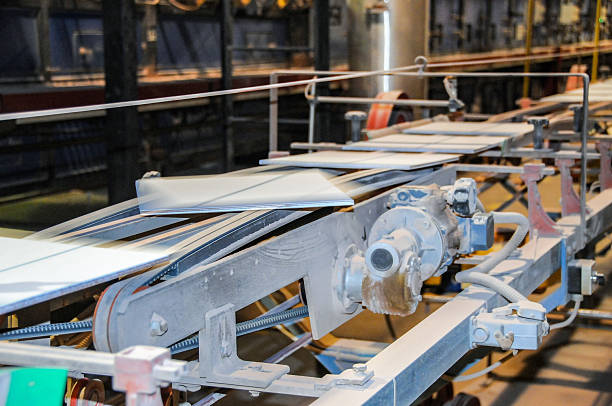
A conveyor line looks simply once it's running. Product moves, boxes sort; pallets shift from one end of the building to the other without anyone touching them. What's invisible is everything that had to go right before that first box ever moved: the layout math, the safety planning, the testing that confirms the whole line actually works the way it was designed to. Skip any of that, and the simple part stops looking so simple fast.
Anyone weighing this kind of project should start with the basics. Our guide to what a conveyor system actually is breaks down the core concepts before getting into the planning and safety work that makes a conveyor system installation succeed.
Before the First Bolt Goes In: Why Planning Drives Everything Else
Most conveyor problems trace back to decisions made, or skipped, long before conveyor system installation day. Throughput requirements, product dimensions, weight limits, and building constraints all shape what kind of system actually fits a facility, and getting any one of these wrong tends to surface only after the line is running and falling short.
A proper planning phase maps current volume against projected growth, so a facility isn't installing a system sized for today's demand and outgrown within two years. Our conveyor systems team runs this assessment before any equipment gets ordered, since a conveyor sized wrong on paper is a far cheaper fix than one already bolted to the floor. This kind of upfront planning matters most in manufacturing facilities, where a conveyor line often has to sync directly with production speed rather than operate independently.
The Building Blocks of a Reliable Conveyor Layout
A handful of core decisions shape whether a conveyor layout performs well or becomes a bottleneck the day it goes live.
Belt or roller selection depends heavily on what's actually being moved, since a system built for uniform boxes performs poorly with irregular or fragile product. Incline and decline sections need careful angle calculation, since too steep a grade causes product to slide or jam. Merge and diverge points, where multiple lines combine or split, are usually where throughput problems concentrate if spacing and timing aren't calculated correctly. Control and sensor placement ties the mechanical system to the electrical side, determining how well the line can speed up, slow down, or stop in response to real conditions downstream.
Getting the electrical side right is just as important as mechanical design. Projects with any real automation depend on our electrical automation services team syncing sensors and controls with the physical conveyor layout from the start, rather than wiring a finished mechanical system after the fact.
Choosing a Conveyor Configuration That Fits the Job
Different conveyor types solve different problems, and matching the configuration to the actual workflow matters more than picking whatever looks most impressive on a spec sheet.
Belt conveyors handle general product movement across most industries and work well for a wide range of item sizes. Roller conveyors suit heavier loads and palletized product, often requiring less power since gravity or minimal drive assistance can move items along. Sortation conveyors direct product to different destinations automatically, essential for high-volume fulfillment operations. Accumulation conveyors allow product to gather and buffer at a station without shutting the whole line down.
| Conveyor Type | Best For | Power Requirements |
|---|---|---|
| Belt Conveyor | General product movement | Moderate |
| Roller Conveyor | Heavy or palletized loads | Low to moderate |
| Sortation Conveyor | High-volume, multi-destination routing | High |
| Accumulation Conveyor | Buffering without full line stoppage | Moderate |
Facilities in warehousing and distribution frequently combine several of these types within a single facility, since receiving, storage, and shipping zones each move product differently. Operations serving 3PL and logistics clients lean especially hard on sortation systems, since routing accuracy directly affects whether the right product ends up on the right truck.
The Safety Stakes Behind Every Conveyor Line
Conveyor systems carry real physical risk, and the injury data behind that risk is a big part of why conveyor system installation quality matters so much. Federal data cited by OSHA shows roughly 8,450 non-fatal amputation cases occur annually across private industry involving machines including conveyors, with 44 percent of these injuries concentrated in the manufacturing sector alone. Nip points, where a conveyor belt or chain runs close to a frame or roller, are a recurring source of these incidents when guarding is inadequate or missing entirely.
Interestingly, the labor picture around conveyors tells its own story. The Bureau of Labor Statistics projects employment for material moving machine operators, the category that includes conveyor operators, to grow just 1 percent between 2024 and 2034, far slower than the average occupation. That slow growth isn't a sign of shrinking demand for material movement. It reflects how much of that growth is now being absorbed by better conveyor and sortation technology instead of added headcount, which raises the stakes on getting the conveyor system installation right the first time. A proper conveyor installation project builds guarding, emergency stops, and lockout points into the design from day one rather than treating them as add-ons after inspection flags a gap.
What Separates a Rushed Startup from a Proven One
Getting a conveyor physically installed is only half the job. Commissioning is what confirms the system actually performs the way it was designed under real product load, not just during a light test run.
| Commissioning Step | What It Confirms | Risk If Skipped |
|---|---|---|
| Mechanical Alignment Check | Belts and rollers track correctly | Premature wear, jams |
| Sensor and Control Testing | Sorting and stop logic respond correctly | Misrouted or damaged product |
| Full-Load Run | System performs at real operating volume | Undetected bottlenecks |
| Emergency Stop Verification | Safety systems engage as designed | Delayed response during an incident |
This step matters most on larger projects tied to a broader facility to build. Teams coordinating conveyor work as part of a full commercial construction project should build commissioning time directly into the construction schedule, rather than assuming the conveyor will simply work once power is connected.
Mistakes That Turn a Conveyor Project into a Rework Job
Under sizing a system for future growth is one of the most common and most expensive mistakes. A conveyor built for current volume with no room to add capacity often forces a costly retrofit within a couple of years, sometimes requiring the line to be partially or fully rebuilt.
Skipping a proper site survey before conveyor system installation causes its own set of problems, since ceiling height, column spacing, and floor conditions all affect what layout is actually possible. Poor coordination between mechanical and electrical teams is another frequent issue, particularly on projects where conveyor installation work gets scheduled separately from controls of programming instead of planned together from the start. Choosing a contractor without direct conveyor systems experience rounds out the list, since general installation experience doesn't always translate into the specific alignment and load calculations of conveyor work demands.
Why MTLI Approaches Conveyor Installation the Way It Does
MTLI Group treats planning, safety design, and commissioning as three connected phases of the same project rather than separate tasks handled by disconnected teams. Every conveyor project starts with a throughput and layout assessment before any equipment is ordered, avoiding the costly mismatch that comes from designing around assumptions instead of real data.
Our team also keeps mechanical conveyor system installation and electrical controls under one roof, which is largely what our what a conveyor system actually is guide gets into when it explains why these two pieces need to be designed together from the start rather than bolted together after the fact.
Hire a Conveyor Installation Company That Gets It Right the First Time
A conveyor system installation touches nearly every part of how a facility moves product, from raw throughput to worker safety to how much retrofitting a business will need within a few years. Getting to plan, safety, and commissioning right the first time avoids the rework and downtime that come from cutting corners on any one of them.
MTLI Group works as a full-service conveyor installation company for facilities across the country, handling planning, safety design, and commissioning under one accountable team. Contact our team to talk through your next conveyor project.