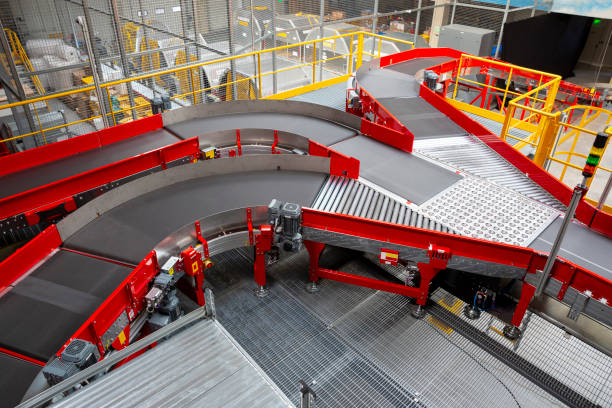
Sortation looks simple from the outside. Packages come down a line, they get routed to the right door or chute, and they leave the building. In practice, choosing the wrong conveyor sorter for your volume, product mix, or facility layout is one of the more expensive mistakes a warehouse can make. And it's rarely obvious until the system is already running below capacity.
Most facilities don't realize how many sorter types exist or how differently they perform under real conditions. A system built for uniform cartons behaves very differently than one built for soft-sided polybags or mixed apparel. Getting this wrong usually means a costly retrofit down the line.
That's where this guide can help. MTLI Group brings more than four decades of experience designing and installing conveyor sortation systems across North America. Based on that experience, we'll walk through how different sorter types work, where each one fits best, and the key factors to evaluate before making an investment.
Why Getting Sorter Selection Wrong Is Costly
Choosing a conveyor sorter based on a single number, such as maximum throughput, can create problems later. A system that is too small can become a bottleneck as volume grows. On the other hand, an oversized system can leave you paying for capacity you rarely use. Product characteristics matter just as much, especially when items vary in size, weight, shape, or packaging.
Common issues caused by a poor sorter selection include:
- Throughput bottlenecks: An undersized sorter can struggle during peak periods and slow down the entire fulfillment process.
- Product damage: The wrong diversion method may handle fragile or irregular items too aggressively.
- Misroutes and jams: Products that do not work well with the selected mechanism can create more exceptions and manual intervention.
- Unnecessary capital costs: An oversized system can tie up budget without providing meaningful additional value.
- Expensive retrofits: Fixing the wrong system after installation can require equipment changes, software adjustments, or layout modifications.
The problem is that these issues often do not become obvious during initial testing. They tend to appear once the facility is running at full volume, especially during peak season. Taking the time to match the sorter to your actual products, throughput, and facility layout upfront can help prevent costly changes later.
How a Conveyor Sorter Actually Works
A conveyor sorter does more than move products along a line. It identifies each item, determines where it needs to go, and automatically directs it to the correct destination. Identification typically happens through barcode scanners, sensors, or vision systems. Once the item is recognized, the sorter uses that information to send it toward the right shipping lane, dock door, chute, or downstream process.
The sorter usually works as part of a larger conveyor system. The conveyor moves products through the facility and controls the flow into the sortation area, while the sorter handles the routing decision. Together, they create a continuous material flow that reduces the need for workers to manually identify and move products between destinations.
Understanding the Different Types of Conveyor Sorters
Sorter mechanisms vary widely in how they physically divert product, and that mechanism drives everything from speed to product handling gentleness. The table below breaks down the most common types used in warehouses today:
| Sorter Type | Diversion Method | Best Fit |
|---|---|---|
| Sliding shoe | Shoes slide product sideways off the line | Cartons, mixed sizes |
| Cross-belt | Small belts on carriers tilt to release product | High-speed parcel sortation |
| Tilt-tray | Trays tip to drop product into chutes | E-commerce, apparel |
| Pop-up wheel | Wheels rise to redirect product at an angle | Lightweight, uniform items |
| Pusher | Arm physically pushes product off the line | Lower-rate, simple diverts |
Each type has its own balance of speed, handling, flexibility, and cost. For example, a high-speed cross-belt system may be ideal for a large parcel operation, while a pusher sorter can be a better fit for a facility with lower volume and fewer destinations.
The sorter also needs to work with the rest of your warehouse system integrator. Looking at the conveyor, scanning technology, controls, and destination layout together makes it easier to choose a system that can maintain reliable flow as your operation grows.
Matching Sorter Type to Your Product Mix
The right sorter depends heavily on what's actually moving through your facility. A few common pairings show up consistently across industries:
- Parcel and e-commerce operations tend to favor tilt-tray or cross-belt sorters for their speed and gentle handling of mixed package sizes
- Apparel and soft goods often pair well with tilt-tray systems, since soft-sided items don't sort reliably on sliding shoe mechanisms
- Food and beverage distribution frequently uses sliding shoe sorters for their ability to handle heavier cartons without damage
- Facilities with goods-to-person picking sometimes integrate sortation directly with robotic cells
None of these pairings are absolute rules. Product mix, order profile, and even seasonal shifts in volume all factor into the final decision.
What Throughput and Accuracy Numbers Really Mean
Sorter specifications can make one system look better than another at first glance, but the headline throughput number does not tell the whole story. A sorter rated for 10,000 items per hour may perform very differently. It depends on product size, package shape, spacing, scan rates, and how consistently the upstream conveyor can feed it.
Demand for automated sortation systems is also growing as more products move through distribution and fulfillment facilities. The Bureau of Labor Statistics projects transportation and warehousing employment to grow through 2034, with continued activity across courier, delivery, and warehousing operations. More volume puts greater pressure on facilities to move products quickly and accurately without creating new labor bottlenecks.
Here's a general look at how common sorter types compare:
| Sorter Type | Typical Throughput (items/hour) | Product Handling |
|---|---|---|
| Sliding shoe | 6,000 - 10,000 | Moderate |
| Cross-belt | 10,000 - 15,000+ | Gentle |
| Tilt-tray | 8,000 - 12,000 | Gentle |
| Pop-up wheel | 3,000 - 6,000 | Moderate |
| Pusher | 2,000 - 4,000 | Firm |
These figures should be treated as general ranges rather than guaranteed performance levels. A sorter rated for 10,000 items per hour will not consistently reach that rate if packages are irregularly shaped, poorly spaced, difficult to scan, or arriving faster than the upstream conveyor can reliably feed them.
The Software That Makes Sorters Smart
The mechanical sorter may handle the physical movement, but software controls where each item needs to go. A WCS/WES platform uses information from the order, destination, scanner, and conveyor system to make routing decisions in real time. It essentially connects the physical equipment with the data needed to keep products moving to the right location.
This integration is critical to overall performance. Even a well-designed sorter can create misroutes or upstream bottlenecks if the controls software, WMS, and sorting equipment are not communicating properly. When these systems are planned together, the sorter can respond to changing order conditions while keeping product flow consistent.
Selection Factors to Walk Through Before You Buy
The right sorter should be selected around your actual operation rather than a generic throughput target. Before making a decision, consider:
- What is your peak-hour volume? Size the system around your busiest periods, not just your average daily throughput.
- What products are you sorting? Package size, weight, shape, and packaging material can all affect sorter performance.
- How many destinations do you need? A higher number of diverts can increase system complexity and may influence which sorter type makes the most sense.
- How much space is available? Floor area, ceiling height, conveyor runs, and access points can all affect the system layout.
- How will it connect to existing technology? Your sorter needs to communicate reliably with your WMS, WCS/WES, scanners, and other automation already in place.
There is also a safety consideration. Manual material handling remains a significant source of workplace strain and injury. The CDC's National Institute for Occupational Safety and Health has identified manual material handling as a major contributor to work-related musculoskeletal disorders. Automating repetitive sorting can therefore do more than increase throughput. It can reduce the amount of repetitive lifting, carrying, and manual diverting workers have to perform.
Where Sorters Fit into a Bigger Automation Plan
A conveyor sorter is rarely a standalone piece of equipment. It usually works alongside conveyors, scanners, warehouse software, storage systems, and sometimes robotics to keep products moving through the facility. If one part of that system is not properly coordinated, it can limit the performance of everything downstream.
For facilities planning a larger automation project, it can make sense to include sortation as part of a turnkey delivery approach. This allows the sorter, conveyors, racking, controls, electrical systems, and other components to be planned around the same workflow instead of being added separately over time.
Looking at the full material flow also makes it easier to identify potential bottlenecks before installation. The goal is not simply to add a fast sorter, but to build a connected system where each component supports the others and the facility can maintain reliable throughput as volume grows.
Picking the Right Conveyor Company
The sorter is only one part of the equation. The company behind it can have just as much influence on the outcome, especially when the project involves system design, controls, electrical work, installation, and integration. A provider that understands only the equipment may not see the problems that can develop between those different pieces.
MTLI Group brings these capabilities together. As a conveyor company, we can support your project from early planning and engineering through installation, electrical work, integration, and commissioning. This creates a more coordinated process and keeps each decision connected to how your facility actually operates.
That approach also allows MTLI to look at practical details that can easily be overlooked, including product characteristics, peak volumes, available space, and future changes in throughput. Rather than starting with a particular sorter and trying to make it fit, the team can work backward from what your facility actually needs.
If you're considering a new conveyor sorter or want to determine whether your current system is keeping up with demand, get in touch with MTLI Group today. We will discuss your operation and explore the right solution.
Choose for the Operation, Not the Brochure
There is no single conveyor sorter that works best for every warehouse. A system that performs exceptionally well for high-volume parcels may be unnecessary for another operation, while a lower-cost option may quickly become a bottleneck as volume changes.
The better approach is to start with how your facility actually operates and work backward from there. MTLI Group can help you evaluate the options, identify the tradeoffs, and determine which sortation approach makes practical sense for your facility.