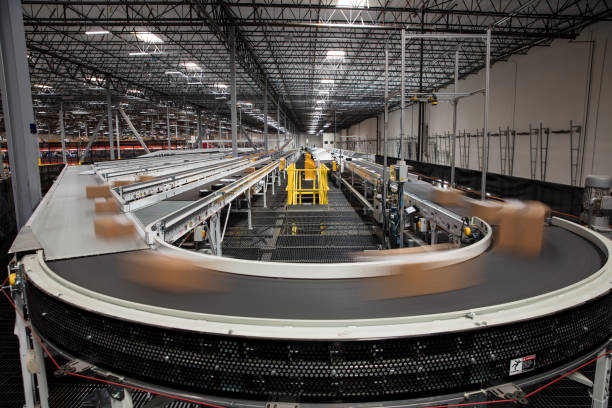
Picking the right partner for a warehouse automation project matters more than picking the right equipment. The best conveyor system or ASRS in the world will underperform if it is installed by a team that does not understand your building, your software, or your actual order volume. For enterprise operations teams managing a major investment, choosing a warehouse automation company is one of the most consequential decisions in the entire project.
MTLI delivers automation projects for enterprise clients across the U.S., managing design, construction, and installation as one accountable program. This guide covers what to look for in a partner, the questions worth asking before signing a contract, and the mistakes that lead enterprise teams to the wrong choice.
Why This Decision Carries More Weight Than It Seems
Construction spending in the U.S. reached a seasonally adjusted annual rate of $2,172.4 billion in April 2026, up 0.9% from a year earlier, with private nonresidential activity remaining a major share of that total (U.S. Census Bureau, Monthly Construction Spending, April 2026). With this much capital flowing into industrial and commercial projects nationwide, the gap between a well-run automation rollout and a poorly run one becomes more visible, and more costly, with every passing year.
These gains only show up when the underlying project is planned and built correctly. A poor partner choice can turn a promising investment into a costly disappointment, even with the right equipment on order.
What Separates a True Integrator From a Vendor
A warehouse automation integrator does more than sell and install equipment. It designs a system suited to your specific building, your order profile, and your software, then takes responsibility for making all the pieces work together. A vendor, by contrast, often sells a single product line and leaves the integration work, such as connecting equipment to your warehouse management software, for someone else to figure out.
This distinction matters most when something goes wrong. With a true integrator, one team owns the full system and can diagnose whether an issue sits in the hardware, the software, or somewhere in between. With a collection of separate vendors, each one can point to the other when a problem surfaces, leaving you to coordinate the fix yourself.
Vendor vs. True Integration Partner
| Factor | Single-Product Vendor | True Integration Partner |
|---|---|---|
| Scope of responsibility | Specific equipment only | Design, construction, equipment, software |
| Troubleshooting ownership | Limited to their product | Full system, hardware and software |
| Construction coordination | Separate contract needed | Managed as part of the same project |
| Long-term support | Often product-specific only | Facility-wide maintenance and service |
| Accountability for delays | Unclear across multiple vendors | Centralized with one team |
Questions Enterprise Teams Should Ask Before Signing
A structured set of questions during the selection process for any warehouse automation company reveals far more than a sales pitch ever will.
- Does the company handle construction and automation directly, or subcontract one of them out? A real integrator should have in-house capability for both, not just project oversight.
- Can the company show experience with facilities similar to yours? A cold storage site and an e-commerce fulfillment center have very different requirements, and direct experience in your specific facility type matters.
- Who is accountable if a delay occurs? One point of contact should own the schedule, not a chain of subcontractors.
- What does ongoing maintenance look like after handover? A strong partner explains this before the project even starts, not after equipment is already installed.
- How does the company handle software integration with existing systems? Equipment that cannot communicate properly with your current warehouse management software creates problems long after installation is finished.
Evaluating an Automation Contractor's Technical Capability
Choosing an automation contractor means looking past the sales materials and into the actual technical capability behind a project. This includes the company's in-house engineering resources, its experience with the specific equipment types your facility needs, and its track record on projects of a similar scale.
Enterprise teams should ask to see references from comparable projects, not just a general portfolio. A warehouse automation company that has handled smaller installations may not have the engineering depth needed for a large, multi-system rollout spanning construction, racking, automation, and controls integration all at once.
Evaluation Checklist for a Potential Partner
| Evaluation Area | What to Confirm |
|---|---|
| In-house capability | Construction, automation, and controls handled directly |
| Relevant experience | Projects of similar scale and facility type |
| References | Verifiable contacts from comparable past projects |
| Maintenance support | Clear post-installation service plan |
| Software integration | Track record connecting equipment to existing systems |
Why a Single Point of Contact Matters for Large Projects
Enterprise-scale automation projects involve construction, electrical work, equipment installation, software integration, and staff training, often all running in parallel. Splitting this work across separate vendors creates coordination gaps that show up as delays, miscommunication, or finger-pointing when something does not go as planned.
A single warehouse automation company removes this risk by design. The same team that plans the construction also plans the automation, which means electrical capacity, floor load, and equipment requirements get worked out together from the start rather than discovered as conflicts midway through the project.
How to Spot Red Flags During the Selection Process
A few warning signs should give enterprise teams pause before committing to a partner:
- Vague answers about construction capability. A company that cannot clearly explain how it handles structural and electrical work likely subcontracts this out, adding a coordination layer you did not plan for.
- No clear maintenance plan. A partner focused only on the installation, with no defined support plan after handover, leaves you exposed once the project is complete.
- Limited references for projects your size. A company with only small-scale experience may struggle with the complexity of an enterprise rollout.
- Pressure to commit before a proper facility assessment. A partner who skips a thorough site assessment before quoting a project is more likely to discover costly surprises mid-build.
- Unclear ownership of software integration. If no one can explain how the new equipment will talk to your existing systems, that gap will surface after installation, not before.
Why MTLI Fits the Profile of a True Integration Partner
MTLI manages the full project lifecycle for enterprise clients, from initial facility design through construction and general contracting, warehouse automation, and final installations. Our teams coordinate structural work, electrical upgrades, and software integration as one program, so enterprise teams work with a single accountable partner rather than managing separate contracts for each phase.
We also support facility management services after handover, giving clients a maintenance plan in place from day one, and our relocations team supports enterprise clients consolidating or transitioning between facilities as part of a larger automation rollout.
Making the Right Choice for Your Next Project
Selecting a warehouse automation company comes down to verifying real technical capability, checking references from comparable projects, and confirming that one team owns the full outcome rather than a chain of separate vendors. Enterprise operations teams that take the time to properly evaluate a potential partner avoid the coordination gaps and accountability issues that derail so many large automation projects.
If your company is planning a major automation rollout in warehousing and distribution or manufacturing, MTLI can walk you through our approach to design, construction, and installation. Contact MTLI to discuss your next enterprise automation project.