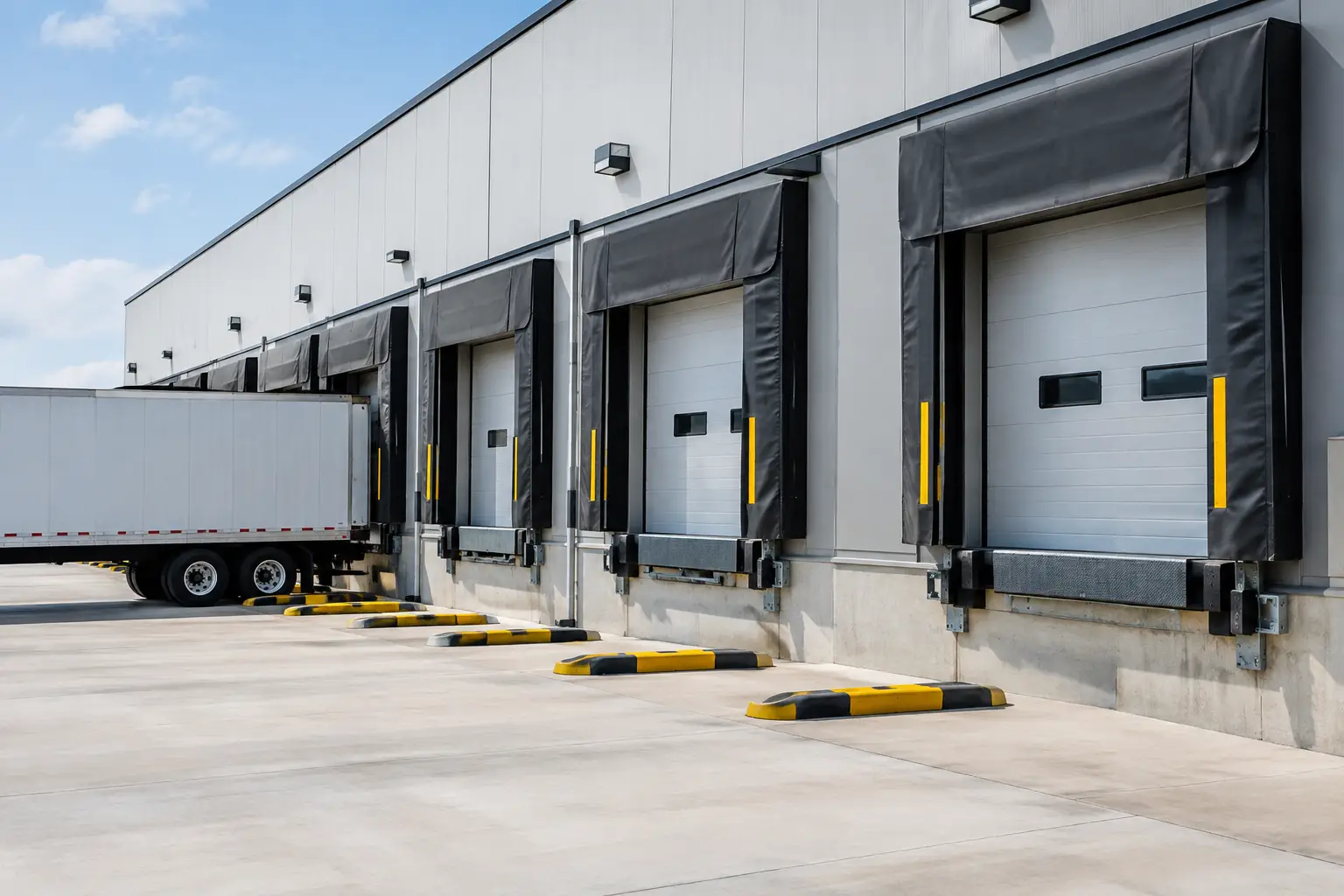
A dock door that takes an extra 30 seconds to cycle can become a throughput constraint when it is repeated across hundreds of trailer turns. A door that does not seal properly can create worker discomfort, product risk, energy loss, and condensation issues. The best dock door solutions address these operational realities as part of the full loading dock system, not as an isolated equipment purchase.
For distribution centers, manufacturing plants, cold storage facilities, and high-volume 3PL operations, the right solution depends on traffic patterns, trailer types, temperature requirements, security exposure, building conditions, and the cost of downtime. The objective is simple: keep product moving safely while protecting the facility, equipment, and workforce.
Start With the Dock’s Operating Profile
Door selection should begin with a field-level review of how each position is used. A shipping door running 20 to 40 trailer cycles per day has different requirements than a high-traffic receiving position, an interior transfer opening, or a door exposed to harsh weather and crosswinds.
Cycle frequency is one of the first decision points. Standard sectional doors can be a practical fit for moderate-use docks, particularly where capital budgets are controlled and opening speeds are not a major constraint. At higher-use positions, faster-opening systems may reduce waiting time, limit conditioned-air loss, and improve traffic flow. The trade-off is higher initial cost and a greater need for disciplined preventive maintenance.
Door size and clear opening dimensions also matter. Facilities often inherit dock openings that do not align with current trailer configurations, material handling equipment, or load profiles. Before replacing a door, confirm the required clear width and height, headroom, side room, track configuration, and clearance for dock lights, vehicle restraints, sprinkler lines, and conveyor or automation equipment.
Best Dock Door Solutions by Operating Need
There is no universal door type that performs best across every facility. The strongest specification matches the door design to the exposure and operating demand at that individual dock position.
Sectional Overhead Doors for General Loading Docks
Insulated sectional overhead doors remain a common choice for standard warehouse docks. They offer a balance of durability, insulation value, serviceability, and cost. Steel panels with appropriate insulation can support temperature control while handling the daily demands of conventional shipping and receiving operations.
They are generally well suited for facilities where doors remain closed between trailer moves and where opening speed is not the primary driver. For a better long-term result, specify hardware, springs, tracks, and operators based on actual cycles rather than minimum-duty assumptions. A door panel may look adequate on paper, but undersized operating components are often where service interruptions begin.
High-Speed Doors for Frequent Cycles and Climate Control
High-speed fabric or rigid doors are often appropriate where doors cycle repeatedly throughout a shift. Their faster travel speeds can reduce forklift waiting, help maintain interior temperatures, and limit exposure to dust, insects, wind, and humidity. They are commonly evaluated for high-throughput distribution, food and beverage, pharmaceutical, and temperature-sensitive operations.
The decision between fabric and rigid construction depends on the environment. Fabric doors can provide speed and flexibility, with some models designed to recover after minor impacts. Rigid high-speed doors typically provide greater security and wind resistance. Either choice requires reliable controls, properly positioned photo eyes, and a service plan that keeps sensors, curtain systems, and drive components operating correctly.
Rolling Steel Doors for Security and Durability
Rolling steel doors are a strong option for exterior openings where security, durability, and compact overhead storage are priorities. They can be especially useful when ceiling conditions do not allow for the tracks and overhead space required by sectional doors.
However, a rolling steel door is not automatically the best answer for every high-cycle dock. The opening speed, insulation performance, and operating characteristics should be reviewed against the application. In a conditioned warehouse with frequent traffic, a conventional rolling door may need to be paired with better sealing or replaced by a faster system to control energy loss and maintain flow.
Impactable Doors for Forklift-Intensive Areas
Interior dock-adjacent openings, staging areas, and transfer lanes are frequently damaged by forklifts and pallet loads. Impactable doors can reduce repair time when collisions are likely. Rather than requiring extensive component replacement after a minor impact, these systems are designed to release, reset, or withstand contact within defined limits.
This approach is particularly valuable where a damaged opening could stop a production line or create an unsafe traffic condition. It does not eliminate the need for operator training, bollards, guardrails, and proper lane design. It does reduce the operational consequences when the occasional impact occurs.
Cold Storage and Freezer Dock Doors
Cold storage doors require more than a higher insulation rating. The system must manage air infiltration, condensation, frost, door cycle speed, and the interface between the door, dock seal, leveler, and building envelope. A poorly coordinated dock opening can allow moisture into the facility, contributing to ice formation, energy waste, and damaged product conditions.
For freezer applications, evaluate insulated door construction, heated components where needed, high-speed operation, perimeter sealing, and control interlocks. The best solution may combine a high-speed insulated door with dock shelters, trailer restraints, and controls that prevent the door from opening until the trailer is properly positioned.
Treat Sealing, Restraints, and Controls as Part of the Solution
A new door cannot compensate for a dock opening with failed seals, uneven approach conditions, or inconsistent trailer positioning. Dock performance depends on the equipment working together.
Dock seals and shelters reduce outside air, rain, debris, and pests from entering around a backed-in trailer. Seals usually provide close contact for common trailer sizes, while shelters can better accommodate varied trailer heights and widths. The appropriate choice depends on the trailer fleet, dock geometry, exposure to weather, and whether energy control or trailer access is the leading concern.
Vehicle restraints are equally important. They reduce the risk of trailer creep and early departure while forklifts are crossing the dock leveler. Integrated lights, audible alarms, and interlocked door controls give dock personnel clear confirmation that the trailer is secured before loading begins. These measures support safety, but they also protect doors and levelers from damage caused by premature movement.
Controls should be specified around how people actually work. A high-speed door that opens before a restraint is engaged creates unnecessary risk. A door control placed outside a forklift operator’s natural travel path may encourage workarounds. Clear control logic, visible status indicators, and operator training are essential to a reliable dock process.
Plan Installation Around Facility Continuity
Dock door replacement often appears straightforward until work begins. Existing openings can conceal structural deterioration, inadequate steel support, electrical limitations, damaged concrete, drainage problems, or conflicts with fire protection and dock equipment. A detailed site survey before procurement reduces change orders and protects the installation schedule.
For active facilities, sequencing is as important as the equipment itself. Work can often be phased by dock position, shift, or operating zone to preserve shipping capacity. Temporary opening protection, trailer scheduling, safety barricades, and communication with operations teams should be established before crews arrive.
A turnkey scope is particularly useful when the project involves more than door replacement. Structural modifications, electrical upgrades, dock leveler coordination, controls integration, concrete repair, and commissioning should be managed as one coordinated package. This reduces the handoffs that can extend downtime or leave responsibility unclear when systems do not perform as intended.
Evaluate Lifecycle Cost, Not Just Purchase Price
The lowest quoted door can become the most expensive option if it requires frequent repairs, causes climate-control losses, or cannot support the required number of cycles. Procurement teams should compare expected service life, warranty terms, local parts availability, response times, and planned maintenance requirements alongside installed cost.
Ask suppliers to document the operating assumptions behind their recommendation. Those assumptions should include daily cycles, wind load, temperature differential, forklift exposure, opening size, operator type, control requirements, and the condition of the existing dock. A solution designed for 10 cycles per day should not be installed at a position that runs 80 cycles per day simply because the door panels appear similar.
Maintenance planning should begin at turnover. Routine inspections can identify worn cables, rollers, hinges, springs, photo eyes, weather seals, and operator components before a failure blocks a dock position. For mission-critical facilities, holding common spare parts and establishing a defined service response process can prevent a small issue from becoming a missed shipping window.
Build a Dock Standard That Can Scale
Multi-site operators benefit from standardizing door types, control logic, safety components, and service practices where practical. Standardization simplifies training, spare-parts inventory, purchasing, and repair response. It should not mean forcing the same equipment into every building regardless of its operating profile.
The right standard establishes a small set of approved solutions for defined conditions: general shipping docks, high-cycle temperature-controlled docks, secure exterior openings, and forklift-intensive interior transfers. Each site can then be evaluated against a consistent framework while retaining flexibility for local conditions.
For organizations managing expansion, modernization, or recurring dock repairs, MTLI Group can coordinate dock equipment, facility modifications, installation, and operational handoff within a single project scope. The practical next step is to assess each dock position by cycle demand, exposure, safety risk, and downtime cost before selecting equipment. That process turns a door replacement into a measurable improvement in loading performance.