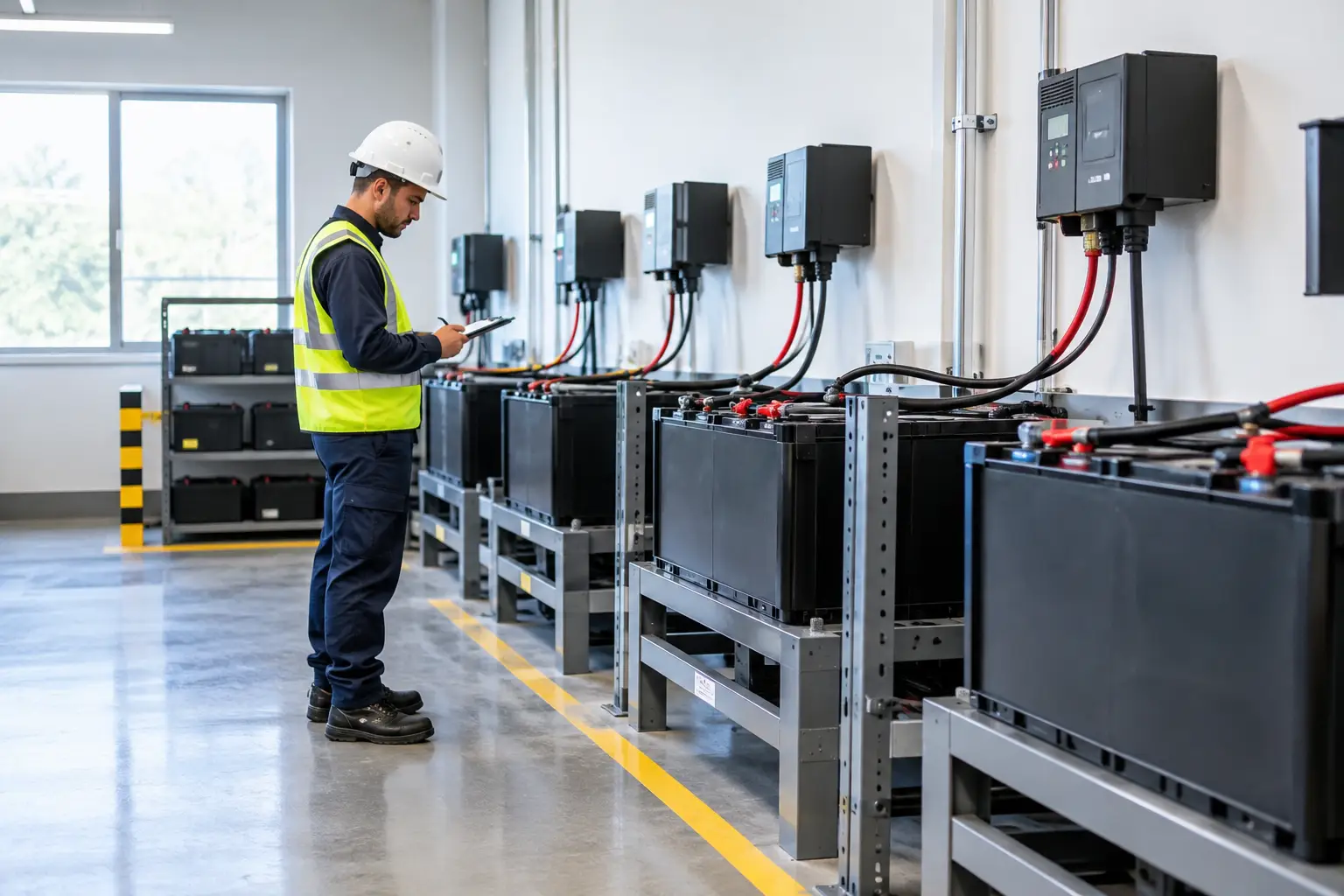
A charging area can become a warehouse bottleneck long before it becomes a safety incident. Forklifts wait for available chargers, operators cross active travel lanes to swap batteries, heat builds around equipment, and a small maintenance issue can interrupt an entire shift. This battery charging room guide addresses the facility decisions that determine whether charging supports dependable throughput or creates avoidable risk.
The right solution is not always a separate room. It depends on battery chemistry, fleet size, charging strategy, building conditions, and applicable local requirements. What matters is designing the charging operation as part of the material flow plan, not treating it as leftover space at the edge of the warehouse.
Start With the Charging Model
Before selecting a room location or ordering equipment, define how vehicles will be charged. A conventional lead-acid fleet may require centralized charging, dedicated watering and wash-down practices, battery changing equipment, and ventilation designed around hydrogen generation. That model needs adequate staging space and a controlled process for moving heavy batteries safely.
Lithium-ion fleets often use opportunity charging, where operators connect equipment during breaks, shift changes, or other idle periods. This can reduce the need for battery changes and central battery storage, but it does not eliminate planning requirements. Charger locations, electrical distribution, cable management, equipment compatibility, emergency response procedures, and manufacturer requirements still need to be addressed.
Fleet utilization is the key input. A facility operating two shifts with high travel demand may need a different charger-to-truck ratio than a site with intermittent use, even when both operate the same number of lift trucks. Review runtime, battery capacity, charger output, break schedules, battery age, seasonal demand peaks, and planned fleet growth. Sizing from truck count alone commonly leads to underbuilt charging capacity.
Battery Charging Room Guide: Selecting the Right Location
A charging room should support the shortest practical route from the work area while staying clear of congested docks, pedestrian paths, high-value inventory, and sensitive operations. The location should allow trucks and battery handling equipment to enter, turn, stage, and exit without backing into traffic or blocking egress.
Centralized lead-acid charging often benefits from a defined room or enclosed area because it concentrates utility connections, controls access, and supports a repeatable battery handling process. However, putting the room too far from the operating zone creates nonproductive travel and encourages operators to bypass the process when the facility is under pressure.
For decentralized or opportunity charging, distributed charging stations may improve uptime. The trade-off is that each location must be evaluated for electrical capacity, clearances, physical protection, vehicle access, and emergency response. Charging points placed wherever wall space is available can create cable hazards and interfere with storage, picking, or replenishment activity.
The layout should reserve clear zones for the charger, battery or truck, operator access, maintenance work, and circulation. It should also account for future equipment replacement. A room that fits current chargers but cannot accommodate a larger fleet, changed battery dimensions, or upgraded electrical gear can become an expensive constraint.
Engineer the Infrastructure Before Installation
Charging equipment is an electrical and facility system, not a standalone purchase. Early coordination between operations, facilities, the electrical contractor, equipment supplier, and the authority having jurisdiction helps prevent field changes after racks, walls, and utilities are already in place.
Electrical capacity and distribution
Confirm the building service can support the planned charger load alongside automation, refrigeration, process equipment, lighting, and future expansion. Demand calculations should reflect how charging will actually occur. Opportunity charging can create concentrated peaks if many operators plug in at the same break time.
Each charger installation requires properly sized circuits, disconnects, overcurrent protection, grounding, and accessible service clearances. Electrical rooms and panels should remain available for maintenance, rather than being consumed by staging or storage. Where operational continuity is critical, plan the installation sequence so electrical work does not take charging capacity offline unexpectedly.
Ventilation, temperature, and drainage
Lead-acid batteries can generate hydrogen during charging. Ventilation design must be based on the battery and charger characteristics, room volume, occupancy, and applicable code requirements. Natural ventilation may be inadequate in enclosed spaces, while mechanical systems require proper controls, maintenance access, and verification.
Temperature affects battery performance, charging time, and equipment life. Excess heat can shorten battery life and add stress to chargers, while very cold conditions reduce available capacity. Facilities with seasonal extremes, cold storage interfaces, or hot mezzanine conditions should evaluate the charging environment rather than relying on standard room assumptions.
For lead-acid operations, the space may also need acid-resistant surfaces, spill containment provisions, eyewash capability, and drainage considerations based on local code and site procedures. These decisions should be resolved during design, not after the room is occupied.
Build Fire and Safety Controls Into the Space
Fire protection requirements vary by jurisdiction, battery type, quantity, and occupancy. Engage the local authority having jurisdiction, fire protection professionals, equipment manufacturers, and insurance stakeholders early. Their requirements may affect room separation, sprinkler design, detection, storage limits, access, signage, and emergency procedures.
Physical protection is equally practical. Chargers, electrical equipment, and exposed cables need protection from lift truck impact. Guarding should not obstruct airflow, access panels, or maintenance space. Clearly marked lanes and parking positions reduce the chance that a truck is left partly in an aisle or that a charger cord crosses a travel path.
A well-run charging area also provides the tools and controls operators need at the point of work. Depending on the battery system, that can include eyewash equipment, spill response materials, appropriate personal protective equipment, inspection records, lockout procedures, and instructions for damaged batteries or connectors.
The following operating controls are usually worth standardizing across shifts:
- Daily inspection of charger cables, connectors, battery cases, and truck-mounted connections.
- Clear rules for when operators may connect, disconnect, water, change, or isolate batteries.
- Defined response steps for leaks, overheating, unusual odors, damaged equipment, or alarms.
- Scheduled housekeeping so pallets, cartons, and unused equipment do not accumulate in required clearances.
- Preventive maintenance responsibilities for chargers, ventilation equipment, battery handling systems, and safety devices.
Design the Workflow, Not Just the Room
A charging room performs only as well as the process around it. Map the operator's path from the point where battery state becomes low through charging or changing, then back to productive work. Measure travel time, wait time, queue locations, and the number of touches required. These details reveal whether the proposed design will hold up during peak volume.
For battery changing operations, consider how depleted batteries are identified, where they are staged, how charged batteries are sequenced, and how operators avoid lifting or moving batteries outside the intended equipment. Battery extractors, changing stands, transfer carriages, and guides should match the truck fleet and battery dimensions. Mixing incompatible equipment creates safety and uptime problems that training alone will not solve.
For opportunity charging, establish a charging discipline. Operators need enough time to charge productively without blocking stations or repeatedly using the wrong connection. Charging data from fleet management systems can help verify whether the planned process is meeting runtime requirements or simply shifting downtime to another point in the shift.
Plan Installation Around Warehouse Continuity
Charging infrastructure is often installed during a new build, expansion, fleet conversion, or automation upgrade. In operating facilities, the work must be sequenced around active production, rack access, dock traffic, and worker safety. Temporary charging capacity may be necessary while electrical upgrades, ventilation work, fire protection modifications, or room construction are underway.
A turnkey project plan should define utility outages, equipment lead times, commissioning steps, acceptance testing, operator training, and the transition from temporary to permanent operations. It should also establish one accountable path for resolving conflicts among construction, material handling equipment, electrical systems, and fire protection scope.
MTLI Group approaches these projects as connected facility work, coordinating the charging environment with the broader warehouse layout, equipment plan, and operational schedule. That coordination reduces handoffs that can otherwise delay commissioning or leave critical scope between vendors.
The most effective charging areas are rarely the largest or most elaborate. They are the ones that give operators a safe, repeatable process, give maintenance teams access to what they must service, and give the operation enough capacity to keep freight moving when demand is at its highest.