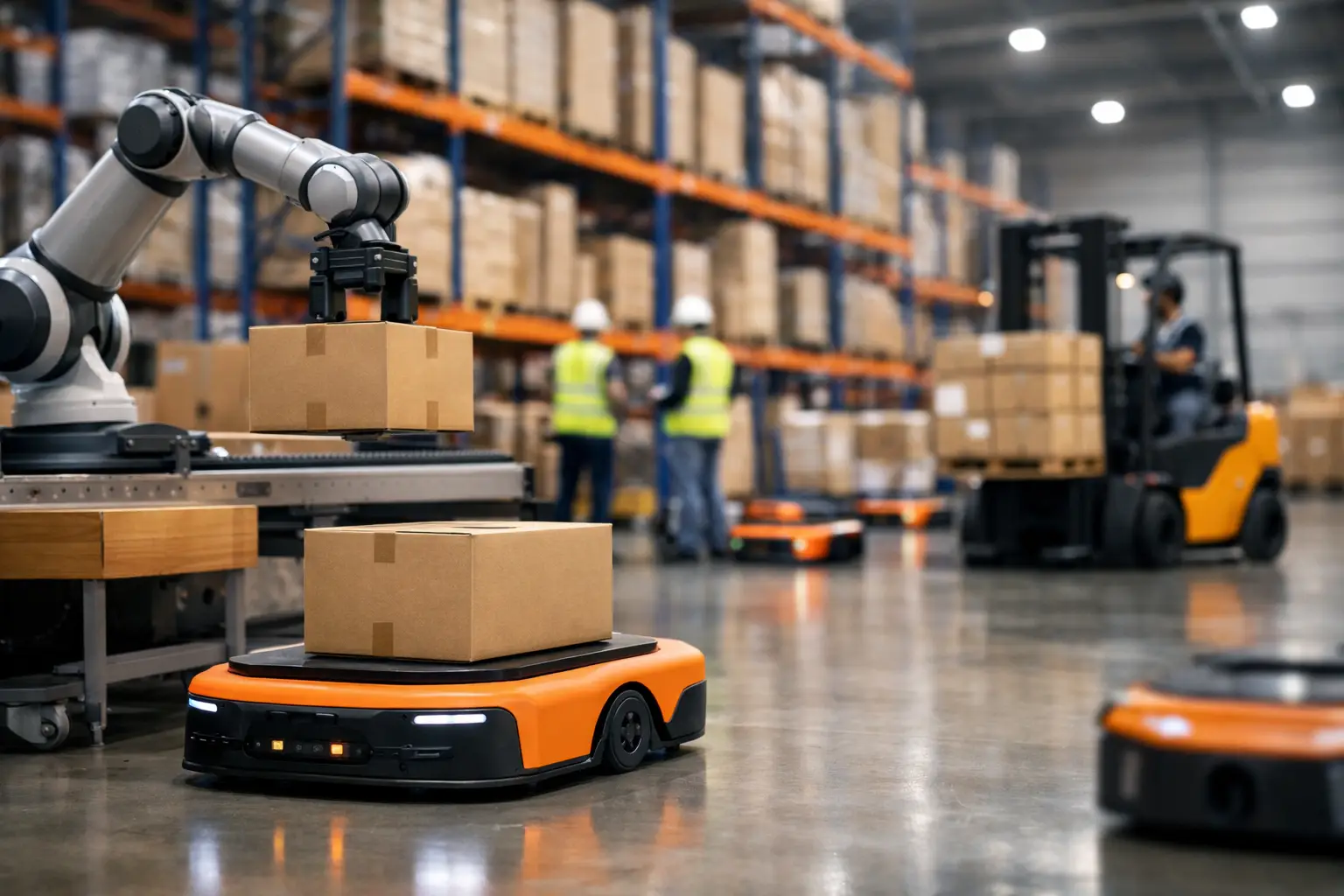
A warehouse automation decision is no longer a simple choice between adding labor and buying equipment. Operations leaders are balancing service-level commitments, labor availability, building constraints, capital discipline, and the risk of disrupting an active operation. The most consequential automation investment trends reflect that reality: companies are funding systems that solve defined flow problems while preserving the ability to scale, modify, and maintain the facility over time.
The strongest business cases are not built around automation for its own sake. They begin with a clear understanding of product profiles, order behavior, peak demand, required throughput, and the physical condition of the building. From there, the question becomes practical: where can automation remove repeatable work, improve consistency, and create measurable capacity without adding unnecessary complexity?
Automation Investment Trends Moving from Vision to Execution
Capital investment remains focused on labor-intensive and high-variability processes, but buyers are more selective about where they automate. Rather than pursuing fully automated facilities as a default, many organizations are prioritizing targeted systems that address specific operating constraints. Conveyance, sortation, pallet handling, goods-to-person picking, automated storage and retrieval systems, mobile robotics, and warehouse control software all have a place, but not every operation needs each technology.
This more disciplined approach reflects hard-earned experience. A system that performs well in a high-volume, stable SKU environment may be a poor fit for a facility handling irregular loads, frequent product changes, or seasonal volume swings. The investment decision depends on the operation, not the appeal of the technology.
Phased automation is replacing all-at-once projects
Phased deployment is one of the clearest market shifts. Companies are designing facilities with a long-term automation roadmap, then installing the infrastructure and equipment in stages. A project may begin with upgraded racking, power, network coverage, dock flow, and conveyor-ready building conditions. Automation can then be added to the highest-value process once operating data validates the expected benefit.
This approach reduces capital exposure and allows teams to learn in production. It also limits operational disruption. Instead of taking an entire facility offline for a major conversion, a phased plan can isolate work zones, sequence installation around seasonal demand, and bring new processes online in controlled steps.
Phasing is not always the right answer. If a facility is already constrained beyond recovery, a complete greenfield build or a major one-time modernization may deliver a better outcome. The key is to compare the cost and risk of staged improvement with the ongoing cost of working around an inefficient layout.
Integration is receiving as much attention as equipment
Automation equipment only creates value when it works as part of a complete operating system. That includes the building, slab condition, racking, fire protection, electrical distribution, charging areas, network infrastructure, warehouse management system, warehouse control system, and maintenance plan.
This is why investment conversations increasingly begin earlier in the project lifecycle. A mobile robot fleet may require changes to travel paths, pedestrian controls, staging practices, and wireless coverage. An automated storage system may affect sprinkler design, egress, structural requirements, and roof clearances. A conveyor and sortation project may require revised induction processes, packaging standards, and exception handling.
Fragmented project delivery can obscure these dependencies. When construction, storage, automation, installation, controls, and facility support are managed separately, gaps often emerge at the handoff points. A turnkey project model gives the owner one accountable team to coordinate scope, schedule, site conditions, commissioning, and operational readiness.
Labor Strategy Is Still Driving the Business Case
Labor challenges remain a central reason for automation spending, but the objective has become more precise. Most operators are not trying to eliminate their workforce. They are trying to reduce dependence on difficult-to-fill, physically demanding, and highly repetitive positions while giving experienced employees better tools to manage exceptions, quality, and customer service.
In practical terms, automation can shorten travel time, reduce manual touches, improve ergonomic conditions, and make output less dependent on adding headcount during peak periods. Those benefits matter in distribution, 3PL, manufacturing, food and beverage, cold storage, pharmaceutical, and automotive environments, where labor conditions and production demands can change quickly.
The labor model should be tested before equipment is selected. If staffing needs are driven by receiving congestion, for example, automating case picking may not solve the root problem. If order profiles are highly variable, a flexible process supported by mobile automation may be more appropriate than fixed infrastructure. Good design starts with the actual source of lost time.
Data Quality and Controls Are Becoming Investment Priorities
More operations leaders are recognizing that automation performance depends on clean data and disciplined controls. Product dimensions, weights, carton quality, location accuracy, inventory visibility, order-release logic, and exception processes directly affect system performance. Poor master data can turn a well-designed automated process into a daily troubleshooting exercise.
Warehouse software is therefore moving closer to the center of capital planning. The warehouse management system must direct work accurately. The warehouse control layer must coordinate equipment behavior, routing, and system priorities. Reporting must give supervisors visibility into jams, idle time, missed service levels, and recurring exceptions.
This does not mean every facility needs a complex software stack. Smaller or less automated operations may achieve meaningful gains through improved slotting, RF discipline, barcode standards, and basic operational reporting. The appropriate level of controls should match the process complexity and the consequences of downtime.
Cybersecurity and supportability belong in the scope
Connected equipment introduces support and security requirements that are sometimes treated as an afterthought. Operators should define who owns system access, patching, backups, remote support, user permissions, and incident response before go-live. They should also understand the availability of replacement parts, local technical support, and the service commitments attached to critical equipment.
A lower initial purchase price can become expensive if support is limited, controls are proprietary, or the system cannot be maintained without extended vendor lead times. Lifecycle cost includes preventive maintenance, spare parts, software support, training, energy consumption, and the cost of lost throughput during a failure.
Automation Investment Trends Are Expanding Beyond Fulfillment
E-commerce fulfillment remains a visible automation market, but investment is broadening across industrial operations. Manufacturers are automating material movement between production and storage, improving line-side replenishment, and reducing forklift travel. Cold storage operators are evaluating automation where labor conditions are especially demanding. Distribution centers are using selective automation to improve case handling, pallet flow, and shipping accuracy.
There is also growing interest in facility modernization that enables future automation. This can include reconfiguring racking for better slotting, strengthening or repairing slabs, upgrading electrical service, improving lighting and safety systems, redesigning dock areas, and creating clearer circulation paths. These improvements may not look like automation on a capital plan, but they can determine whether an automation project is feasible and reliable.
How to Evaluate an Automation Investment
A credible evaluation should measure more than anticipated labor savings. Operations leaders should model throughput by process, peak-period capacity, order accuracy, utilization, maintenance requirements, implementation duration, and the impact of a system outage. They should also identify what happens when volume, SKU counts, packaging, or service requirements change.
The following questions help separate a practical project from an equipment-led proposal:
- Which specific bottleneck limits throughput or drives overtime today?
- Is the process stable enough for fixed automation, or does it require flexibility?
- What facility changes are required before installation can begin?
- How will construction, installation, testing, and training occur without interrupting operations?
- What is the fallback process if equipment or software is unavailable?
- Who will maintain the system after commissioning, and what parts must be kept on site?
The financial model should account for avoided expansion costs, improved space utilization, reduced errors, lower damage rates, and service-level protection where those benefits are measurable. It should also account for the operational cost of change. Training, temporary processes, cutover support, and inventory migration are real project costs, even when they do not appear in an equipment quote.
Execution Determines Whether the Investment Performs
The best automation concept can fail if site readiness, installation sequencing, controls integration, and commissioning are poorly managed. A successful project requires clear design assumptions, coordinated trades, defined acceptance criteria, operator training, and a structured transition into daily operations.
For complex warehouse and industrial projects, MTLI Group helps owners align construction, storage systems, material handling equipment, installation, and facility requirements under one execution plan. That coordination is especially valuable when the facility must remain productive while the work is completed.
The right investment is the one that improves the flow of work without creating a new set of operating constraints. Start with the bottleneck, validate the building and data requirements, and build a deployment plan that protects throughput from the first day of installation through long-term support.