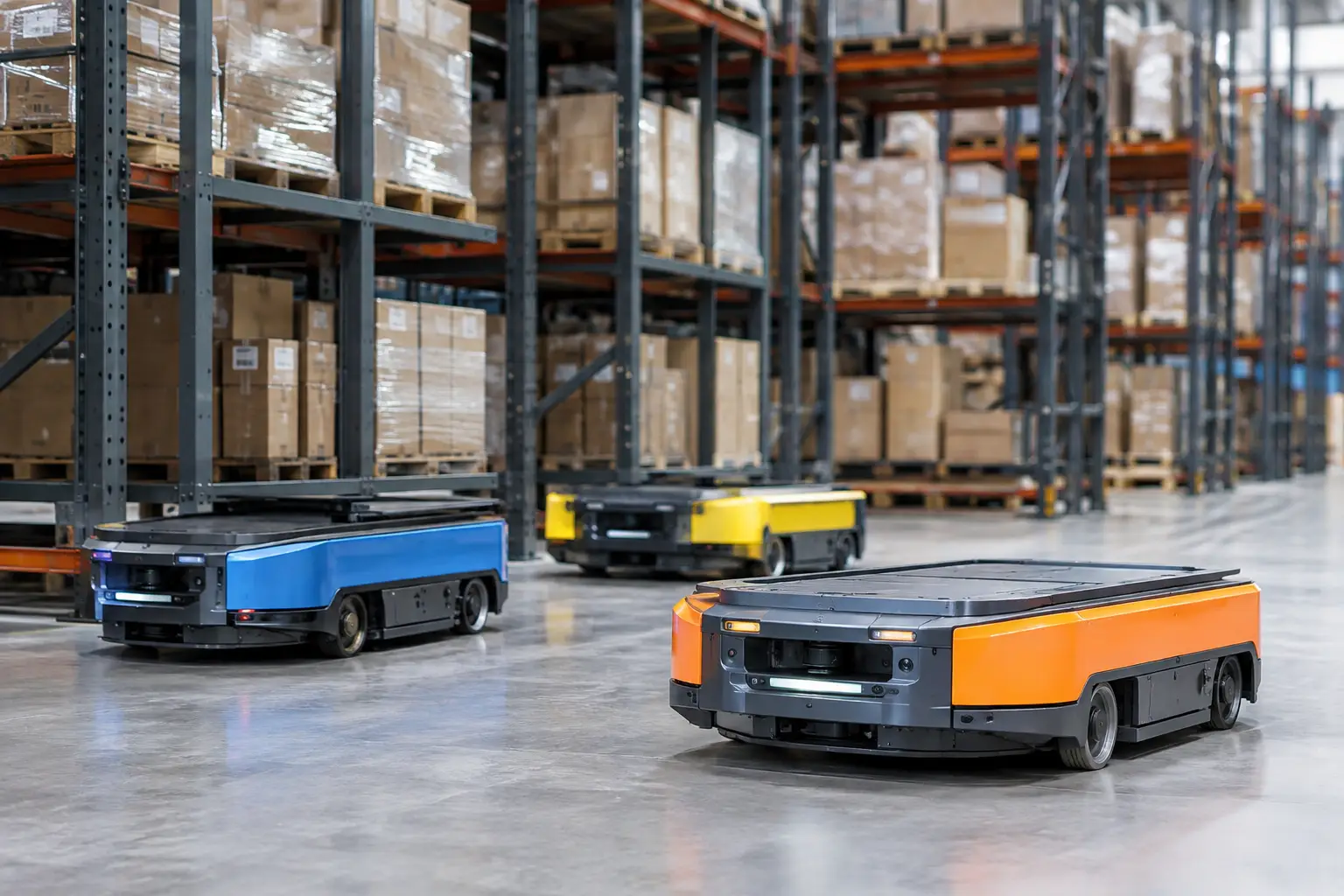
A meaningful ASRS shuttle comparison starts with the operating profile, not the equipment brochure. Two systems can both be described as shuttle-based automation while serving very different inventory, throughput, and building requirements. For an operation facing labor pressure, capacity limits, or tighter service commitments, the right decision depends on how product moves through the facility every hour of the day.
Shuttle systems are often selected because they increase storage density and reduce travel by separating horizontal movement from vertical movement. That benefit is real, but it does not make every shuttle design interchangeable. Load type, SKU profile, order structure, required redundancy, building geometry, and integration requirements should drive the final system concept.
ASRS Shuttle Comparison: Start With the Load
The first distinction is whether the system stores pallets or smaller loads such as totes, cartons, trays, and cases. This decision affects nearly every part of the project, from rack design and floor loading to controls architecture and outbound conveyance.
A pallet shuttle ASRS typically uses carrier vehicles that travel through deep storage lanes, supported by vertical lifts or transfer cars. It is well suited to high-density pallet storage, especially when inventory has multiple pallets per SKU and the operation benefits from deep-lane storage. Common applications include food and beverage, cold storage, manufacturing buffers, and distribution environments with substantial reserve inventory.
A tote or carton shuttle system, often called a multi-shuttle system, uses smaller vehicles operating within a racking structure. Lifts move totes between levels, while conveyor, sortation, picking stations, or robotic work cells handle input and output. These systems are designed for high-frequency each-pick, case-pick, sequencing, and goods-to-person fulfillment operations. They are common in e-commerce, pharmaceutical, retail, and parts distribution environments where order lines are numerous and inventory velocity is high.
The operational question is straightforward: are you trying to store large quantities of like product efficiently, or are you trying to access a broad inventory assortment quickly? A pallet system can be an excellent density solution but may not be the right engine for high-volume each picking. A tote shuttle can deliver fast item access but may introduce unnecessary complexity if the core requirement is reserve pallet storage.
Compare Throughput at the System Level
Shuttle throughput is frequently evaluated by the published speed of a shuttle vehicle. That is not enough. Total performance is determined by the complete material flow path: induction, lifts, transfer conveyors, shuttle travel, storage or retrieval cycles, buffering, picking, packing, and shipping.
For example, adding more shuttles can increase horizontal capacity, but it will not solve a lift bottleneck. Likewise, a fast tote shuttle system will not maintain its expected rate if replenishment conveyors or downstream packing stations cannot absorb the released work. Pallet systems face similar constraints at inbound staging, pallet inspection, stretch-wrap removal, and outbound shipping lanes.
A proper design should define throughput in practical terms: required pallets, cases, totes, or order lines per hour; peak operating periods; batch sizes; cut-off times; and recovery capacity after a disruption. It should also distinguish average demand from peak demand. Designing only to average volume can create a system that performs acceptably in a demonstration but falls behind during promotions, seasonal demand, or shift changes.
Consider the Consequence of a Single Point of Failure
Redundancy is part of throughput planning, not an optional add-on. A system with multiple lifts, transfer positions, and shuttle vehicles can continue operating at reduced capacity when one component is offline. A tightly sized system may meet its target rate under ideal conditions but have little margin for maintenance, a controls issue, or an unplanned surge.
The appropriate level of redundancy depends on the cost of interruption. A 24/7 cold storage operation, an automotive plant supporting just-in-time production, or a fulfillment center with strict carrier cutoffs may require a more fault-tolerant design than a single-shift reserve warehouse. The capital cost is higher, but the cost of lost operating time can be higher still.
Storage Density Is Not the Only Space Metric
Shuttle ASRS systems can make better use of cube than selective pallet racking or conventional shelving, particularly where deep storage lanes and high elevations are practical. However, density should be measured against usable inventory access, not simply the number of positions installed.
Deep-lane pallet storage works best when each lane can hold multiple units of the same SKU, lot, or production run. Operations with a large number of low-volume SKUs may lose flexibility if too much space is committed to dedicated deep lanes. Inventory rotation requirements also matter. First-in, first-out handling may require a flow-through configuration or different loading and retrieval logic than a last-in, first-out application.
For tote systems, dense storage improves the number of inventory locations within the footprint, but tote dimensions must match the product mix. Oversized totes waste cube. Totes that are too small can increase the number of locations, touches, and replenishment transactions required to support order demand. Product weight, fragility, packaging condition, and item dimensions should be validated before slotting assumptions become rack specifications.
Building conditions matter as well. Clear height, column spacing, slab capacity, fire protection, roof structure, dock flow, and available staging space can all affect the layout. In an existing facility, the best automation concept may be the one that fits the building with the least operational disruption, even if another configuration appears more efficient on a blank-site layout.
Controls and Integration Define the Operating Experience
Shuttle hardware is only one layer of the system. Warehouse control software coordinates equipment movements, manages priorities, reports exceptions, and communicates with the warehouse management system, enterprise resource planning platform, picking technologies, and shipping processes.
Before selecting a system, operations leaders should establish ownership of inventory logic, wave release, replenishment triggers, order prioritization, and exception handling. A system designed for batch picking may need different control rules than one supporting continuous fulfillment. The integration scope should also address master data quality, carton and tote identification, label standards, interfaces, cybersecurity expectations, and reporting requirements.
Commissioning must include real operating scenarios rather than basic movement tests alone. That means testing damaged loads, no-reads, misrouted containers, blocked locations, depleted pick faces, priority orders, shift handoffs, and recovery after a controlled stop. The goal is not simply to prove that the equipment moves product. It is to prove that the operation can manage predictable exceptions without losing control of inventory or throughput.
Evaluate Capital Cost Against the Full Lifecycle
A lower initial price does not necessarily mean a lower project cost. The total investment includes site preparation, rack structure, fire protection modifications, electrical distribution, controls, conveyors, lifts, guarding, network infrastructure, integration, testing, training, spare parts, and ongoing support.
Labor savings are often a major part of the business case, but they should be modeled carefully. Automation may reduce travel labor, improve ergonomics, and stabilize output, yet it also creates technical maintenance requirements. The operation needs a defined maintenance strategy, trained personnel, documented escalation procedures, and critical spare parts that match the system's risk profile.
Energy use also varies by design. Cold storage operators should examine the value of higher density and reduced conditioned volume alongside the electrical demands of automation. High-throughput fulfillment operations should evaluate the cost of operating multiple vehicles, lifts, conveyors, and workstations across long daily run times.
A lifecycle comparison should also account for expansion. Some shuttle systems can add vehicles, storage levels, lifts, or workstations with relatively limited disruption. Others require a more substantial structural or controls modification. If business growth is uncertain, phased deployment may be more valuable than optimizing solely for the first year of demand.
Plan the Project as a Facility Change, Not an Equipment Purchase
Shuttle automation affects building systems, fire protection, material flow, information systems, safety procedures, and staffing. Treating it as a standalone equipment purchase can create gaps between the automation supplier, general contractor, racking installer, electrical contractor, and operations team.
A coordinated turnkey approach reduces those gaps by aligning the facility scope with the equipment scope early in design. This is particularly important for occupied facilities, where demolition, installation, cutovers, and commissioning must be scheduled around active production or shipping activity. MTLI Group supports this type of coordinated execution across facility construction, storage systems, automation installation, and operational transition planning.
The best shuttle system is the one that protects service levels while making the facility easier to operate at scale. Define the inventory and throughput problem precisely, test the design against peak conditions and failure scenarios, and select a delivery plan that gives operations a controlled path from construction through sustained performance.