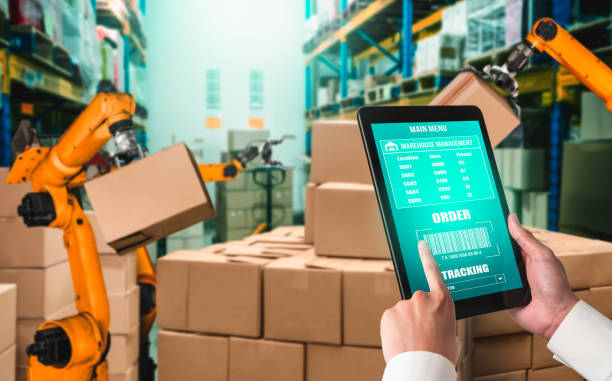
Third-party logistics providers compete on speed, accuracy, and cost, often for the same client contract as several other providers bidding at the same time. That competition has pushed a growing number of 3PLs toward 3PL warehouse automation, since manual processes alone struggle to keep pace with client expectations around same-day and next-day delivery. Operations managers running these facilities are the ones weighing whether the investment pays off within the length of a typical client contract, and whether it holds up once that contract renews with a different volume profile.
MTLI Group works with 3PL operators across North America to plan and install warehouse automation systems that fit variable client volumes, not just one product line. This guide breaks down why 3PLs are adopting automation now, where it delivers the strongest return, what it costs to get wrong, and what to consider before committing to a system.
The U.S. Census Bureau reported that e-commerce sales grew 9.8 percent year over year in the first quarter of 2026 and now account for 16.9 percent of total retail sales. Every one of those online orders eventually passes through a warehouse, and a growing share of that volume runs through 3PL facilities rather than retailers’ own operations, which is part of why so many 3PL operators are re-evaluating their equipment and staffing plans right now.
Why 3PL Operations Face Different Pressure Than Single-Client Warehouses
A 3PL warehouse rarely handles one product line under one steady demand curve. It handles multiple clients at once, each with a different order profile, seasonal pattern, and service-level agreement written into their contract. A spike from one client’s flash sale can hit the same floor space and labor pool serving three other clients that same week, and a miss on one client’s SLA can affect the 3PL’s ability to win that contract’s renewal.
This variability is the core reason 3PL warehouse automation looks different from automation in a single-brand distribution center. A 3PL needs equipment and software flexible enough to reconfigure between clients, not a system built around one fixed SKU catalog. Logistics automation in this setting has to handle constant change in order volume, product mix, and packaging requirements without a full re-engineering project every time a client contract changes or a new account comes on board.
This also changes how a 3PL evaluates return on investment. A single retailer can model automation payback against one demand curve. A 3PL has to model it against a blended demand curve across several accounts, some of which may leave at the end of a contract term. That uncertainty is one reason many 3PLs phase their automation investment rather than committing to one large system all at once.
What Logistics Automation Typically Covers in a 3PL Facility
Logistics automation spans a range of equipment types, and most 3PLs adopt them in stages rather than all at once.
| Automation Type | What It Does | Common 3PL Use |
|---|---|---|
| Conveyor and sortation | Moves and sorts parcels by destination | Splitting multi-client volume across separate outbound lanes |
| Goods-to-person picking | Brings inventory to a stationary picker | Reducing walk time across a large, multi-client floor |
| Automated storage and retrieval (AS/RS) | Stores and retrieves pallets or totes without a forklift | Maximizing density for clients with large SKU counts |
| Put walls | Sorts individual items into client-specific order totes | Managing multiple small orders across different clients at once |
| Warehouse control software | Coordinates equipment and directs tasks in real time | Switching priorities quickly as client volumes shift |
Most 3PLs start with conveyor and sortation, since it delivers a fast, visible improvement in throughput without a long commissioning period. AS/RS and goods-to-person systems tend to come later, once a facility has enough consistent volume across its client base to justify the larger upfront investment. Put walls often get added when a 3PL takes on more e-commerce clients shipping small parcels, since manual sortation of high SKU counts becomes a bottleneck quickly at that volume.
The Return on 3PL Warehouse Automation
Operations managers evaluating 3PL warehouse automation usually compare it against the cost of adding more labor to handle growth. The table below outlines how the two approaches tend to differ.
| Factor | Adding Labor | Adding Automation |
|---|---|---|
| Scalability | Limited by local labor market availability | Can add throughput without adding headcount |
| Cost pattern | Ongoing wage and turnover costs | Higher upfront cost, lower marginal cost per order |
| Peak season handling | Requires seasonal hiring and training | Runs at capacity without a hiring cycle |
| Error rate | Varies with staff experience and fatigue | Stays consistent once the system is tuned |
| Client onboarding speed | Faster for small volume changes | Faster for large or recurring volume once integrated |
Bureau of Labor Statistics data shows warehousing and storage employment were 34 percent higher in June 2024 than it was in February 2020, reflecting how much this sector has grown since the pandemic. That growth has also made experienced warehouse labor harder to find in many markets, which is part of why automation has become a more attractive alternative to simply hiring more staff.
Steps Before Committing to Fulfillment Automation
A 3PL considering fulfillment automation should work through a few questions before signing off on equipment:
- Is client volume stable enough to justify it? Automation pays off fastest on steady, predictable volume. A facility with highly seasonal or one-off client contracts may get more value from a smaller, modular system than a large fixed installation.
- Does the racking layout support the equipment? Automated systems often need specific aisle widths and rack spacing. Our storage and racking team typically reviews the existing layout early, since retrofitting racking after equipment purchase adds cost and delay.
- Can the system integrate with multiple clients’ order data? A 3PL’s software needs to route tasks correctly across several client accounts at once, so integration testing matters more here than in a single-brand warehouse.
- What is the installation timeline? Coordinating MHE installation around ongoing client operations takes careful scheduling, since a 3PL facility rarely has a slow period long enough to shut down for a full retrofit.
- Who maintains the system after installation? A facility maintenance plan matters even more in a multi-client facility, since downtime affects several client relationships at once instead of just one.
Industries Driving 3PL Automation Demand
Several client industries are pushing 3PLs toward faster automation adoption.
| Client Industry | Why It Drives 3PL Automation |
|---|---|
| E-commerce fulfillment | High SKU counts and tight delivery windows |
| Food and beverage | Fast inventory turnover and shelf-life tracking |
| Retail | Omnichannel demand across online and in-store fulfillment |
| Cold storage | High energy cost per square foot pushes density and speed |
E-commerce fulfillment clients tend to push 3PLs toward automation fastest, since order accuracy and same-day processing directly affect their own customer satisfaction scores. Food and beverage clients add a different kind of pressure, since inventory has to move quickly enough to avoid spoilage, which favors automation that speeds up putaway and picking over manual processes.
How MTLI Group Supports 3PL Warehouse Automation Projects
MTLI Group manages 3PL warehouse automation projects from the initial facility assessment through full commissioning. Our team coordinates racking adjustments, electrical work, and equipment installation under one contract, which matters in a 3PL facility where downtime affects multiple client accounts rather than one brand.
For 3PLs expanding into a new facility or adding capacity through construction and general contracting work, we plan the racking and automation layout together from day one instead of treating them as separate projects. With more than 40 years in the industry and over 15,000 completed projects across North America, our team understands the operational pressure a multi-client facility runs under and plans installations around it.
Ready to Explore 3PL Warehouse Automation?
3PL warehouse automation is not a one-size-fits-all decision. The right scope depends on client volume, contract length, and how much flexibility the facility needs to serve different accounts at once. A careful assessment upfront prevents an expensive mismatch between the equipment and the actual demand pattern.
MTLI Group is ready to help you evaluate your facility and plan an automation project that fits your client mix. Get a free quote and talk through your goals with our team.